Author: Mosaic BHC

7 Coping Skills for Addiction That Support Lasting Recovery

Coping skills for addiction are the practical strategies people use to manage cravings, stress, and triggers without returning to substance use.

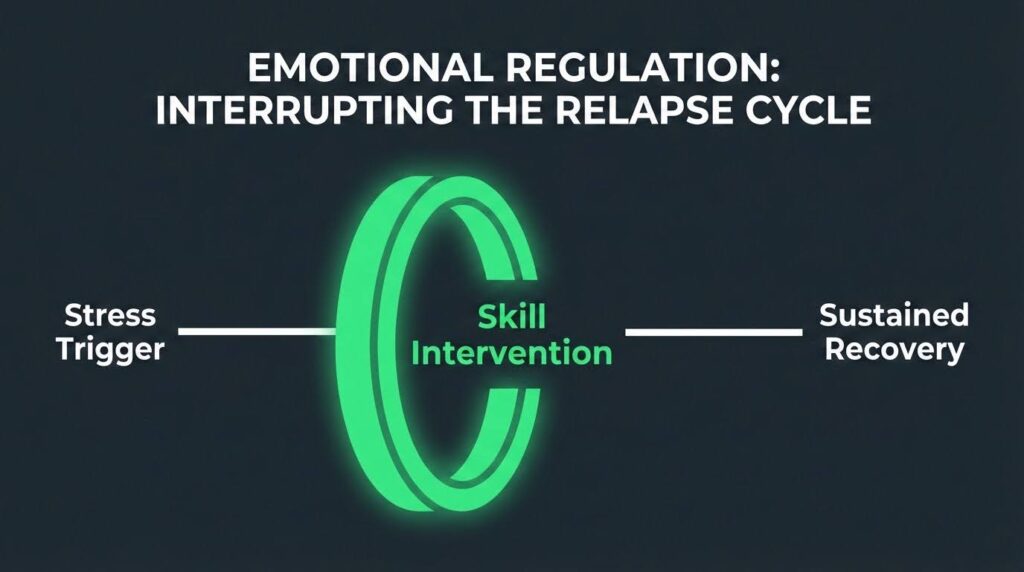
Research shows that relapse is rarely a sudden event; it typically unfolds across emotional, cognitive, and behavioral stages, which means the right skills, applied early, can interrupt the process before it escalates.

This article walks through seven of the most evidence-supported coping skills for addiction recovery and explains how each one works in real life.

Coping Skills for Addiction: Why They Matter?

Many people assume that stopping substance use is the hardest part of recovery. In practice, learning to live without substances as a coping tool is often the longer challenge.

Addiction frequently becomes a person’s main method for managing stress, loneliness, shame, boredom, and emotional pain. When substances are removed, those underlying pressures remain.

Relapse prevention research describes recovery as “creating a new life where it is easier to not use.” That framing matters because it shifts the focus from white-knuckling through cravings to building a daily life that supports sobriety. Coping skills are the tools that make that new life possible.

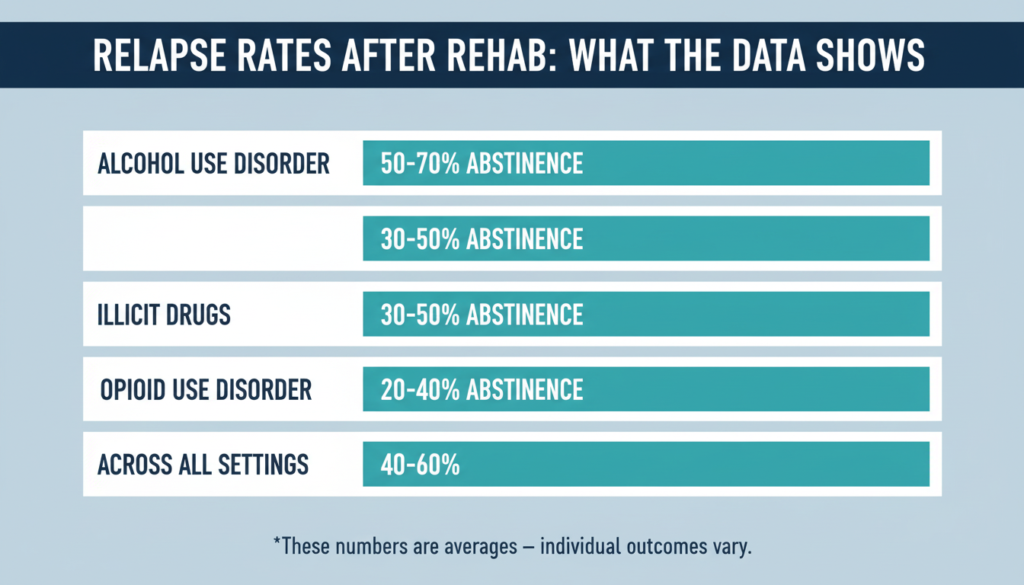
Relapse rates for substance use disorders are commonly estimated in the 40% to 60% range, comparable to other chronic health conditions.

That figure is not a reason for pessimism. It is a reason to take coping seriously as an ongoing practice rather than a one-time lesson learned in treatment.

1. Recognize Your Triggers Early

The single most important coping skill for addiction recovery is learning to spot warning signs before a craving peaks. 

Relapse prevention models describe a predictable sequence: a high-risk situation arises, and if the person has no effective coping response ready, self-confidence drops and the chance of relapse rises sharply.

Triggers fall into two broad categories:

  • Internal triggers include stress, anger, loneliness, shame, boredom, fatigue, and trauma-related feelings.
  • External triggers include people tied to past use, places where substances were available, conflict situations, celebrations, and unstructured time.

A practical self-monitoring tool used across many recovery programs is the HALT check. Before acting on an urge, pause and ask: Am I Hungry, Angry, Lonely, or Tired?

The VA Whole Health guidance on reducing relapse risk presents HALT as a reminder that basic unmet needs can quietly raise vulnerability long before a conscious craving appears.

Keeping a daily log of moods, cravings, sleep quality, and social contact helps you spot patterns over time. When you know your personal trigger map, you can respond earlier and more deliberately.

2. Use Cognitive-Behavioral Coping Skills for Addiction

Cognitive-behavioral therapy is one of the most studied approaches in addiction treatment. It works by increasing the gap between a trigger and a response.

Instead of moving automatically from “I feel stressed” to “I need a drink,” a person learns to notice the thought, question it, and choose a different action.

Common thoughts that drive relapse include:

  • “I can’t handle this sober.”
  • “One time won’t matter.”
  • “I’ve already messed up today, so it doesn’t matter.”
  • “I deserve a reward.”

StatPearls addiction relapse prevention identifies cognitive-behavioral approaches among the most common and effective relapse prevention strategies.

The skill is not to suppress the thought but to examine it. Ask: Is this thought accurate? What is the likely outcome if I act on it? What have I done before when I felt this way?

Coping cards, written in advance, can help. A card might say: “This craving will pass in 20 to 30 minutes. Call someone. Change location. Review what I have to lose.” Having the response written down means you do not have to generate it under pressure.

3. Manage Cravings Actively and Quickly

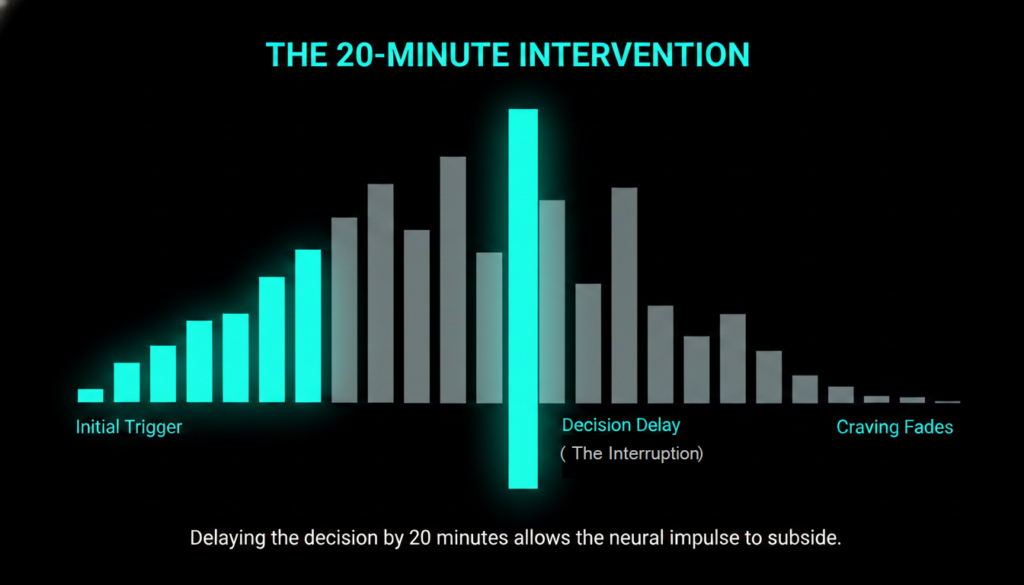
Cravings are not commands. They are temporary waves of discomfort that rise, peak, and fall. One of the most useful coping skills for drug addiction and alcohol recovery is learning to ride that wave rather than fight it or give in to it.

Urge surfing, a technique developed within mindfulness-based relapse prevention, teaches people to observe a craving with curiosity rather than alarm.

Notice where you feel it in your body. Rate its intensity from one to ten. Watch whether it rises or falls over the next few minutes. Most cravings peak and begin to ease within 20 to 30 minutes if you do not feed them.

Other craving-management steps that work well together:

  • Leave the environment immediately if possible.
  • Call or text a support person before the craving reaches its peak.
  • Use slow, controlled breathing to lower physical arousal.
  • Delay any decision by at least 20 minutes.
  • Review your written relapse-prevention plan.

The key principle across all of these is to respond early. Waiting until a craving is at full intensity before acting makes every other skill harder to use.
4. Build a Structured Daily Routine

A structured daily routine may be the single most underappreciated coping skill in addiction recovery.

Research on habits and routines in early recovery found that consistent practices such as writing, prayer, and regular meeting attendance helped people in recovery structure their time, build social support, and maintain self-care. Participants specifically identified these routines as protective against relapse.

Routine matters for several practical reasons. It reduces idle time, which is a common trigger. It lowers decision fatigue by making recovery-supporting behaviors automatic rather than effortful.

It stabilizes sleep and meals, which directly affect mood and impulse control. And it creates a predictable framework within which other coping skills can be practiced.

A basic recovery routine might include:

  • A consistent wake and sleep time
  • Regular meals
  • A daily self-check or HALT scan
  • Scheduled therapy, meetings, or support contact
  • Physical movement of some kind
  • An evening wind-down with reflection or journaling

Routine is also the delivery system for every other coping skill. Sleep hygiene requires routine. Meeting attendance requires routine.

Medication adherence requires routine. When life becomes chaotic, coping skills are the first thing to slip.

5. Prioritize Self-Care, Especially Sleep

Self-care is not a lifestyle preference in addiction recovery. It is a relapse-prevention strategy. The five rules of recovery described in foundational relapse prevention literature place self-care alongside honesty, help-seeking, and cognitive change as a core recovery principle.

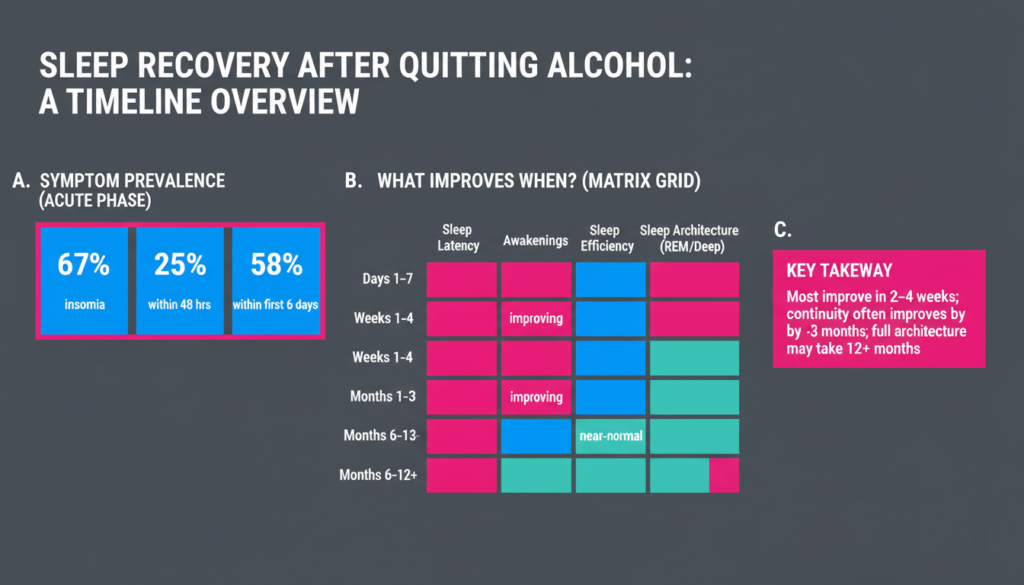
Sleep deserves special attention. Poor sleep raises irritability, weakens impulse control, increases craving sensitivity, and reduces the effectiveness of every other coping skill.

Research on long-term alcohol remission found that neurocognitive and physiological issues including sleep disruption continued to predict relapse risk well beyond the first year of recovery. Sleep problems are not just an early detox concern.

Nutrition and regular meals matter too. Stable blood sugar supports mood regulation and reduces the irritability that can quietly push a person toward high-risk thinking. Exercise, even moderate daily movement, helps with stress regulation, sleep quality, and structured time use.

Mind-body relaxation, including paced breathing and progressive muscle relaxation, is identified in relapse prevention literature as one of the main tools for reducing physiological arousal during high-risk moments.

These practices are most useful when they are already part of a daily routine rather than something you try for the first time during a crisis.

6. Use Social Support as an Active Coping Skill

Social support is sometimes treated as a background condition of recovery rather than a coping skill in its own right. The evidence suggests that framing is wrong.

Actively using support is a behavior that requires honesty, initiative, and willingness to be known. It is one of the most protective things a person in recovery can do.

The VA Whole Health guidance states clearly that meeting attendance, active engagement, and having a sponsor are among the strongest predictors of abstinence over time.

qualitative meta-synthesis on recovery coping found that self-awareness and personal responsibility, including reaching out for help, were central to overcoming recovery challenges.

Specific support-based coping behaviors include:

  • Calling a sponsor or peer before acting on an urge, not after
  • Attending a meeting the same day a major trigger occurs
  • Telling someone you trust about warning signs you have noticed
  • Participating in a recovery community, whether in person or online
  • Keeping a list of emergency contacts and using it

Relapse tends to happen in secrecy and isolation. The more connected a person stays, the harder it is for the gradual drift toward relapse to go unnoticed.

7. Maintain Vigilance and Continuing Care Over Time

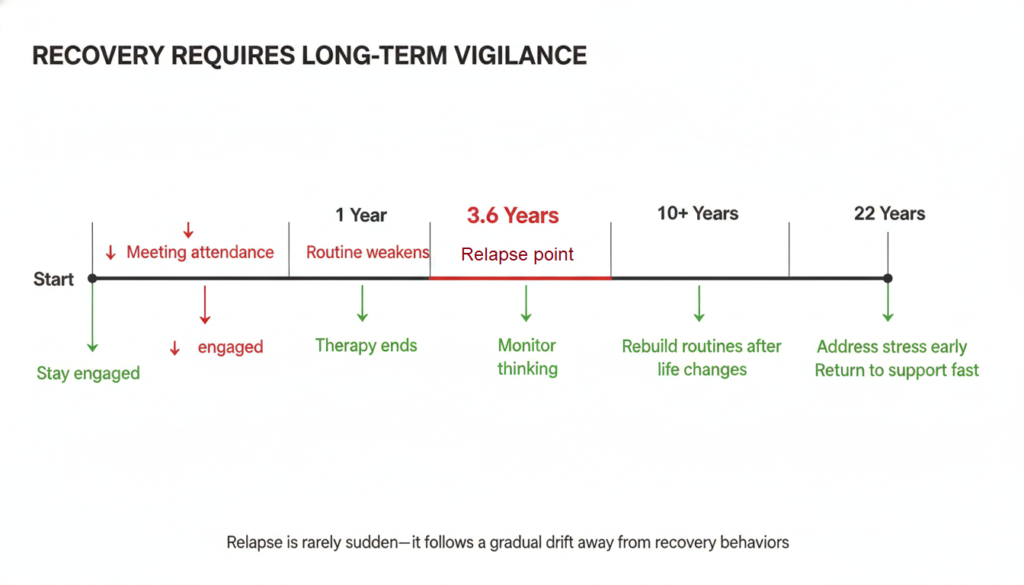
One of the most important findings in recent addiction research concerns long-term recovery. Among people with sustained alcohol remission who eventually relapsed, one of the strongest preceding changes was a reduced focus on recovery.

The long-term relapse study found that the mean time in full remission before relapse was about 3.6 years, with a range extending to more than 22 years. Recovery vigilance is not just an early-stage concern.

As life stabilizes, recovery can quietly lose its central place. Meetings become less frequent. Therapy ends. The daily practices that once felt essential start to feel optional. This gradual drift is itself a warning sign.

Healthy coping skills for addiction over the long term include:

  • Keeping some level of recovery engagement active, even when things are going well
  • Noticing when “I’m fine now” thinking starts to erode boundaries
  • Reassessing routines after major life changes such as a new job, a move, or a relationship shift
  • Addressing new stressors early rather than absorbing them silently
  • Returning to more intensive support quickly after any lapse

Ongoing outpatient therapy or aftercare following initial treatment is recommended in clinical guidance specifically because addiction recovery is a long-term process, not a finite episode.

Continuing care is not a sign of weakness. It is one of the healthiest coping skills for addiction recovery available.
How These Skills Work Together?

No single coping skill is enough on its own. A breathing exercise will not protect someone who is sleep-deprived, isolated, skipping treatment, and returning to high-risk environments.

Conversely, a person with a stable routine, good sleep, regular support contact, and honest self-monitoring is far better protected than someone who knows many techniques but uses none of them consistently.

The strongest evidence across relapse prevention research points to a layered system: structured routine, active social support, consistent self-care, early warning sign recognition, cognitive-behavioral coping, and ongoing recovery engagement.

These work together because they address both the acute moments of crisis and the slower, quieter conditions that make those moments more likely.

Recovery is not about eliminating discomfort. It is about building the capacity to meet discomfort without automatically reaching for a substance. That capacity is built skill by skill, day by day, through practice.

If you are ready to build that foundation with professional support, Mosaic’s addiction recovery services can help you take the next step.

How Long to Rewire Brain From Addiction and What to Expect?

Rewiring your brain from addiction is not a single event that happens at a fixed date.

Research shows that meaningful brain recovery often begins within days to weeks of stopping substance use, with many core cognitive functions improving substantially within 6 to 12 months of abstinence.

This article walks through what the science actually says about how long it takes to rewire your brain from addiction, what changes at each stage, and what shapes your personal timeline.

How Long to Rewire Brain From Addiction: The Core Answer

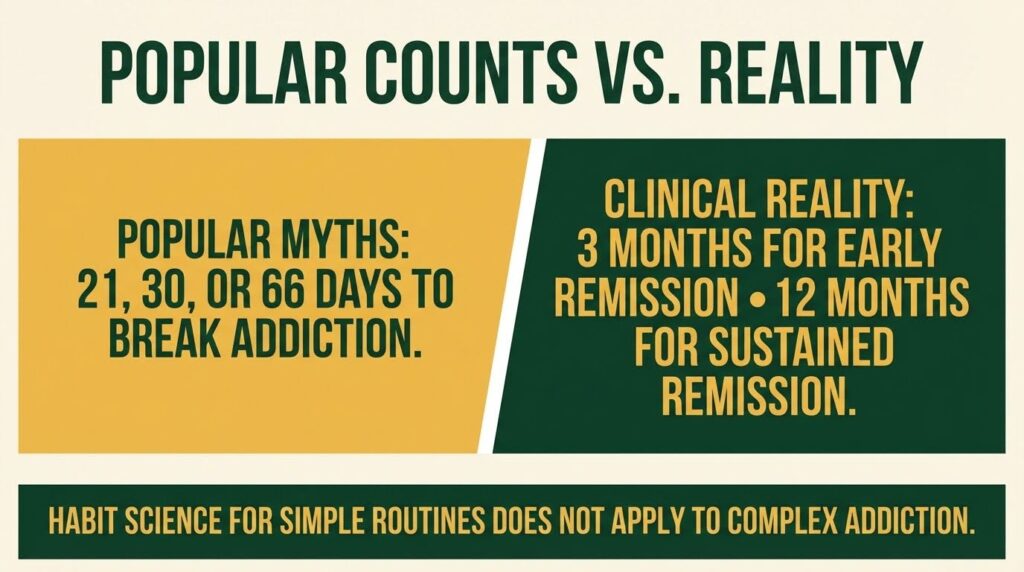
The brain does not reset on a 30-day or 90-day clock. A systematic review of 45 longitudinal neuroimaging studies found that structural recovery appears most consistently in the frontal cortex, insula, hippocampus, and cerebellum during abstinence.

Neurochemical changes begin soon after stopping, especially with alcohol, while functional recovery tends to take longer.

A separate systematic review of 16 longitudinal studies in adults with alcohol use disorder found that most neuropsychological functions, including attention, memory, perception, and executive skills, recover within 6 to 12 months.

Some simpler processes like basic processing speed recover earlier. Higher-order reasoning shows less consistent recovery.

The most honest, evidence-based answer is this: the brain usually begins recovering within days to weeks, shows meaningful change over 3 to 6 months, and undergoes major cognitive and neurobiological recovery over 6 to 12 months and beyond.

Complete normalization is not guaranteed for every system or every person, but it is also not required for a successful, lasting recovery.

What “Rewiring” Actually Means?

The phrase “rewire your brain” is common but scientifically loose. In practice it refers to several overlapping processes happening at different speeds:

  • Structural recovery: changes in gray matter volume, cortical thickness, and white matter integrity
  • Functional recovery: shifts in how brain networks activate, connect, and respond to cues
  • Neurochemical recovery: partial normalization of dopamine and other neurotransmitter systems
  • Neuropsychological recovery: improvements in memory, attention, processing speed, and executive function
  • Clinical recovery: reduced craving, better mood, lower relapse risk, and improved daily functioning

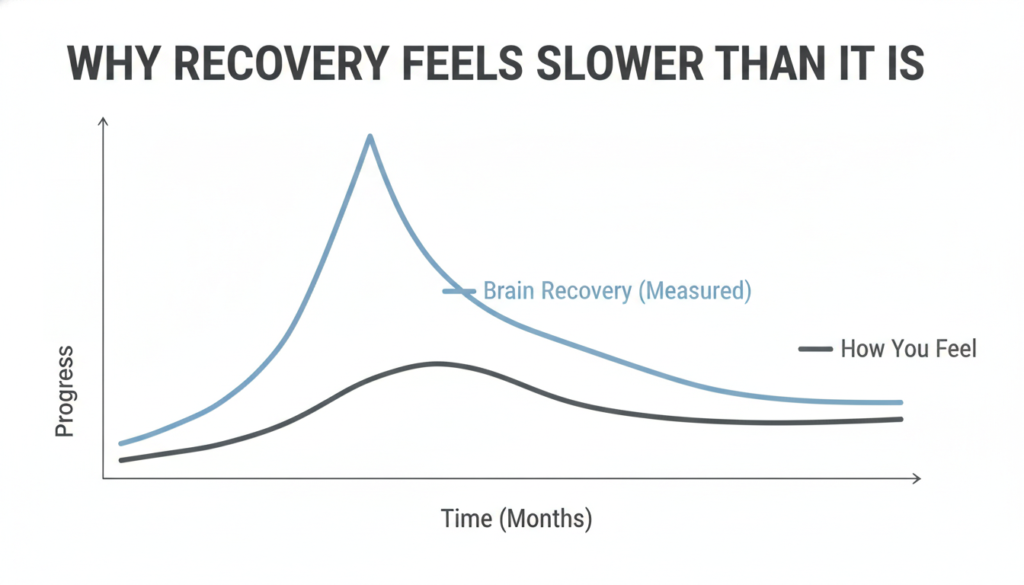
These processes do not move in lockstep. Someone may show early structural improvement on a brain scan while still experiencing strong cue-triggered cravings and emotional instability.

That gap between visible repair and full functional recovery is one of the most important things to understand about how long it takes to rewire your brain from addiction.

A Stage-by-Stage Timeline of Brain Recovery

Days to a Few Weeks

The brain starts changing almost immediately after stopping substance use. Neurochemical adaptation begins early, particularly in alcohol-related recovery.

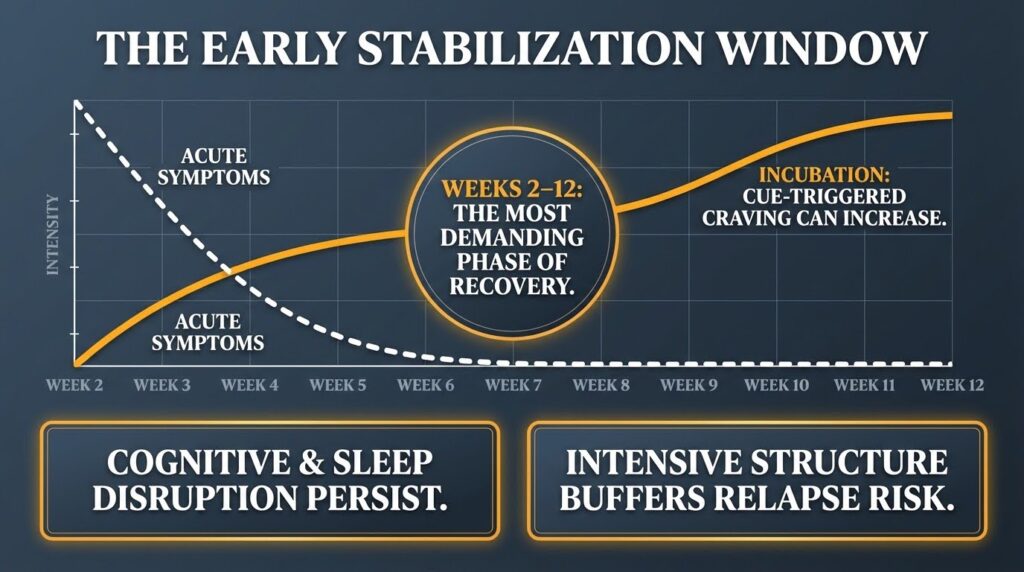
At the same time, this phase is often the hardest. Withdrawal symptoms, sleep disruption, emotional volatility, and cognitive fog are common.

Research on sleep abnormalities in early abstinence shows that poor sleep during this period can impair attention, memory consolidation, and emotional regulation, all of which slow apparent recovery.

Increased sleep latency in the first two weeks of alcohol abstinence has been linked to higher relapse risk over the following five months.

This is not the stage to expect clarity or steadiness. The brain is changing, but it is still highly destabilized.

One to Three Months

Basic processing speed and working memory updating tend to improve earlier than higher-order functions.

Some functional changes in reward-related brain regions have been observed within this window, though the evidence is thinner for non-alcohol substances.

Clinically, mood often starts improving during this period. A 2025 study tracking anxiety and depression trajectories in people with alcohol use disorder found that many individuals show rapid early improvement in the first month.

However, a clinically important subgroup does not improve quickly, and sustained symptoms signal higher relapse risk and a need for more tailored care.

People often feel noticeably better during this phase and may overestimate how recovered they are. Frontal control under stress may still be weak even when day-to-day mood has lifted.

Three to Six Months

This is the phase where the phrase “the brain is rewiring” starts to match lived experience more closely. Structural recovery in frontal regions and white matter continues.

Some EEG markers associated with relapse risk begin to shift. Executive control improves, and cue-triggered responses may become less intense.

scoping review of 44 EEG studies in substance use disorder treatment found that abstinence was associated with decreases in cue-elicited brain responses and reductions in resting beta power, both markers linked to recovery and reduced relapse risk.

Three to six months is best understood as major progress, not completion.

Six to Twelve Months

This is the core neurorecovery window supported by the strongest direct evidence. The 2024 longitudinal systematic review in alcohol use disorder found that most neuropsychological functions, including attention, executive function subdomains, perception, and memory, recover within this period.

The neuroimaging review similarly found that structural and functional stabilization continues across the first year.

Structural improvements correlate with better cognitive performance, meaning the brain changes visible on scans likely underpin real improvements in thinking, planning, and emotional regulation.

If someone asks when many of the cognitive benefits of abstinence typically become clear, 6 to 12 months is the strongest evidence-based answer for alcohol-related recovery, and the broader pattern likely applies across substance types.

Twelve Months and Beyond

Recovery continues after the first year. Some reward and control systems keep normalizing. Emotional regulation becomes more consistent.

Coping skills become more habitual. However, some deficits may persist, particularly in people with polysubstance use histories, psychiatric conditions, or prolonged and severe exposure.

The literature supports continuing recovery after 12 months while also recognizing that some individuals show persistent residual changes.

That is not a reason for pessimism. Successful long-term recovery does not require every brain system to return to a pre-addiction baseline.

How Long Does It Take for Dopamine Receptors to Recover?

This is one of the most searched questions in addiction recovery, and it deserves a direct answer.

Dopamine receptor recovery is not a simple reset. Research shows that detoxified people with alcohol use disorder can have profoundly blunted dopamine release in the striatum even after physical withdrawal ends. Stimulant use is associated with reduced dopamine receptor availability and blunted release capacity. These changes do not reverse overnight.

In practical terms, the dopamine-related symptoms people notice most are anhedonia (reduced pleasure), low motivation, and emotional flatness.

A narrative review of anhedonia across substance use disorders found that anhedonia tends to improve over abstinence, and one cited six-month follow-up study of opioid-dependent patients found that elevated anhedonia reduced to near-normal levels after about 1 to 2 months in people who did not relapse.

That is one of the most concrete data points available. Pleasure often starts returning within the first month, but full motivational recovery commonly takes several months and may remain incomplete in some people, especially after heavy or prolonged use.

The key insight is that dopamine receptor recovery is not a single biological event. It is a gradual functional normalization of reward circuitry, and it is shaped by abstinence duration, sleep quality, psychiatric health, and treatment engagement.

What Slows or Speeds Up Brain Recovery?

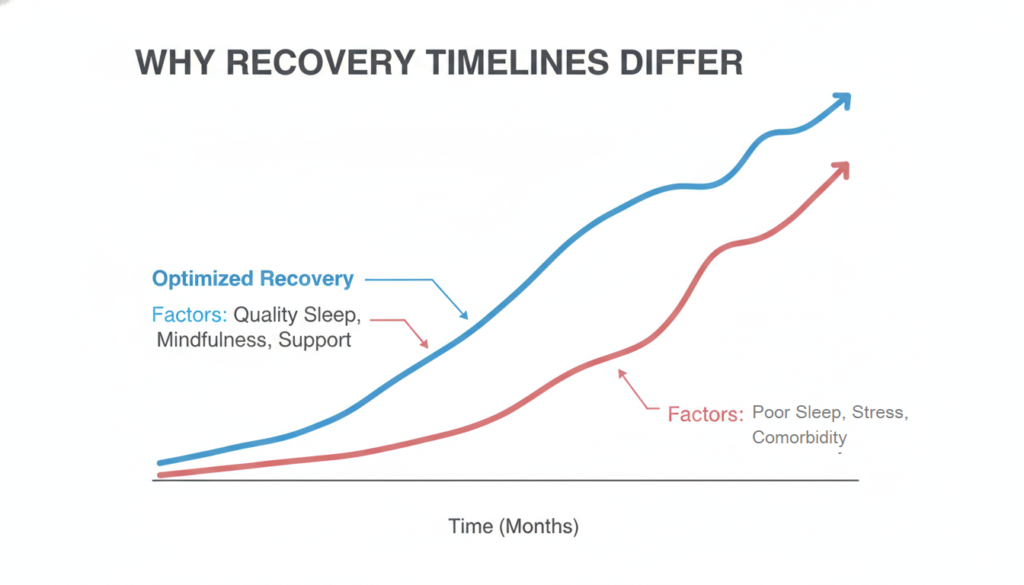
Recovery time is not the same for everyone. Several factors consistently appear in the research as meaningful moderators:

  • Polysubstance use: People who have used multiple substances show slower and less complete cognitive recovery. Even after one year of abstinence, polysubstance users may show lower cognitive function than controls.
  • Psychiatric comorbidity: Depression, PTSD, ADHD, and personality disorders can amplify brain dysfunction and slow recovery. A 2025 neuroimaging review found that schizophrenia and personality disorder may amplify neurobiological effects of substance use, while depression may attenuate or have no additional effect.
  • Smoking: In a prospective study of 129 people with alcohol use disorder followed for 18 months, smokers relapsed earlier and a greater proportion relapsed within six months of treatment.
  • Sleep quality: Poor sleep during abstinence impairs cognition and predicts worse outcomes. Persistent insomnia can materially slow apparent brain recovery even in people who remain abstinent.
  • Brain morphology at treatment entry: Volumes of the right caudal anterior cingulate cortex and total right frontal gray matter predicted drinking status at 18-month follow-up in the same relapse study.
  • Age and developmental stage: Adolescence is a sensitive neurodevelopmental period. Early intervention matters more, and the consequences of use during development may differ from adult-onset use.
  • Treatment engagement: Psychosocial treatments support abstinence, which is the main condition under which recovery occurs. The brain does not rewire through passive waiting alone.

Why Frontal Recovery Matters Most?

Across neuroimaging, cognition, and relapse research, the frontal cortex appears repeatedly as both a primary site of addiction-related change and a key target for recovery.

The prefrontal cortex supports response inhibition, planning, and salience attribution, all of which are central to the addiction cycle.

When frontal systems recover, people typically notice improvements in impulse control, future-oriented thinking, resistance to cues, and the ability to engage meaningfully with treatment.

That is why the 6 to 12 month window feels so different from the first few weeks for many people in recovery.

What Recovery Actually Feels Like Over Time?

Understanding the neuroscience is useful, but it helps to translate it into what people actually experience:

  • In the first weeks, most people feel worse before they feel better. Fog, irritability, poor sleep, and strong cravings are normal and do not mean recovery is failing.
  • By one to three months, many people notice clearer thinking and some improvement in mood, though emotional instability under stress often remains.
  • By three to six months, day-to-day functioning often improves noticeably. Cravings may become less constant, though cue-triggered urges can still be strong.
  • By six to twelve months, many people describe feeling more like themselves. Memory, concentration, and emotional regulation are often substantially better.
  • Beyond twelve months, gains tend to consolidate. Residual vulnerabilities may remain, but the tools and stability to manage them are usually stronger.

This is not a linear path. Relapse can reverse gains. Stress, poor sleep, and untreated psychiatric symptoms can stall progress.

But the research is clear that the brain has a real capacity to recover, and that capacity is most active during the first year of sustained abstinence.

The Role of Treatment in Brain Recovery

Treatment does not just support sobriety. It creates the conditions under which the brain can recover. Abstinence is the substrate for neurobiological change, and anything that extends and stabilizes abstinence also extends the window for recovery.

Behavioral treatments, particularly contingency management, show strong evidence for supporting abstinence in stimulant use disorders where dopaminergic reward is most blunted.

Cognitive support and structured skills training are especially valuable for people with executive dysfunction or polysubstance histories, because their brains may not yet have the processing capacity to benefit fully from insight-based therapies alone.

The practical implication is that recovery programs should not assume cognitive normalization in early treatment. Supporting thinking, sleep, mood, and structure during the first year gives the brain the best chance to do what the research shows it can do.

If you or someone you care about is navigating addiction recovery and wondering what to expect, speaking with a specialist can help you understand your personal timeline and build a plan that accounts for where you are right now. So, reach out to Mosaic’s addiction treatment team to take the next step.
How Can Holistic Addiction Treatment Support Recovery?

Holistic addiction treatment addresses the whole person, not just the substance use, and that broader focus can make a real difference in long-term recovery.

The U.S. Department of Veterans Affairs states that complementary approaches may improve recovery outcomes when added to conventional treatment, though they are not meant to replace it.

This article breaks down what holistic treatment actually includes, which approaches have the strongest evidence, and how you can use this information to make better decisions about care.

How Holistic Addiction Treatment Supports Recovery?

Holistic addiction treatment works by expanding care beyond symptom control to address the physical, emotional, social, and behavioral conditions that shape whether recovery lasts. A person with opioid use disorder or alcohol use disorder is rarely managing cravings alone.

They may also be dealing with insomnia, chronic pain, trauma, shame, depression, social isolation, and a stress-response system that has been pushed hard for years. Treating only the substance while leaving those conditions unaddressed leaves a lot of relapse risk on the table.

That is the core clinical logic behind holistic care. It does not reject medication or psychotherapy. It builds on them.

What “Whole Person” Actually Means in Practice?

When clinicians talk about treating the whole person, they mean attending to several overlapping dimensions at once:

  • Physical health, including sleep, nutrition, exercise, and withdrawal-related discomfort
  • Psychological health, including coping skills, craving awareness, and relapse triggers
  • Emotional health, including trauma, anxiety, shame, and the ability to tolerate difficult feelings without using
  • Social health, including relationships, peer support, family involvement, and community connection
  • Behavioral health, including daily routine, self-care habits, and lifestyle structure
  • Values and meaning, including purpose, identity, and motivation to stay in recovery

2025 systematic review on emotional regulation in addictive disorders found that the ability to manage difficult internal states is a central treatment target across substance use disorders.

Many people use substances not for pleasure alone, but to numb trauma, reduce anxiety, escape shame, or blunt depression. Holistic approaches that build non-drug ways to regulate those states are addressing something real and clinically important.

Holistic Treatment is an Addition, Not a Replacement

This point matters enough to state plainly. Holistic addiction therapy is most defensible when it sits on top of evidence-based care, not instead of it. For opioid use disorder, medication-assisted treatment remains first-line.

review of pharmacological and behavioral treatment for opioid use disorder is clear that medication should be provided alongside counseling and behavioral interventions, not replaced by wellness practices.

Steering someone away from buprenorphine or methadone toward yoga and nutrition alone is not a holistic approach. It is a dangerous one.

The same logic applies to alcohol use disorder. Medically supervised detoxification is essential when withdrawal risk is present. Holistic practices belong in the stabilization and recovery maintenance phases, not as substitutes for medical safety.

Which Holistic Therapies Have the Strongest Evidence?

Not all holistic modalities are equally supported by research. Here is an honest look at where the evidence stands.

Mindfulness and Mindfulness-Based Relapse Prevention

Mindfulness-based relapse prevention, known as MBRP, is the most evidence-supported holistic modality in addiction care. It was developed specifically for substance use disorders and combines mindfulness meditation with cognitive relapse-prevention skills.

It is designed for people who have completed initial treatment and want to maintain recovery and make lasting lifestyle changes.

meta-analysis of mindfulness-based relapse prevention found that MBRP can improve some relapse-related outcomes, reduce depressive symptoms, and lower craving-related measures, with variation across populations and substances.

systematic review of manualized mindfulness programs documented multiple studies across alcohol, opioid, stimulant, smoking, and residential treatment populations, reinforcing that the evidence is promising though still mixed in places.

Mindfulness appears especially useful for:

  • Craving awareness and urge surfing
  • Stress reactivity and emotional regulation
  • Negative affect and depressive symptoms
  • Relapse prevention after stabilization

2021 review of mindfulness-based interventions for substance use disorders, including the landmark Bowen et al. trial comparing MBRP with standard relapse prevention and treatment as usual, reinforces that mindfulness is one of the few holistic approaches with replicated, peer-reviewed support across multiple substance categories.

Yoga

Yoga has a smaller but growing evidence base in addiction treatment. One randomized controlled trial found that yoga improved mood and quality of life in women undergoing heroin detoxification.

A narrative review covering 16 studies, 12 of them randomized controlled trials, found positive signals but also noted small sample sizes, heterogeneous populations, and limited long-term outcome data.

Yoga is most plausible as a support for stress reduction, body awareness, autonomic regulation, and sleep, especially for people with trauma-related dysregulation or high physical tension.

It is a reasonable adjunct, particularly when patients want it, but claims that yoga alone treats substance use disorder are not supported by the current evidence.

Exercise

Exercise has a broader evidence base in behavioral medicine and a growing one in addiction. Studies in abstinent methamphetamine-dependent individuals in residential treatment found that exercise improved depression and anxiety symptoms.

A meta-analysis found that physical exercise has a beneficial effect on substance use disorders, though the mechanisms and outcome specificity vary.

Exercise supports mood, routine, natural reinforcement, and physical health restoration, making it one of the more credible and low-risk holistic components.

Massage Therapy

The VA notes that massage may help with relaxation, muscle tension, anxiety, and symptoms of withdrawal from alcohol, cocaine, and opiates, citing preliminary evidence.

Massage is not a primary addiction treatment, but it may support recovery in early stabilization by lowering somatic arousal and making treatment more tolerable.

Better tolerability can support retention, and retention matters for outcomes.

Acupuncture

Acupuncture is common in holistic programs but the evidence is more cautious than many provider websites suggest.

A systematic review and meta-analysis including 41 studies and over 5,000 participants found no consistent differences between acupuncture and comparators for relapse, frequency of use, or dropout.

There were short-term effects favoring acupuncture for withdrawal-related craving and anxiety, but those findings were limited by publication bias and did not hold at longer follow-up.

Acupuncture may be a reasonable comfort-oriented adjunct for selected patients, but it should not be presented as a core anti-addiction therapy.

Why is Emotional Regulation Central to Holistic Recovery?

One of the clearest findings across the research is that emotional regulation sits at the heart of addiction and recovery.

The 2025 systematic review on emotional regulation in addictive disorders shows that interventions incorporating mindfulness, emotion regulation training, and related skills are relevant to cravings, distress tolerance, and psychiatric symptoms across substance use disorders.

This helps explain why holistic practices that target stress reactivity and self-regulation can be clinically useful.

When someone learns to notice a craving without automatically acting on it, or to sit with anxiety without reaching for a substance, they are building a skill that directly reduces relapse risk. That is not peripheral to recovery. It is central.

Stress is also a major relapse driver. Holistic practices that calm the nervous system and strengthen coping may improve resilience in ways that complement what medication and psychotherapy do.

The mechanisms are consistent with what the peer-reviewed mindfulness and emotional-regulation literature describes.

The Role of Social Connection and Recovery Capital

Holistic recovery is often described in individual terms, but the deeper research shows that social and environmental factors are equally important.

Recovery capital refers to the internal and external resources that support a non-using life, including social support, housing, purpose, skills, health, and community connection.

Research on long-acting injectable buprenorphine found that medication works best when embedded in recovery-oriented systems with psychosocial support and community partnerships.

That finding applies broadly. Even the most effective pharmacotherapy benefits from a surrounding structure that supports identity change, social belonging, and reduced stigma.

Some holistic practices support this transition indirectly. Meditation groups, yoga classes, peer-led wellness programs, exercise routines, and service work can help people inhabit a new identity, build sober social networks, and find communities organized around wellness rather than substance use.

These are not substitutes for addiction treatment, but they can make recovery more livable and more socially anchored.

What a Credible Holistic Addiction Program Looks Like?

A well-designed holistic program does not choose between evidence-based care and whole-person support. It combines both. Here is what that looks like in practice:

  • A clinical foundation that includes medical assessment, evidence-based psychotherapy, medication treatment when indicated, co-occurring disorder evaluation, and relapse-prevention planning
  • Mindfulness-based relapse prevention or structured mindfulness practice as a core adjunct
  • Exercise and movement programming to support mood, routine, and physical health
  • Sleep and nutrition support to address the physical damage that often accompanies substance use
  • Stress-management training and self-care skill building
  • Family and peer support involvement
  • Recovery-capital and life-function planning to help people rebuild structure and purpose

Programs that market holistic treatment as a stand-alone alternative to medication, psychotherapy, or dual-diagnosis care are not supported by the strongest evidence.

The most defensible version of holistic care is integrated, monitored, and honest about what each component can and cannot do.

A Practical Summary: Evidence by Modality

ModalityRelative Evidence StrengthBest-Supported Role
Mindfulness and MBRPModerate, strongest among holistic approachesRelapse prevention, craving awareness, stress and emotional regulation
ExerciseModerateMood, routine, physical health restoration
YogaLow to moderateStress reduction, body awareness, autonomic regulation
MassageLow to moderateEarly recovery comfort, anxiety and withdrawal symptom relief
Nutrition and sleep supportModerate for general healthPhysical restoration, energy, medication tolerance
AcupunctureLow, mixed findingsShort-term symptom relief, comfort adjunct
Expressive therapiesLow direct SUD evidenceEngagement, emotional expression, identity support

Why This Matters for Long-Term Recovery?

The strongest addiction research does not support a narrow, episode-based model of care. A RAND systematic review on medication-assisted treatment functional outcomes found that meaningful recovery includes cognitive, physical, occupational, social, and neurological functioning, not only abstinence. Holistic treatment is often aimed at exactly these under-measured but clinically important outcomes.

2025 article calling for research on whole-person recovery argues that addiction research has historically overemphasized relapse prevention and immediate proximal mechanisms while underdeveloping models of broader socioecological context. That is a strong argument for holistic thinking, not as an alternative to science, but as an extension of it.

The clearest conclusion from the evidence is this: holistic addiction treatment supports recovery not by replacing standard care, but by making recovery more comprehensive, more tolerable, more regulated, and more sustainable.

It helps people build a life in which sobriety is biologically, psychologically, and socially maintainable. That contribution is real, but only when grounded in evidence, individualized care, and clinical honesty.

If you are looking for whole-person addiction and mental health care that combines evidence-based treatment with integrated support, consider reaching out to learn more about outpatient addiction treatment at Mosaic.

Why High-Functioning Addicts Rarely Seek Treatment Until Crisis Hits?

If you are holding your life together on the outside while quietly losing control on the inside, you are not alone!

About 80% of people who needed substance use disorder treatment in 2024 did not receive it, and high-functioning addicts rarely seek treatment because outward success makes concealment easier than care.

This article explains why that delay happens, what keeps it in place, and what can break the cycle before a crisis forces the issue.

Why High-Functioning Addicts Rarely Seek Treatment Early?

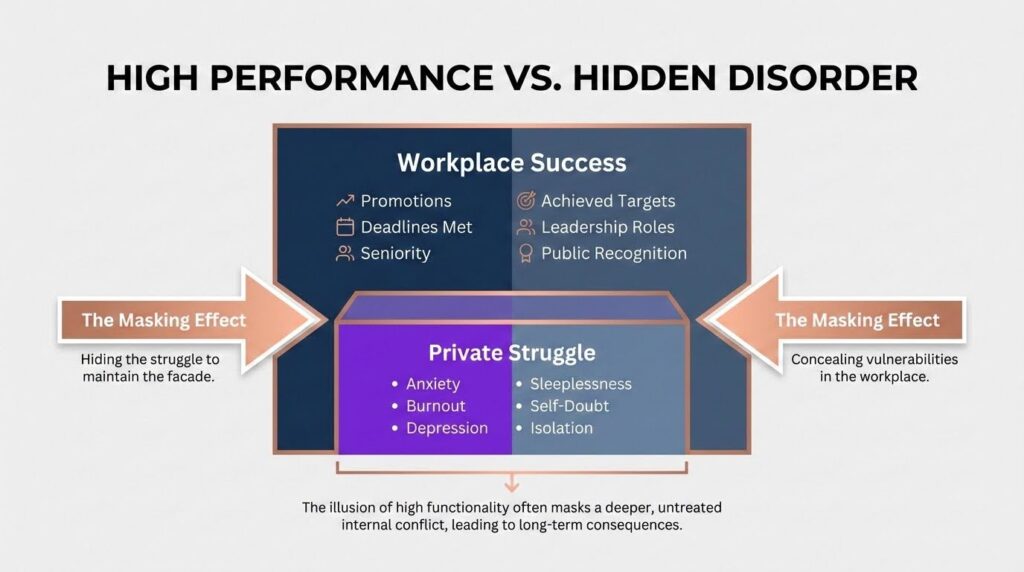
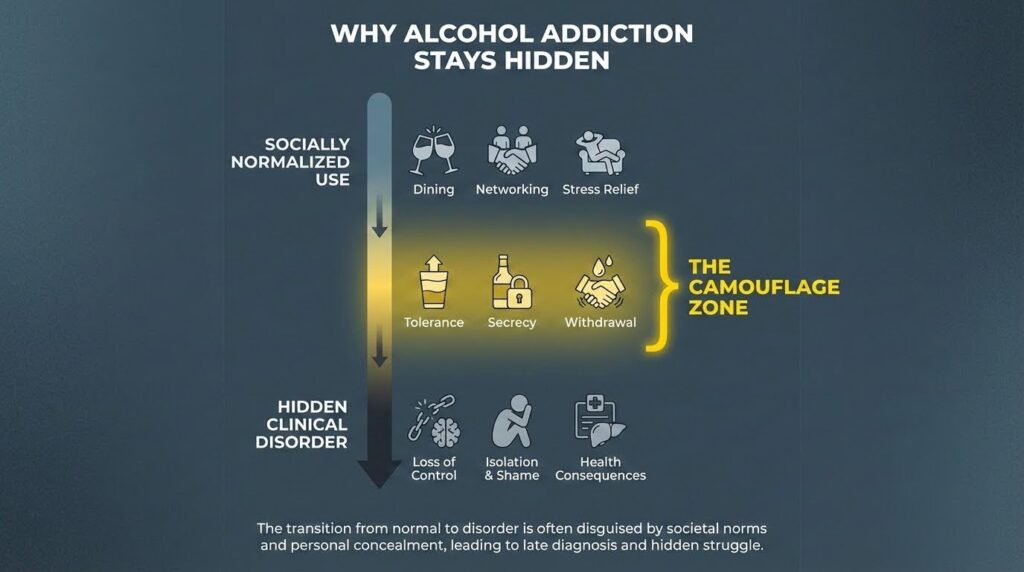
The term “high-functioning addiction” is not a formal diagnosis. It describes a real pattern, though: someone meets deadlines, earns promotions, cares for children, and appears socially polished while privately experiencing clinically significant dependence.

Their productivity does not mean the disorder is mild. It often means the disorder is hidden, subsidized by personal resources, or socially normalized.

The Surgeon General’s report confirms that substance misuse can be reliably identified through screening and that less severe forms often respond to brief physician advice and other early interventions, especially for alcohol.

Early treatment is cost effective. So the question is not whether help exists. The question is why people who still look successful avoid it.

The answer sits at the intersection of denial, stigma, workplace culture, and systems that were never designed to catch someone who is still performing.

How Functioning Masks Disorder and Raises the Cost of Disclosure?

High functioning produces a double effect. First, it masks the disorder. Second, it raises the perceived cost of getting help.

Plausible deniability built on success

A person who still pays bills, holds a title, and shows up on time has visible data supporting the belief that things are under control.

One qualitative study captured this directly: participants said, “I don’t feel like I have a problem because I can still go to work and function.”

The same research found that people who deliberately adjusted use to avoid interference with work responsibilities were less likely to recognize they had a problem at all.

In workplaces where alcohol is woven into networking and celebration, continued performance can coexist with escalating use.

A literature review in Frontiers in Public Health identified alcohol-tolerant workplace environments as a risk factor for misuse and found that demanding job situations were linked with alcohol-related presenteeism.

The stakes of disclosure feel too high

Someone who has built a career and identity around competence may see treatment as a direct threat to reputation, licensure, promotion, financial stability, custody, and self-concept.

As long as outward functioning stays intact, the internal cost-benefit calculation favors secrecy over treatment. A crisis changes that calculation by suddenly making non-treatment more dangerous than disclosure.

Denial in High-Functioning Addiction is Structurally Reinforced

Denial in high-functioning addiction is not simple stubbornness. It is structurally reinforced by the person’s environment and identity.

The “not that bad” trap

High-functioning individuals compare themselves not to healthy functioning but to more visibly deteriorated cases. The logic sounds like this:

  • “I have never lost my job.”
  • “I don’t drink in the morning.”
  • “I’m not getting arrested.”
  • “I still show up and win.”

This comparison is partly true, which makes it sticky. But substance use disorder severity does not need homelessness, job loss, or arrest.

The Surgeon General’s report supports screening for risky use before severe disorder emerges, reinforcing that treatment is appropriate well before end-stage collapse.

Yet public stigma continues to associate addiction with catastrophe, making people who have not yet collapsed feel exempt from care.

Identity as an anti-treatment defense

People in high-status roles often experience addiction disclosure not merely as a health event but as an identity threat. Their self-concept may be built on discipline, expertise, reliability, and emotional control.

Admitting need can feel incompatible with their role. Professional-focused clinical literature describes rationalizations such as “If I were an addict, I couldn’t possibly be so successful at work.” That is not arrogance. It is identity-protective resistance to a narrative of impairment.

Barriers to Treatment for High-Functioning Addicts

The barriers are layered and mutually reinforcing. They operate at the individual, social, workplace, and system levels.

Stigma works on multiple levels

Stigma is not one barrier. It is a system. A review of self-stigma and perceived social stigma in treatment-seeking found recurring reports of shame, embarrassment, guilt, and a need for secrecy about both use and treatment attempts.

Among people not seeking treatment, 84% said their problem was not serious and 96% said they could handle it themselves.

Another review found that perceived social stigma and healthcare-provider stigma can increase internalized self-stigma, reduce treatment engagement, and worsen recovery through negative emotions and reduced self-efficacy.

For high-functioning individuals, whose identity is built around being seen as disciplined and in control, these forces are especially strong.

Workplace culture often sustains the delay

The workplace is where most adults spend much of their time, making it both a risk environment and a potential intervention setting. Yet it often fails to function as an early detection system.

High performers may receive more latitude. Their achievements create a halo effect. Supervisors may hesitate to confront them because they deliver results, hold seniority, or are socially influential. Meanwhile, Employee Assistance Programs remain underused.

One industry summary reports that 51% of private-sector employers offer EAPs covering more than 67 million employees, yet the average utilization rate is around 5%.

Employees may not trust employer-linked support. They worry that using behavioral health resources will affect promotion, trust, assignments, or job security. Where confidentiality is uncertain, treatment delay is predictable.

Treatment systems depend on crisis contact

Effective interventions exist. Screening, Brief Intervention, and Referral to Treatment (SBIRT) is an evidence-based approach developed for identifying risky substance use before severe disorder develops.

A recent article argues that respectful, person-centered addiction care should be part of routine medical care and that primary care clinicians are uniquely positioned to identify and manage substance use disorders.

But many clinicians still under-screen, under-treat, or separate addiction from ordinary medical care. Referral pathways are often weak. Specialty treatment still carries a strong stigma signal.

For people who are still employed, parenting, and performing, entering an addiction program may feel socially disproportionate. Unless programs offer discreet, flexible, and credible pathways, they may be perceived as options for “people worse than me.”

Signs of High-Functioning Addiction Most People Miss

The signs emerge first in internal and behavioral patterns, not in dramatic public failures. Recognizing them early matters because waiting for visible collapse is a dangerous threshold.

DomainEarly SignsLater Signs
PsychologicalUsing substances to unwind or cope with stress; growing emotional relianceFeeling unable to function normally without the substance; shame and ambivalence
BehavioralRoutine use; rationalization; structured schedules around accessSecrecy and concealment; repeated failed attempts to cut back; increasing tolerance
SocialDrinking or use embedded in social normsWithdrawal from honest connection; narrowing social life to substance-compatible settings
OccupationalPreserved performance with increasing internal costPresenteeism; subtle errors; overcompensation with productivity to prove nothing is wrong
PhysicalSleep problems; fatigueHealth decline; rebound symptoms; cognitive fog

The most telling sign is not a single event. It is the shift from optional to necessary. When a person increasingly needs the substance to sleep, relax, focus, or recover from stress, that dependence is already clinically meaningful, even if the person still looks fine at work.

Stages of High-Functioning Addiction

No validated clinical staging model exists specifically for high-functioning addiction. But the research supports a four-stage pattern.

Stage 1: Performance-compatible use

Substances are framed as useful, deserved, or harmless. Use is linked to stress relief, social bonding, or reward. Work and responsibilities remain intact. The person sees no problem.

Stage 2: Compensated dependence

Tolerance rises. The person increasingly relies on the substance to regulate internal states. Routines become more deliberate. Concealment increases. Attempts to cut back may start and fail. External functioning remains largely preserved. This is the classic “high-functioning” zone.

Stage 3: Strain leakage

The cost of maintaining the facade rises. Cracks appear in mood, sleep, relationships, or health. Occupational performance may remain superficially intact, but more effort is needed. Shame and fear of exposure intensify.

Stage 4: Recognition crisis

The person hits a subjective or objective wall. They may feel unable to control use. Consequences threaten a valued identity: career, relationship, health, or self-respect. Denial becomes harder to sustain.

When Do High-Functioning Addicts Seek Help?

Usually later than would be clinically ideal, and typically not at the first signs. National data from the 2024 NSDUH show that about 80% of people who needed substance use disorder treatment did not receive it.

Among high-functioning individuals, the gap is likely even wider because their external stability further reduces perceived need.

What finally changes the calculation?

Crisis works not because stigma vanishes but because denial becomes unsustainable. A DUI, overdose, job warning, medical emergency, relationship rupture, or simply the dawning realization that functioning now depends on the substance can shift the equation.

At that point, the perceived cost of non-treatment finally exceeds the perceived cost of disclosure.

Five things happen at crisis that did not happen before:

It destroys plausible deniability. It externalizes the problem so others can see consequences. It changes the cost equation so that not treating carries greater immediate loss.

It mobilizes systems like emergency departments, employers, family members, or clinicians. And it legitimizes care so the individual finally feels “sick enough” to deserve help.

Why evidence alone rarely persuades before a crisis?

Objective evidence of risk often loses to identity-preserving interpretation. A crisis is harder to narrate away. It disrupts the person’s explanatory framework.

Treatment delay among high-functioning individuals is not best understood as a failure to process facts. It is better understood as a failure of facts to overcome protected identity until disruption becomes undeniable.

Why Does Alcohol Present a Special Camouflage Problem?

A large portion of the workplace literature focuses on harmful alcohol use, and for good reason. Alcohol is legal, socially embedded, often professionally normalized, and difficult to distinguish from accepted social use.

Heavy drinking may be interpreted as ordinary networking or stress release. Alcohol problems can stay hidden longer than some illicit drug use.

Many adults struggle to identify when “social drinking” becomes disorder. Professional settings may reward alcohol-centered bonding. And since many people drink, admitting alcohol addiction feels more contestable than admitting dependence on an illicit substance.

Effective medications for alcohol use disorder exist, including naltrexone and acamprosate. The existence of effective treatment options further supports the conclusion that the main barrier is not therapeutic absence but delayed entry.

The Role of Confidentiality and Trust

Trust is one of the most underappreciated factors in treatment timing. A person with a high-status identity may ask: Who will know? Will this go on my record? Will my employer find out? Will my licensing board be notified? Will I be treated respectfully?

Where confidentiality is uncertain, treatment delay is predictable. People with more to lose are often more confidentiality-sensitive, not less.

Their resources make private coping possible for longer. That means treatment systems must be exceptionally trustworthy to overcome delay.

Even when high-functioning individuals do seek help, they may encounter provider stigma or anticipate it. Research on contingency management found that stigmatizing language appeared in 70% of treatment program transcripts studied.

High-functioning individuals, who are especially sensitive to humiliation and status loss, may be deterred by exactly these treatment climates.

Why This Matters: Crisis is a Systems Outcome, Not a Moral Failure

Crisis-driven treatment entry among high-functioning individuals is not an individual moral failure. It is a predictable systems outcome.

The modern social and workplace environment makes concealment easier than care. Many treatment entry points remain poorly designed for people who are still outwardly functioning.

The most important practical question is not “Has this person fallen apart yet?” It is “How much of their ability to cope, sleep, perform, or feel normal now depends on substance use?” When that dependence begins to substitute for natural self-regulation, help is already warranted.

What would change the pattern?

Moving addiction care into ordinary medical settings would help. Making confidentiality visible and credible would help. Redesigning workplace intervention around trust rather than surveillance would help.

Reducing treatment friction through telehealth, digital tools, and flexible scheduling would help. Actively addressing provider stigma would help. And normalizing non-crisis treatment entry through public messaging would help.

Until systems make early care more confidential, integrated, nonjudgmental, and easy to reach, crisis will continue to function as the main gateway to treatment for people who are still able to look successful while suffering.

You Do Not Have to Wait for a Crisis!

If anything in this article felt familiar, that recognition matters more than you might think. You do not need to hit rock bottom to deserve support. You do not need to lose your job, your family, or your health before reaching out.

If substances have quietly become the thing holding your daily life together, that is reason enough to talk to someone who understands. Take the first step and explore Mosaic’s treatment options that meet you where you are.

How Does PHP vs IOP Affect Your Level of Mental Health Care?

Choosing the wrong level of care can slow your recovery or leave you without enough support when you need it most.

PHP vs IOP is not just a scheduling question — it is a clinical decision that shapes how much structure, monitoring, and therapeutic contact you receive each day.

This article breaks down how each program works, who each one fits best, and how to think through the choice for depression, addiction, or broader mental health needs.

How PHP vs IOP Shapes Your Mental Health Treatment?

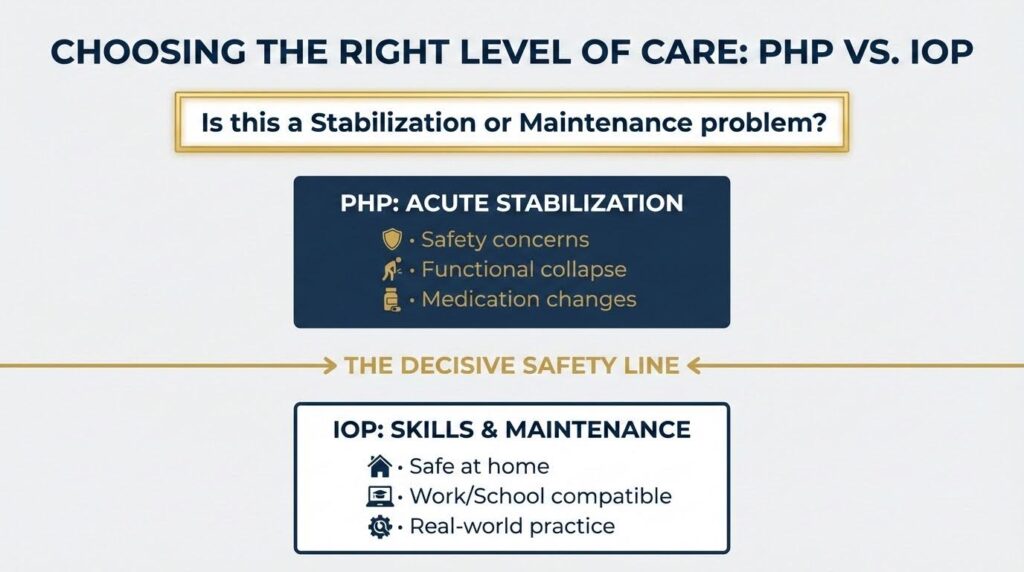
The clearest way to understand the difference: PHP organizes your day around treatment, while IOP fits treatment around your day. That single distinction drives nearly every other difference between the two programs.

partial hospitalization program typically runs five days a week for five to six hours each day, adding up to roughly 20 to 30 hours of structured care per week.

An intensive outpatient program usually meets three to five days a week for about three hours per session, totaling nine to fifteen hours weekly.

Both allow you to sleep at home. Neither requires overnight admission. But the gap in intensity between them is significant, and placing someone at the wrong level can mean the difference between stabilizing and sliding backward.

The ASAM Criteria, the most widely used placement framework in addiction treatment, formally labels PHP as Level 2.5 and IOP as Level 2.1. That numbering reflects a real clinical difference, not just an administrative one.

What Each Program Actually Looks Like Day to Day?

Inside a Partial Hospitalization Program

A typical PHP day might start with a morning check-in group, move into psychoeducation, then individual therapy, then a skills group using cognitive behavioral therapy or dialectical behavior therapy, and close with medication management or discharge planning.

Psychiatric oversight happens daily or near-daily. The structure is intentional: it is designed to hold you steady when your own routines cannot.

PHP is most often used in three situations. First, as a step-down after inpatient psychiatric care or residential addiction treatment, when you are no longer in crisis but still too fragile for less intensive support.

Second, as a way to avoid hospitalization altogether when symptoms are serious but you can remain safe at home overnight. Third, as a step-up when standard outpatient therapy or IOP is no longer enough.

One peer-reviewed study of a virtual PHP found that patients in the telehealth format had a hospitalization rate of 8.9 percent, compared to 16.5 percent for in-person PHP patients, and attendance was higher in the virtual group as well.

That finding matters because it shows that PHP-level care can prevent hospitalization when delivered well, even remotely.

Inside an Intensive Outpatient Program

IOP sessions typically run in the evening or morning, making it possible to keep working, attend school, or care for family members while still receiving structured treatment.

A session might include a check-in, a process group, a skills group focused on relapse prevention or emotional regulation, and a brief wrap-up with homework.

The defining feature of IOP is real-world application. You attend treatment, then go back into your life and practice what you learned. That is a strength when you are stable enough to handle it. It becomes a risk when you are not.

Intensive outpatient programs work best as a step-down from PHP or residential care, or as a step-up from weekly outpatient therapy that is no longer holding.

They assume you can stay safe between sessions and that your home environment is supportive enough to carry some of the therapeutic load.

Key Differences at a Glance

DimensionPHPIOP
Typical weekly hours20 to 30 hours9 to 15 hours
Days per week5 to 73 to 5
Psychiatric monitoringDaily or near-dailyLess frequent, as needed
Primary clinical goalStabilizationSkill application and maintenance
Work or school compatibilityOften difficultUsually feasible
ASAM level (addiction)2.52.1
Best role in care pathwayPost-inpatient step-down or hospitalization diversionStep-down from PHP or step-up from outpatient

PHP vs IOP for Depression: How to Tell Which Fits?

Depression does not automatically point to one level of care. What matters is how severe the symptoms are, whether safety is a concern, and how much the depression is disrupting daily functioning.

PHP is usually the better fit for depression when:

  • Symptoms are severe enough to make basic routines feel impossible
  • There is recent suicidal ideation, self-harm concern, or a recent psychiatric hospitalization
  • Medications have just been changed and need close monitoring
  • Co-occurring conditions like anxiety, trauma, or substance use are making things more unstable
  • Standard outpatient therapy or IOP has already failed to hold the person steady

IOP is usually the better fit for depression when symptoms are real and impairing but the person can stay safe at home, maintain some responsibilities, and benefit from structured therapy several times a week without needing daily clinical oversight.

A useful shorthand: if depression is a stabilization problem, PHP is likely the right answer. If it is a maintenance-and-application problem, IOP is likely enough.

One source focused specifically on PHP vs IOP for depression puts it plainly: choose PHP if daily functioning feels overwhelming or medication management and all-day structure are needed, and choose IOP when symptoms are serious but compatible with home living and skill-based treatment.

Safety is the decisive line. When depressive symptoms involve suicidal thinking, self-harm, or severe functional collapse, the risk of undertreatment is greater than the risk of overtreatment.

Placing someone in IOP when they need PHP because IOP is easier to schedule is one of the most common and consequential mismatches in behavioral health care.

IOP vs PHP for Addiction Treatment

For substance use disorders, the same core logic applies, but a few addiction-specific factors shift the calculation.

PHP is generally the better choice when:

  • The person has just completed detox or inpatient rehab and is newly sober but unstable
  • Relapse risk is high and cravings feel unmanageable in ordinary life
  • There are active co-occurring psychiatric symptoms
  • Previous attempts at IOP or outpatient treatment have ended in relapse

IOP is generally the better choice when:

  • The person is medically stable and has a supportive home environment
  • The goal is relapse prevention and accountability rather than daily stabilization
  • Work, school, or caregiving responsibilities need to be maintained
  • The person is stepping down from PHP or residential care and is ready to practice recovery in real life

One important insight from the addiction literature is that IOP may actually produce stronger long-term recovery habits than inpatient care for certain patients, because it allows people to identify and manage triggers in their real environment rather than a protected setting.

But that advantage only applies when the person is stable enough to survive that exposure. If they are not, home exposure becomes a relapse hazard rather than a therapeutic benefit.

The ASAM Criteria framework evaluates six dimensions to guide placement decisions: withdrawal potential, biomedical conditions, emotional and behavioral conditions, readiness to change, relapse potential, and the recovery environment.

That last dimension, the recovery and living environment, is one of the most overlooked. Someone with a chaotic or trigger-heavy home may need PHP or even residential care even if their symptom severity alone might suggest IOP.

The Role of Telehealth in PHP and IOP Access

Telehealth has changed the practical calculus for both programs, especially for people in rural areas or those facing transportation barriers.

The virtual PHP study mentioned earlier found that removing transportation as a barrier actually improved attendance and reduced hospitalization rates.

That finding has a direct implication: if a person clinically needs PHP but cannot access it in person, virtual PHP delivery may be a viable and effective option rather than defaulting to a lower level of care.

IOP adapts more easily to telehealth because of its shorter session blocks and lower need for daily medical monitoring. But the evidence suggests that PHP can also be delivered virtually without sacrificing outcomes when the program is well-structured.

As of January 2026, Medicare telehealth rules no longer require patients to be in a rural area to receive mental health services via telehealth from home, which expands access meaningfully for behavioral health programs at both levels.

PHP and IOP as a Sequence, Not a Competition

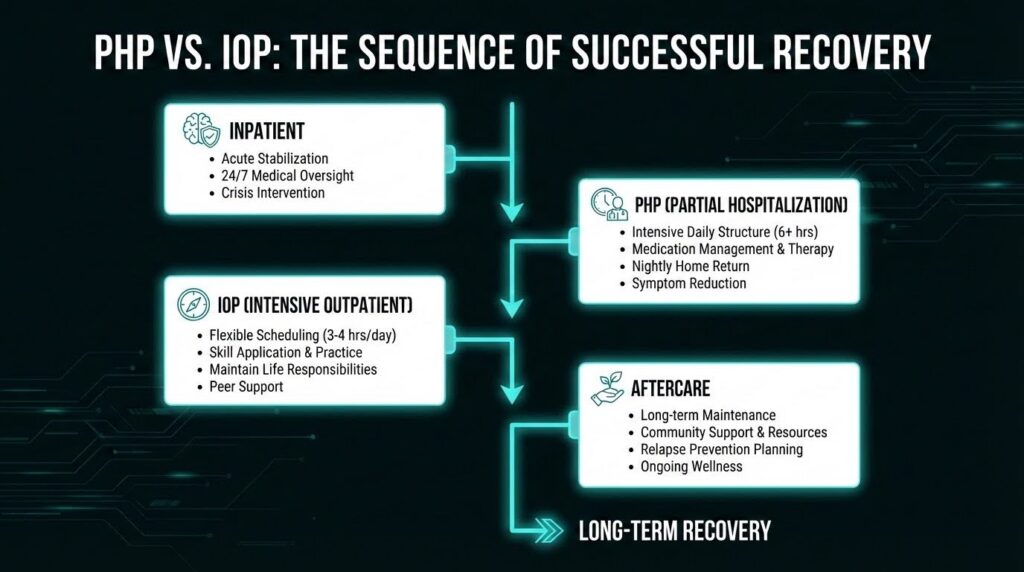
One of the strongest themes across the research is that PHP and IOP work best when treated as linked stages rather than competing options. The most common and effective pathway looks like this:

Detox or inpatient care leads to PHP for stabilization, which then steps down to IOP for continued structured recovery, which eventually transitions to standard outpatient therapy and aftercare.

SAMHSA’s 2025 National Behavioral Health Crisis Care Guidance reinforces this systems view, emphasizing coordinated continuums where people can move between levels of care based on need, with no wrong door for access and clear accountability for transitions.

The period immediately after leaving PHP or IOP carries its own risks. External stressors return, accountability drops, and the skills learned in treatment face their first real test.

Building the next step into the plan before discharge, whether that is IOP after PHP or outpatient therapy after IOP, is not optional. It is part of what makes the treatment work.

A Practical Decision Rule

If you are trying to decide between PHP and IOP for yourself or someone you care about, two questions cut through most of the complexity:

Does this person need treatment to organize and stabilize their day? If yes, PHP is likely the right level.

Can this person organize their day independently but still needs frequent, structured clinical support? If yes, IOP is likely enough.

The home environment matters as much as symptom severity. A stable, supportive living situation makes IOP more viable. An unstable, chaotic, or trigger-heavy environment pushes the need toward PHP or higher, regardless of how the clinical picture looks on paper.

And if access is the barrier rather than clinical need, it is worth asking whether a telehealth PHP or IOP option exists before settling for a lower level of care than the situation calls for.

Why Getting the Right Level of Care Matters?

Poor level-of-care matching creates two real problems. Undertreatment, placing someone in IOP when they need PHP, can lead to deterioration, relapse, or hospitalization.

Overtreatment, placing someone in PHP when IOP would serve them better, creates unnecessary burden, disrupts work and caregiving, and can reduce adherence over time.

The goal is not the most intensive program or the most convenient one. It is the one that matches where the person actually is, right now, with a clear plan for what comes next.

If you are ready to talk through which level of care fits your situation, reach out to our team at Mosaic to start the conversation.

How Does CBT for Substance Abuse Help Prevent Relapse?

Cognitive behavioral therapy for substance abuse is one of the most studied and widely used treatments in addiction care.

Research shows that CBT helps prevent relapse by teaching people to recognize triggers, challenge the thoughts that lead to use, and practice coping skills before high-risk moments escalate.

This article explains exactly how CBT works, which techniques matter most, and why the evidence supports it as a core part of recovery.

How CBT for Substance Abuse Targets the Relapse Process?

Relapse rarely happens without warning. It usually begins long before a person picks up a substance, with a shift in mood, a familiar place, a stressful conversation, or a thought that quietly gives permission to use. Cognitive behavioral therapy for addiction works by making that process visible and interruptible.

The core idea is straightforward. Substance use is partly a learned behavior, maintained by reinforcement, emotional cues, and automatic thinking.

CBT does not treat addiction as a willpower problem. Instead, it treats it as a sequence of observable events that can be identified, slowed down, and changed.

At the center of that sequence is a chain that looks something like this: a trigger appears, an automatic thought follows, an emotional reaction builds, craving rises, and substance use occurs.

CBT targets each link in that chain. It teaches people to notice triggers earlier, interpret cravings more accurately, and respond with practiced alternatives rather than automatic use.

A foundational review of CBT for substance use disorders describes the approach as a family of interventions united by a focus on overcoming the reinforcing effects of psychoactive substances through cognitive, motivational, and skills-building methods.

That description matters because it signals something important: CBT is not one technique. It is a coordinated system of skills, and its relapse-prevention power comes from how those skills work together.

One of CBT’s most clinically significant strengths is durability. Because it is skills-based rather than insight-based alone, the benefits can continue after formal therapy ends.

A person who has learned to recognize their personal triggers, challenge permission-giving thoughts, and use a coping plan does not lose those abilities when sessions stop. That is a structural advantage in a chronic condition like addiction, where relapse risk extends well beyond the treatment period.

The Core CBT Techniques for Addiction

Self-Monitoring: Making Patterns Visible

Self-monitoring is one of the most practical tools in CBT and addiction treatment. Patients use thought records, craving logs, and mood diaries to track what happens before, during, and after a craving or use episode. Over time, patterns emerge that would otherwise stay invisible.

A person might notice that cravings spike on Sunday evenings, after conflict with a family member, or when they are tired and alone.

That pattern is not obvious in the moment. It becomes clear only when tracked consistently. Once it is visible, it becomes preventable.

Self-monitoring also connects directly to newer digital treatment models. Recent trials of digital CBT for alcohol use disorder included app-based diary functions that tracked alcohol consumption, craving, and mood, with clinician dashboards that flagged rising risk.

The classic CBT diary has become the conceptual foundation for modern digital therapeutics and remote relapse monitoring.

Trigger Recognition and Functional Analysis

CBT distinguishes between external triggers, such as people, places, and times associated with past use, and internal triggers, such as anxiety, loneliness, shame, boredom, and anger. Both matter. Both can drive relapse.

Functional analysis goes deeper than labeling triggers. It asks what need the substance was serving. Was it numbing emotional pain? Reducing social anxiety?

Providing energy or sleep? Without understanding that function, relapse prevention stays superficial. With it, the therapist and patient can design targeted alternatives.

A common shortcut in addiction treatment is telling people to simply avoid triggers. That advice is incomplete. Many triggers cannot be avoided.

Stress, painful memories, and social cues are part of ordinary life. Effective CBT combines avoidance where possible with coping where avoidance is not realistic.

Cognitive Restructuring: Changing What Cravings Mean

Relapse is often driven not just by craving but by the thoughts that surround it. CBT for addiction directly targets automatic thoughts and substance-related beliefs that increase relapse risk.

Common examples include:

  • “I’ve already messed up today, so I might as well use.”
  • “One drink won’t matter.”
  • “I can’t handle this craving.”
  • “I deserve this after a hard day.”
  • “If I say no, people will reject me.”

These thoughts are not trivial. They compress long-term consequences and magnify short-term relief. Cognitive restructuring teaches patients to identify a thought, test it against evidence, and replace it with a more balanced alternative.

For example, “I can’t tolerate this urge” becomes “This urge is uncomfortable, but urges rise and fall. I’ve gotten through them before.”

One of CBT’s most underappreciated functions is what happens after a lapse. A single slip can become a full return to uncontrolled use when it is interpreted as total failure.

CBT weakens that cascade by teaching people that a lapse is a data point, not a verdict. That cognitive shift is often what separates a brief slip from a prolonged relapse.

Coping Skills Training

Knowing a trigger exists is not enough. A person also needs a practiced response ready when that trigger appears. Coping skills training builds exactly that.

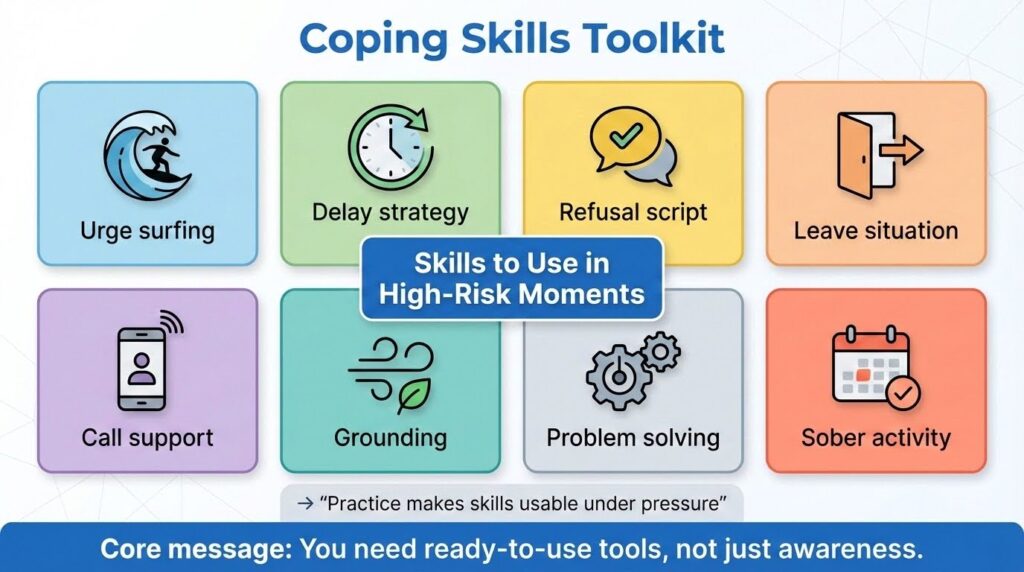
Skills vary by patient but commonly include urge surfing, delay strategies, refusal scripts, leaving high-risk situations, calling a support person, grounding techniques, problem solving, and scheduling sober activities.

The goal is not to eliminate craving but to make non-use behaviorally possible by giving people something to do instead.

Research on CBT4CBT, a web-based CBT program with a strong evidence base, highlights an important point: treatment may improve outcomes not just by increasing the number of coping skills a patient knows, but by improving the quality and actual use of those skills under pressure.

Skills need to be practiced until they are usable in a high-risk moment, not just understood in a calm session.

Relapse Prevention Planning

Relapse prevention is not a late-stage add-on in CBT. It is a central organizing feature. Patients work with their therapist to build a structured plan that includes their top triggers, early warning signs, coping strategies, support contacts, and a step-by-step response for if a lapse occurs.

The logic is that high-risk situations are inevitable. Prevention depends on recognizing risk early, slowing the sequence, applying a preplanned response, and returning to recovery behavior quickly after any slip.

CBT converts relapse prevention from a vague aspiration into a set of pre-rehearsed behaviors.

How CBT and Addiction Treatment Work Together With Co-Occurring Conditions?

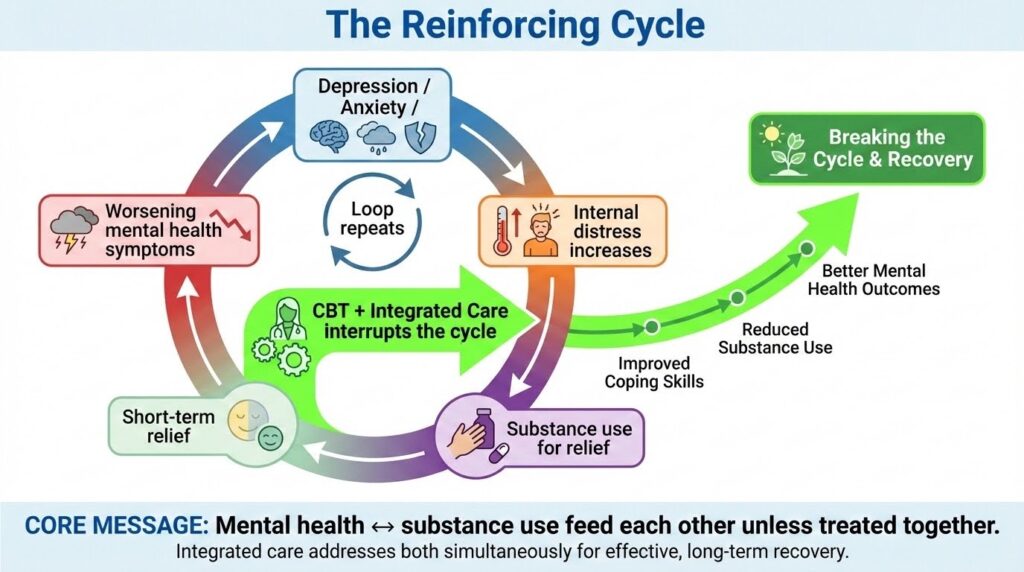
For many people, relapse is not driven by substance cues alone. It is driven by untreated depression, anxiety, trauma, or other mental health conditions that create internal pressure to use. This is where integrated treatment becomes essential.

A review of integrated treatment for substance use and psychiatric disorders found that treating both conditions simultaneously is consistently superior to treating them separately or in uncoordinated parallel care.

The reasoning is direct: untreated psychiatric symptoms can trigger substance use, and substance use can worsen psychiatric symptoms. Leaving one untreated while addressing the other leaves a major relapse driver in place.

A 2024 umbrella review of psychosocial interventions for adults with substance use disorder and co-occurring mental health conditions confirmed that integrated, coordinated care generally outperforms treating one condition alone. This is one of the most important higher-level findings in the current evidence base.

PTSD and substance use disorder is one of the most clinically difficult combinations. A 2022 systematic review and meta-analysis that included 27 studies and 2,849 participants found that trauma-focused CBT-based approaches improved PTSD symptom severity compared with addiction treatment alone, and some evidence suggested delayed benefits in reduced alcohol use at six to thirteen months.

The review also found that dropout was high, which is a real-world limitation that matters for how treatment is designed and delivered.

The practical implication is clear. If PTSD symptoms improve, the patient has fewer internally driven triggers for substance use. But treating trauma alone is not enough. Direct addiction-focused relapse prevention remains necessary alongside it.

What the Evidence Says About CBT for Addiction?

The evidence base for CBT and addiction is broad and consistent. A review of CBT for substance use disorders describes it as having demonstrated efficacy both as a standalone treatment and in combination with other approaches, with evidence supporting durability of effects over time.

A 2025 systematic review and meta-analysis published in *Psychological Medicine* compared digital and face-to-face CBT for alcohol use disorder across 25 randomized controlled trials with 2,065 participants. For drinking quantity, digital CBT showed a significant effect with a standardized mean change ratio of 1.21.

For drinking frequency, both digital and face-to-face CBT produced significant reductions, with face-to-face showing a stronger effect size.

A separate randomized study of a CBT-based digital therapeutic for alcohol use disorder enrolled 30 outpatients and found that the digital group, who received 84 video-based CBT sessions through a mobile app over 12 weeks, achieved abstinence during weeks nine through twelve at a rate of 73.3 percent, compared with 30.8 percent in the face-to-face control group.

The digital CBT group also showed significantly greater reductions in risky drinking, craving, and anxiety.

These findings matter because they show that CBT’s core mechanisms, self-monitoring, skills rehearsal, and structured feedback, translate effectively into digital formats.

The underlying logic of CBT does not change when delivered through an app. If anything, digital delivery intensifies it by making monitoring and coping support available in real time rather than only during weekly sessions.

SAMHSA’s guidance on substance use treatment reinforces that whole-patient treatment combining medication with counseling and behavioral therapies provides the strongest foundation for recovery.

For opioid use disorder in particular, medication is often indispensable, and CBT works best as a complement to it rather than a substitute.

Why CBT Prevents Relapse: A Summary of the Mechanisms

The table below shows how each CBT mechanism targets a specific point in the relapse process.

Relapse pathwayCBT targetHow it helps
Unnoticed risk escalationSelf-monitoringEarlier recognition of warning signs
Cue-triggered automatic useTrigger analysisAnticipatory planning before exposure
Permission-giving thoughtsCognitive restructuringReduces impulsive or rationalized use
No alternative to usingCoping skills trainingBuilds practiced non-use responses
Lapse becomes full relapseLapse managementLimits escalation after a slip
Psychiatric symptoms drive useIntegrated CBTFewer internal relapse triggers
Risk returns after treatment endsSkills generalizationSustained self-management over time

The deeper point is that CBT does not prevent relapse by eliminating craving. It prevents relapse by making the process that leads to use more visible, more predictable, and more interruptible.

That is a more honest and more useful framing than promising that therapy will remove all risk.

CBT Works Best as Part of a Broader Recovery Plan

The current evidence does not support treating CBT as a complete solution on its own. Substance use disorders are chronic and multifactorial.

The most reliable outcomes come from coordinated care that may include medication, contingency management, peer support, telehealth, and wraparound services alongside CBT.

Contingency management is a good example of a complementary approach. It uses incentives to reinforce abstinence and treatment attendance. CBT builds the internal skills needed to sustain gains after incentives end. Together, they address both capability and motivation.

Telehealth delivery also extends CBT’s reach. A feasibility study of relapse prevention group therapy delivered via videoconferencing found it acceptable and practical for both participants and providers, and telehealth for SUD treatment can reduce barriers related to transportation, geography, and stigma that often lead to treatment dropout and relapse.

The most defensible current position is that CBT is a high-value, evidence-based core treatment whose relapse-prevention power increases when it is coordinated with medication where appropriate, integrated care for co-occurring conditions, and tools that support monitoring and continuity between sessions.

If you are looking for structured, evidence-based support for substance use or co-occurring mental health concerns, speaking with our qualified clinician is a strong first step. Reach out to explore Mosaic’s outpatient treatment options and find the right level of care for where you are right now.

Insomnia After Quitting Marijuana: Causes & Sleep Solutions

Quitting marijuana often triggers severe insomnia that can last for weeks, leaving many people wondering if they’ll ever sleep normally again.

Within 24 to 48 hours of stopping, sleep architecture begins to deteriorate, with total sleep time dropping, awakenings increasing, and vivid dreams disrupting rest, changes that peak around days 2 to 6 and drive many back to using.

This article explains why cannabis withdrawal causes insomnia, what happens to your brain and sleep cycles during recovery, and the evidence-based strategies that actually work to restore sleep without relying on weed.

Why Quitting Weed Causes Insomnia?

Cannabis withdrawal insomnia stems from neurobiological changes in your brain’s sleep regulation systems. When you use marijuana regularly, THC acts on CB1 receptors throughout your brain, initially promoting sedation and altering sleep stages.

Over time, chronic exposure leads to tolerance, meaning the sleep-promoting effects fade while your brain adapts to constant THC stimulation.

When you stop using, your endocannabinoid system suddenly shifts from chronic external stimulation to relatively low internal signaling.

This abrupt change disrupts the neural circuits that control arousal, REM sleep, and deep slow-wave sleep. Polysomnography studies show that heavy users experience reduced total sleep time, lower sleep efficiency, increased wake time after sleep onset, and a characteristic REM rebound, shortened REM latency and increased REM percentage, within the first nights of abstinence.

The severity correlates directly with prior use patterns. Heavier users who consumed marijuana five or more times per week show more pronounced sleep disturbances, including increased periodic limb movements that correlate with the quantity and duration of prior use.

These objective changes align with subjective complaints of insomnia and strange dreams, which occur in 32 to 76 percent of people during withdrawal.

How Cannabis Withdrawal Disrupts Sleep Architecture?

Understanding what happens to your sleep stages during withdrawal clarifies why insomnia feels so severe and why certain interventions work better than others.

Acute Effects Versus Chronic Tolerance

In occasional users, acute THC can shorten the time to fall asleep and may increase slow-wave sleep, the deepest and most restorative stage. However, systematic reviews reveal that these effects are inconsistent across studies and depend heavily on dose, cannabinoid composition, and individual factors.

More importantly, chronic daily use leads to tolerance, the sleep-inducing benefits diminish over time, and sleep efficiency often worsens despite continued use.

Interestingly, tolerance to THC’s REM-suppressing effects develops more slowly than tolerance to its sedative effects. This asymmetry becomes critical during withdrawal: when you stop, the muted REM suppression unmasks a strong REM rebound, while the tolerance to slow-wave enhancement leaves deep sleep depleted.

The result is a mixed picture of longer sleep onset, more awakenings, less total sleep, reduced slow-wave sleep, and early-phase REM instability.

The Withdrawal Timeline

Cannabis withdrawal symptoms typically begin 24 to 48 hours after cessation, peak between days 2 and 6, and can persist for two to three weeks or longer in heavy users. Sleep disturbances follow a dynamic pattern:

  • Days 1 to 7: Sleep onset latency increases, wake after sleep onset rises, total sleep time and efficiency drop, and REM rebound appears with shortened REM latency and increased REM percentage.
  • Weeks 2 to 4: REM changes tend to decline with continued abstinence, but wake time and reduced slow-wave sleep may persist, causing ongoing nonrestorative sleep and fatigue.
  • Beyond 45 days: A subset of individuals continues to experience sleep problems, often reflecting unmasked underlying sleep disorders, behavioral conditioning, or comorbidities rather than lingering receptor changes.

An inpatient polysomnography series tracking 18 heavy users across two weeks of abstinence documented declining total sleep time and sleep efficiency, increasing wake time, declining REM amount over time, and increasing periodic limb movements, all objective markers of the hyperarousal state that characterizes early withdrawal.

The Brain Science Behind Insomnia From Quitting Weed

CB1 Receptor Downregulation and Recovery

Chronic THC exposure downregulates CB1 receptor availability in the brain by approximately 15 to 20 percent compared to non-users.

These receptors are central to regulating arousal, REM-NREM cycling, and homeostatic sleep drive. When you quit, the sudden removal of exogenous THC leaves your endocannabinoid system operating with relatively low signaling capacity, contributing to hyperarousal and sleep fragmentation.

Importantly, PET imaging studies in cannabis-dependent individuals show that CB1 receptor availability begins to normalize rapidly, group differences between users and controls disappear after just two days of abstinence and remain absent at 28 days.

However, lower receptor availability at day two correlates inversely with withdrawal severity, linking the endocannabinoid system directly to symptom burden during the acute phase.

This rapid receptor normalization suggests that prolonged insomnia beyond four to six weeks is less likely driven by lingering CB1 downregulation and more by behavioral conditioning, pre-existing sleep vulnerabilities, and comorbidities.

Orexin and Arousal Systems

The orexin (hypocretin) system stabilizes wakefulness and coordinates arousal with reward and motivation pathways. Orexin signaling has been implicated in sleep disruption and craving across substance use disorders.

While not yet tested specifically in cannabis withdrawal, blocking orexin receptors improves sleep in chronic insomnia and may attenuate withdrawal and craving in other substance use populations, supporting a bidirectional sleep-addiction framework.

Conditioned Arousal and Coping-Oriented Use

Many people with baseline sleep difficulties initiate and maintain cannabis use as a sleep aid, forming strong conditioned associations between using and falling asleep.

Upon cessation, going to bed without cannabis becomes a cue for “not sleeping,” amplifying withdrawal insomnia and prolonging sleep problems beyond the period explained by receptor normalization alone. This conditioning persists and is a plausible driver of longer-lasting insomnia after quitting.

Evidence-Based Strategies to Sleep Without Weed

The most effective approach to sleeping after quitting weed combines behavioral sleep medicine with circadian interventions, reserving short-term pharmacologic support for acute withdrawal when relapse risk is highest.

Cognitive Behavioral Therapy for Insomnia (CBT-I)

CBT-I is the first-line treatment for chronic insomnia, strongly recommended by the American Academy of Sleep Medicine. It reliably improves sleep initiation, maintenance, and quality, with benefits persisting beyond the treatment period. CBT-I addresses the perpetuating factors of insomnia that outlast the withdrawal window, reducing relapse risk linked to chronic poor sleep.

Key components include:

  • Stimulus control: Retraining the bed-sleep association by going to bed only when sleepy, leaving bed if awake more than 15 to 20 minutes, and using the bed only for sleep.
  • Sleep restriction: Consolidating sleep by limiting time in bed to match actual sleep time, then gradually expanding the window as sleep efficiency improves.
  • Cognitive strategies: Reducing catastrophizing and worry about sleep through structured thought challenges.
  • Relaxation techniques: Progressive muscle relaxation, breathing exercises, and mindfulness to reduce pre-sleep arousal.

Typically delivered over four to eight sessions in person or via telehealth, CBT-I is the standard against which other treatments should be compared.

small pilot study in veterans with cannabis use disorder found that two weeks of a mobile CBT-I app was feasible and associated with decreased cannabis use and improved sleep efficiency, supporting the usability of CBT-I content in this population.

Bright Light Therapy and Circadian Entrainment

Bright light therapy is an established treatment for circadian rhythm sleep-wake disorders and a powerful tool during cannabis withdrawal, when irregular schedules and circadian drift are common. Timing is critical:

  • To shift sleep earlier (phase advance): Deliver bright light soon after waking in the morning.
  • To shift sleep later (phase delay): Deliver bright light in the early evening.

Devices typically provide approximately 10,000 lux for 30 to 60 minutes. Morning bright light within one hour of waking is a pragmatic, low-risk anchor during the withdrawal window, helping to stabilize circadian phase and consolidate sleep drive.

A practical circadian plan includes:

  • Obtaining 10,000-lux equivalent bright light for 30 minutes within 60 minutes of waking, either via a light box or 30 to 60 minutes of outdoor sunlight.
  • Strictly minimizing evening bright light, especially blue-enriched light, in the last two to three hours before bed.
  • Keeping caffeine consumption before early afternoon and avoiding alcohol as a sedative.
  • Maintaining a consistent rise time within 30 minutes, even after poor nights, to stabilize anchor times.

Sleep Restriction Protocol

Sleep restriction is a core CBT-I technique that consolidates sleep by matching time in bed to actual sleep time, then gradually expanding the window as efficiency improves.

During withdrawal, this approach counteracts the hyperarousal and fragmentation that characterize early abstinence.

Implementation steps:

1. Calculate average total sleep time from a baseline sleep diary (for example, 5.5 hours).

2. Set time in bed equal to total sleep time plus 30 to 45 minutes (for example, 6 to 6.25 hours), with a fixed rise time.

3. Adjust weekly based on sleep efficiency (total sleep time divided by time in bed):

  • If efficiency exceeds 85 percent, increase time in bed by 15 to 30 minutes.
  • If efficiency is 80 to 85 percent, hold steady.
  • If efficiency is below 80 percent, reduce time in bed by 15 minutes, never below 5 hours.

This consolidates sleep drive during withdrawal hyperarousal and prevents the common mistake of spending excessive time in bed trying to “catch up,” which worsens insomnia.

Pharmacologic Options for Acute Withdrawal Insomnia

Pharmacotherapy should be short-term, symptom-targeted, and adjunctive to behavioral and circadian care. The goal is to bridge the acute withdrawal peak (days 2 to 10) and reduce relapse risk without creating new dependencies.

Gabapentin

12-week randomized controlled trial in cannabis-dependent adults found that gabapentin 1,200 mg per day significantly reduced cannabis use, decreased overall withdrawal severity, and significantly improved sleep by Pittsburgh Sleep Quality Index total and components, including sleep efficiency and duration. Executive function and marijuana-related problem scores also improved versus placebo.

Gabapentin can be a reasonable short-term adjunct to CBT-I for patients at low risk of misuse, with the dual potential to improve sleep and reduce cannabis use and withdrawal severity.

However, systematic reviews report gabapentin misuse prevalence around 40 to 65 percent among individuals with prescriptions and 15 to 22 percent in people who misuse opioids. Clinicians should screen for misuse risk, use prescription monitoring, and avoid co-administration with other CNS depressants.

Short-Term Hypnotics

Clinical management guidance recommends supportive care, CBT-I, and optional short-term hypnotics in some settings for withdrawal insomnia:

  • Zolpidem: A GABA-A positive allosteric modulator that can target withdrawal-related sleep difficulty. Prior laboratory work noted benefits for sleep during abstinence. Risks include dependence and parasomnias; use for a few nights only.
  • Diazepam: May be considered short-term in supervised settings. Risks include sedation, respiratory depression (especially with other depressants), and dependence.

These are not first-line for chronic insomnia but may bridge acute withdrawal to reduce relapse risk when behavioral measures alone are insufficient.

Dual Orexin Receptor Antagonists (DORAs)

For persistent insomnia beyond the acute withdrawal window, dual orexin receptor antagonists such as lemborexant, suvorexant, and daridorexant have the strongest general efficacy and safety profile.

network meta-analysis of 45 randomized controlled trials found that lemborexant ranked best on three of four polysomnography-measured outcomes at four weeks, with a safety profile broadly similar to other treatments.

Orexin signaling links arousal and reward; suvorexant improved sleep, withdrawal, and craving during buprenorphine taper without a clear misuse signal.

While no cannabis-specific DORA trials exist, these data support consideration of DORAs in recovery-related insomnia when CBT-I and circadian strategies are insufficient, with careful monitoring.

What Not to Use?

Avoid THC-containing products and CBN: Using THC or THC-dominant products to self-manage withdrawal insomnia sustains dependence neuroadaptations and increases relapse risk.

No clinical studies have tested isolated CBN on objectively measured human sleep; human evidence to date mixes CBN with THC, precluding attribution.

An ongoing randomized controlled trial will test isolated CBN 30 mg and 300 mg using polysomnography, but until those results are available, recommending CBN for sleep is premature.

A Phase-Informed Protocol for Sleeping After Quitting Weed

Phase 1: Days 0 to 6 (Acute Withdrawal)

Goals: Contain hyperarousal, protect sleep opportunity, reduce relapse risk.

  • Education: Normalize the timeline, symptoms start 24 to 48 hours, peak days 2 to 6, may last two to three weeks in heavy users; sleep will recover with treatment.
  • Circadian anchoring: Fix rise time; morning bright light or outdoor light within 60 minutes of wake; brief, light exercise if possible.
  • CBT-I core behaviors: Stimulus control (bed only for sleep; out of bed if awake more than 15 to 20 minutes; consistent wake time); gentle relaxation before bed; avoid long daytime naps (limit to 20 minutes, before 2 pm if needed).
  • Sleep restriction: Calculate average total sleep time from baseline diary and set time in bed equal to total sleep time plus 30 to 45 minutes, with fixed rise time; adjust weekly based on sleep efficiency.
  • Pharmacologic bridge (selective, short-term): If insomnia is severe (fewer than 3 to 4 hours sleep, pronounced wake time) and relapse risk high, consider zolpidem IR 5 to 10 mg at bedtime for up to 7 to 10 nights, or gabapentin 300 to 600 mg at dinner and 300 to 600 mg at bedtime (target 900 to 1,200 mg per day) if low misuse risk; reassess at two weeks.

Phase 2: Weeks 2 to 4 (Consolidation)

Goals: Transition off short-term sedatives, optimize CBT-I, stabilize circadian timing.

  • Continue CBT-I titration: Maintain sleep restriction titration rules; expect sleep efficiency to improve (targets above 85 percent). Address maladaptive cognitions (“I’ll never sleep without weed”) via cognitive restructuring.
  • Light/dark regimen: Continue daily morning bright light and evening dim light.
  • Taper pharmacologic adjuncts: Zolpidem, discontinue within 7 to 10 nights or step down to alternate nights, then stop. Gabapentin, if used, reassess sleep and craving; plan taper by week 4 to 8 if stable; monitor for misuse risk.
  • Consider DORA initiation: For patients with ongoing sleep onset latency or wake time despite optimized CBT-I and circadian steps, consider a DORA (for example, lemborexant 5 mg at bedtime; titrate to 10 mg if needed), acknowledging off-label status for cannabis withdrawal but strong insomnia efficacy.

Phase 3: Weeks 5 to 12 (Maintenance and Relapse Prevention)

Goals: Durable sleep independence from cannabis; relapse prevention via sleep stability.

  • Complete CBT-I course: Ensure at least four to six sessions with consolidation and cognitive work; maintain modest sleep window rather than overexpanding time in bed.
  • Continue circadian hygiene: Solidify light/dark habits and fixed rise time; add weekend variability limit (no more than one hour shift).
  • Pharmacologic review: If a DORA was started, plan the minimal effective dose and consider tapering after several months of stability. Avoid chronic Z-drugs or benzodiazepines in recovery.
  • Address comorbidities: Screen and treat sleep apnea, depression, anxiety; treat nicotine use (nicotine replacement therapy) if co-quitting.
  • Relapse planning: Identify “sleep crisis” plan, non-drug coping (relaxation scripts, out-of-bed protocol, next-day light exposure) and access to clinician support, avoiding cannabis as a fallback.

Special Considerations and Comorbidities

Co-Use of Nicotine

Nicotine withdrawal overlaps with cannabis withdrawal symptoms and time course; unaddressed nicotine cessation can amplify insomnia and relapse risk.

Consider nicotine replacement therapy during withdrawal if you are also quitting tobacco, and differentiate symptoms where possible.

Circadian Delay in Adolescents and Young Adults

Delayed sleep-wake phase disorder is common in youth and can confound insomnia. Emphasize school or work-compatible rise times, morning light, and CBT-I adapted for youth.

Avoid reliance on cannabis for sleep onset; focus on phase advances and stimulus control.

Sleep Apnea and Medical Comorbidity

large sleep-clinic cohort found that long-term daily cannabis use was associated with greater nocturnal wakefulness, lower sleep efficiency, and more stage N1 sleep.

Cannabis users often have comorbid sleep apnea; sedatives (especially benzodiazepines) may worsen hypoventilation. Screen for apnea before initiating hypnotics; prioritize CBT-I and circadian steps, and treat apnea (for example, CPAP).

Depression and Other Psychiatric Comorbidities

Insomnia and depression are bidirectionally linked. For major depressive disorder with insomnia, treat depression per guidelines; sedating antidepressants (mirtazapine, doxepin) may be considered in selected cases but weigh metabolic effects. CBT-I improves both insomnia and PTSD symptoms and is a versatile adjunct across psychiatric comorbidity.

Measuring Progress and Adjusting Care

Use a validated sleep diary daily for at least four weeks; calculate sleep efficiency and adjust time in bed weekly per CBT-I.

Consider actigraphy to objectify wake time and sleep timing variability; this is particularly useful when subjective-objective mismatch is suspected. Reserve polysomnography for suspected sleep apnea, limb movement disorder, parasomnias, or when treatment response is atypical.

Include patient-reported outcomes (Insomnia Severity Index, daytime functioning) and relapse metrics (Timeline Followback, urine toxicology in clinical trials) to connect sleep improvements to cannabis use disorder outcomes.

Why It Matters?

Insomnia after quitting marijuana is not just uncomfortable, it is a clinically significant predictor of relapse and a barrier to sustained recovery. Understanding that withdrawal insomnia stems from neurobiological changes in CB1 receptors, REM-NREM regulation, and conditioned arousal clarifies why resuming cannabis immediately relieves symptoms but perpetuates tolerance and dependence cycles.

The durable solution is not to restore the drug state but to restore sleep health through evidence-based behavioral care and targeted treatment of comorbidities.

The most effective and durable way to sleep without weed is to build treatment around CBT-I and circadian entrainment. These are first-line, disease-modifying approaches that consolidate sleep, correct phase, and reduce long-term relapse risk.

Layer short-term pharmacotherapy selectively to bridge the withdrawal peak and reduce relapse risk, zolpidem for a few nights or gabapentin for two to four weeks in low-misuse-risk patients can meaningfully improve sleep and withdrawal severity.

For persistent insomnia beyond the acute window, consider a dual orexin receptor antagonist as the preferred pharmacologic adjunct over sedating antipsychotics or re-exposure to cannabinoids.

Sleeping without weed is achievable by combining rigorous behavioral sleep medicine with targeted, time-limited pharmacologic support. This strategy aligns with the best available evidence, minimizes new dependencies, and directly addresses the sleep-relapse link that derails so many quit attempts.

If you or someone you care about is struggling with insomnia after quitting marijuana and needs professional support to navigate withdrawal and build lasting recovery, reach out to Mosaic for compassionate, evidence-based care.

Insomnia After Quitting Alcohol: Causes, Duration & Sleep Tips

Insomnia after quitting alcohol is one of the most common and frustrating parts of early recovery.

For many people, the most severe sleep problems peak in the first week and begin to ease within two to four weeks, though a meaningful number of people struggle for months or longer.

This article walks through why sleep suffers after you stop drinking, how long insomnia typically lasts, and what the evidence says actually helps.

Insomnia After Quitting Alcohol: What is Happening and Why?

When you drink heavily over time, your brain adapts. It dials down the calming signals and dials up the excitatory ones to stay balanced.

The moment you stop, those excitatory systems run unchecked. The result is hyperarousal: a wired, restless state that makes falling asleep and staying asleep genuinely hard.

Alcohol also reshapes your sleep architecture over time. Research on alcohol and sleep shows that chronic heavy drinking reduces slow-wave sleep, the deep restorative stage, while increasing REM sleep pressure.

REM pressure means your brain pushes harder and earlier into the rapid eye movement stage, producing fragmented, unrefreshing sleep. When you quit, both of these disruptions do not vanish overnight. They linger, sometimes for months.

There is also a circadian component. Heavy drinking destabilizes your internal body clock, making it harder to fall asleep at a consistent time and easier to wake in the early hours.

The Neurochemistry Behind the Sleeplessness

Alcohol works partly by boosting GABA, the brain’s main calming neurotransmitter, and suppressing glutamate, the main excitatory one. With prolonged use, the brain compensates by reducing GABA sensitivity and increasing glutamate activity.

Stopping alcohol suddenly leaves glutamate dominant, which is why withdrawal feels so activating and why sleep feels impossible in those first days.

This imbalance also affects the stress hormone system. The HPA axis, which governs your cortisol response, stays dysregulated for weeks after cessation, keeping arousal levels high at night when they should be falling.

How Long Does Insomnia Last After Quitting Alcohol?

This is the question most people want answered, and the honest answer is: it depends on the phase of recovery.

comprehensive review of sleep in alcohol use disorder found that 67 percent of detoxified men reported insomnia, with 25 percent experiencing it within the first 48 hours and about 58 percent having at least one night of insomnia within the first six days. That is the acute peak.

Here is a rough timeline based on the research:

  • Days 1 to 7: Insomnia is at its worst. Sleep latency is long, total sleep time is short, and awakenings are frequent. REM rebound, where the brain floods into REM sleep it was suppressed from during drinking, adds to fragmentation.
  • Weeks 1 to 4: Gradual improvement begins for many people, but sleep remains substantially impaired. A meta-analysis of polysomnographic studies confirmed that total sleep time, sleep efficiency, and slow-wave sleep all remain below normal averages during this window.
  • Months 1 to 3: Sleep continuity, meaning how well you stay asleep, often approaches near-normal levels for many people. Subjective complaints, however, frequently persist even when objective measures improve.
  • Months 6 to 12 and beyond: Most people achieve functionally acceptable sleep, but a meaningful subset does not. Research tracking abstinent individuals has documented abnormal sleep architecture, including reduced deep sleep and elevated REM percentage, lasting up to 27 months in some cases.

The short answer: for many people, the worst insomnia eases within two to four weeks. Substantial improvement in sleep continuity often comes by one to three months.

Full normalization of sleep architecture, the deeper structural patterns, can take a year or more and may never fully return for some.

Why Some People Take Longer?

Several factors slow recovery. Comorbid anxiety or depression is a major one, as mood disorders independently disrupt sleep and can amplify insomnia long after alcohol is gone.

Irregular sleep schedules, nicotine use, and untreated sleep disorders like obstructive sleep apnea also extend the timeline. Age matters too: older adults tend to lose deep sleep faster and recover it more slowly.

How Sleep Problems Connect to Relapse Risk?

This is not just about comfort. Poor sleep after quitting alcohol is a genuine relapse risk factor.

Studies show that people who relapse tend to have longer sleep latencies, shorter REM latency, and less deep sleep before they drink again.

A study tracking sleep regularity after inpatient discharge found that a lower Sleep Regularity Index, a measure of how consistent your sleep timing is day to day, predicted relapse within the first 28 days after leaving treatment.

People who relapsed also reported worse subjective sleep quality and longer daytime naps, suggesting a dysregulated circadian pattern.

The mechanism makes sense. Poor sleep increases negative affect, impairs prefrontal regulation, and raises craving. Alcohol then becomes a tempting shortcut to sedation. Treating insomnia is therefore not separate from relapse prevention. It is part of it.

randomized trial in veterans during early recovery found that participants who achieved insomnia remission, regardless of which treatment they received, had substantially lower alcohol craving for up to six months compared to those who did not. Craving scores were roughly 2.8 versus 9.5 in those groups. That gap matters.

How to Stop Alcohol Insomnia: What the Evidence Supports?

Cognitive Behavioral Therapy for Insomnia

CBT-I is the most evidence-backed treatment for insomnia after quitting alcohol. It targets the behaviors and thought patterns that keep insomnia going: irregular schedules, spending too long in bed awake, and anxious beliefs about sleep.

It works regardless of what originally caused the insomnia, which makes it well suited to the complex picture of alcohol recovery.

2025 meta-analysis across the spectrum of alcohol use disorder found that CBT-I reduced insomnia severity significantly compared to control conditions at the end of treatment, with benefits maintained at one to three months and six months. The mean difference in insomnia severity scores was about 5.5 points at post-treatment, which is clinically meaningful.

Digital CBT-I programs have shown particular promise because they remove access barriers. A randomized pilot study of the SHUTi digital program in heavy drinkers with insomnia found that participants using the program had greater reductions in insomnia and also drank less than those in an education control group, with benefits sustained to six months and no adverse events.

The entire trial ran remotely, showing that effective care does not require an in-person clinic.

Practical Sleep Tips for Early Recovery

The following strategies are grounded in the behavioral principles of CBT-I and are appropriate to start in the first weeks after quitting:

  • Keep a fixed wake time every day, even after a bad night. This anchors your circadian rhythm.
  • Get morning light exposure within an hour of waking. Natural light is one of the strongest signals to your body clock.
  • Get out of bed if you have been awake for more than 15 to 20 minutes. Lying awake in bed trains your brain to associate the bed with wakefulness.
  • Avoid caffeine after midday and cut out nicotine where possible, as both fragment sleep.
  • Keep daytime naps short and early, or skip them entirely. Long naps reduce sleep pressure at night.
  • Avoid screens and bright light in the hour before bed to support melatonin release.
  • Track your sleep with a simple diary. Noting your bedtime, wake time, and how you felt helps you spot patterns and gives a clinician useful information.

What About Medication?

Medications for insomnia in alcohol recovery require caution. Benzodiazepines are appropriate during acute withdrawal under medical supervision to prevent seizures, but they are not a solution for ongoing insomnia in recovery because of dependence risk.

Trazodone is commonly prescribed, but a narrative review of insomnia treatment in alcohol recovery raised concerns: sleep benefits did not persist at three to six months, and there were signals of increased drinking after stopping the medication. The review recommends against using trazodone routinely in early recovery.

systematic review of pharmacologic options found mixed and limited evidence for most agents, reinforcing that behavioral therapy should be the backbone of insomnia care in this population.

Screening for Other Sleep Disorders

Insomnia after quitting alcohol is sometimes made worse by an underlying sleep disorder that alcohol was masking or worsening.

Obstructive sleep apnea is common in people with alcohol use disorder. Alcohol relaxes the muscles of the throat, worsening breathing during sleep. If you snore loudly, wake gasping, or feel unrefreshed despite adequate time in bed, it is worth asking a doctor about a sleep study.

Restless legs syndrome and periodic limb movements in sleep can also fragment sleep and are more common during early abstinence. Iron deficiency is a treatable contributor, so checking ferritin levels is a reasonable first step.

Circadian rhythm disruption, where your internal clock is shifted or irregular, can cause persistent difficulty falling asleep at a normal time. Morning light therapy and consistent scheduling are the main tools here, and they complement CBT-I well.

What to Expect Over Time?

A staged model fits the evidence best. Think of recovery in three broad phases:

The first phase, roughly the first month, is about stabilizing. Sleep will likely be poor, especially in the first week. The goal is safety, consistency, and starting behavioral strategies early rather than waiting for sleep to fix itself.

The second phase, months one to three, is where many people see real gains in how well they sleep through the night. Subjective complaints may lag behind objective improvement, meaning you might still feel like a poor sleeper even as your sleep data looks better. That gap is normal and tends to close with time.

The third phase, beyond three months, is about consolidating gains and managing residuals. Some people will have fully recovered sleep by six months.

Others, particularly those with mood disorders or irregular schedules, may still notice problems. Booster sessions of CBT-I, continued attention to sleep hygiene, and treatment of any underlying conditions all help during this phase.

The research on sleep architecture recovery shows partial normalization of brain-level sleep markers over 12 months of abstinence, which is encouraging. But it also confirms that complete normalization is not guaranteed within the first year, so patience and ongoing care matter.

Why Treating Sleep Early Makes a Difference?

Waiting for sleep to fix itself is not a good strategy. The evidence is clear that insomnia in early recovery predicts relapse, and that treating insomnia reduces craving and alcohol-related harm even when it does not always change abstinence rates directly.

Starting CBT-I, whether in person or through a digital program, within the first two to four weeks of quitting gives you the best chance of breaking the cycle. Stabilizing your sleep schedule, getting morning light, and keeping the bed for sleep only are low-cost steps you can take today.

If sleep problems persist beyond four to six weeks despite consistent effort, talking to a clinician about a formal CBT-I program or a sleep study is a reasonable next step.

Recovery from alcohol use disorder is hard enough without running on empty. Treating your sleep is not a side project. It is central to getting well.

If you are struggling with sleep, alcohol use, or both, speaking with a specialist can make a real difference. Reach out to Mosaic Behavioral Health to learn about outpatient treatment options that address both mental health and substance use in an integrated, evidence-based way.

Addiction Recovery Statistics: Recovery Rates, Relapse & Rehab Data

If you or someone you love is wondering how many people actually recover from addiction, you are not alone in searching for a clear answer.

About 9.1% of U.S. adults, roughly 22 million people, report having resolved a substance problem, and 40% to 60% of people in specialty care remain abstinent or avoid heavy use at the one year mark.

This article breaks down what addiction recovery statistics really show, who recovers, what percent of addicts relapse, and which factors shift the odds.

What Addiction Recovery Statistics Tell Us?

The honest truth is that no single number captures addiction recovery rates. The figure you see depends on how “recovery” is defined, which substance is involved, how long researchers followed people, and whether the study counted total abstinence or stable, low risk use.

Large national surveys like the National Epidemiologic Survey on Alcohol and Related Conditions (NESARC) sort people into distinct categories: abstinent recovery, nonabstinent recovery, partial remission, and more.

NESARC researchers required nonabstinent recovery to meet strict criteria, including no abuse or dependence symptoms and drinking within low risk limits set by the NIAAA. That means “recovery” in the data is not just wishful thinking. It is measured against clear clinical thresholds.

How many people recover from addiction?

The National Recovery Study found that about one in eleven U.S. adults have resolved a significant alcohol or other drug problem.

Among those 22 million people, more than half do not call themselves “in recovery.” Many say they resolved the problem with little or no formal help. Mutual help groups like AA were the most common support among those who did seek outside help.

These numbers reflect lifetime problem resolution, not a single treatment episode. They include people across a wide range of severity. Someone who struggled with heavy drinking for a few years and stopped on their own sits alongside someone who completed multiple rounds of rehab. Both count.

Abstinent vs. nonabstinent recovery

Recovery does not always mean total abstinence. For alcohol, nonabstinent remission, meaning symptom free use within safe limits, is more common.

For drug problems, especially opioids, abstinence is the more typical path. NESARC data formalized by Dawson and colleagues show that both endpoints can be durable and clinically meaningful when properly measured.

This distinction matters because addiction recovery rates look different depending on which definition a study uses. Including nonabstinent remission raises the measured rate, especially for alcohol. Excluding it paints a narrower picture.

Addiction Recovery Rates by Substance and Setting

Alcohol use disorder

Across intensive outpatient and residential programs, about 40% to 60% of people with alcohol use disorder are abstinent or not drinking heavily at the six to twelve month mark.

One hospital cohort showed an early advantage for inpatient care: roughly 25% of inpatients returned to heavy drinking by two months compared with about 50% in outpatient care.

By six months, both groups converged near 50%, showing that the initial setting matters less over time than what happens after discharge.

Long term data tell a more encouraging story. Among people with alcohol use disorder who attended AA for 27 or more weeks in their first year, outcomes were significantly better 16 years later.

Part of formal treatment’s long term benefit appeared to flow through sustained AA involvement, suggesting that ongoing connection is a powerful driver of lasting change.

Illicit drugs and polysubstance use

In a prospective study of inpatients treated for illicit drug use, about 37% relapsed within 90 days of discharge. Younger adults and those with psychiatric conditions faced higher risk.

Notably, treatment at longer term clinics (over six months) was linked to lower relapse regardless of how long any individual stayed, pointing to the clinic environment itself as a protective factor.

Opioid use disorder

For opioid use disorder, the most important recovery statistic is not an abstinence percentage. It is survival. A BMJ meta analysis found that all cause mortality during methadone treatment was 11.3 per 1,000 person years compared with 36.1 out of treatment.

For buprenorphine, the rate was 4.3 in treatment versus 9.5 out of treatment. Risk spiked sharply in the first four weeks after stopping medication, then declined.

Veterans Health Administration data echo this pattern. Days off buprenorphine carried a 4.33 fold higher risk of suicide or overdose death compared with days on treatment, with the highest danger 8 to 14 days after stopping.

A synthesis of 28 longitudinal OUD cohorts shows that multiple treatments and relapses are common before sustained remission. The risk of relapse drops substantially after about five years of continuous remission, reinforcing the chronic care model.

What Percent of Addicts Relapse After Rehab?

There is no universal relapse rate. But credible ranges, broken down by substance and timeframe, give a realistic picture.

  • Alcohol use disorder, 6 to 12 months post treatment: About 40% to 60% remain abstinent or avoid heavy drinking. Early relapse risk is higher and sensitive to depression, low self efficacy, and lack of continuing care.
  • Illicit drugs, first 3 months post inpatient: Roughly 30% to 40% relapse, with younger age and psychiatric comorbidity raising risk. Longer term clinic environments reduce this figure.
  • Opioid use disorder: Multiple treatment episodes and relapses are typical before sustained remission. Medication retention is the strongest predictor of survival and stability. Most Medicaid patients on either extended release naltrexone or buprenorphine discontinue within six months.
  • Across settings at 6 to 12 months: Inpatient and intensive outpatient programs produce broadly similar outcomes (50% to 70% abstinent) when severity and retention are accounted for. Early advantages for residential care tend to fade by six months.

These numbers are not destiny. They describe averages across populations, and individual outcomes shift based on what happens after the initial treatment episode.

Why So Few People Get Evidence Based Care?

The 2023 National Survey on Drug Use and Health paints a stark picture of the gap between need and treatment.

Indicator (ages 12 and older)Estimate
Received any substance use treatment in the past year4.5%
Received outpatient treatment3.5%
Outpatient care delivered outside general medical settings82.6%
Adults with co occurring SUD and mental illness receiving both treatments18.6%
Adults with co occurring SUD and mental illness receiving neither37.6%
People with OUD receiving medication for OUD18%

Only 18% of people with opioid use disorder received medication in 2023. That single figure represents one of the largest missed opportunities in American healthcare.

Medications like methadone and buprenorphine are cost effective, reduce infectious disease transmission, and save lives. Yet regulatory barriers, fragmented care, and uneven state policies keep them out of reach for most people who need them.

Meanwhile, 37.6% of adults dealing with both a substance use disorder and a mental illness received no treatment for either condition. Addiction care remains largely separated from general medical and mental health services, and that separation costs lives.

What Predicts Relapse and What Prevents It?

Decades of research point to a consistent set of factors that raise or lower relapse risk.

Low self efficacy and poor coping skills are among the strongest proximal predictors. The Alcohol Abstinence Self Efficacy Scale (AASE) shows excellent reliability across major clinical trials and can be tracked over time to flag rising risk.

Interestingly, early behavioral wins, like confirmed abstinence through contingency management, appear to build self efficacy in a positive feedback loop. Reducing heavy drinking increases confidence in staying sober, which in turn supports continued abstinence.

Depressive symptoms consistently predict relapse in alcohol use disorder and elevate risk after inpatient care for other substances.

Depression erodes coping and creates the negative emotional states that classic relapse models identify as high risk triggers. Treating depression alongside addiction is not optional. It is essential.

Sustained mutual help participation is one of the most reliable long term protective factors. The dose matters: 27 or more weeks of AA in the first year predicted better outcomes 16 years later.

A national longitudinal study during the pandemic found that alcohol outcomes improved regardless of whether people attended mutual help groups online, in person, or both. Engagement itself, not the format, drove improvement.

Structured continuing care extends the treatment window. Telephone based monitoring and counseling platforms that run 12 to 18 months after intensive outpatient care help people stay connected, practice coping skills, and catch warning signs early.

Routine AASE tracking gives clinicians a measurement based tool to guide adaptive care rather than waiting for a crisis.

Recovery housing likely reduces early relapse by providing a stable, sober environment during the highest risk months. A 2025 systematic review found only three randomized trials on recovery housing, with the longest average follow up at 18 months.

The evidence is promising but thin, and updated research with economic evaluations is urgently needed.

How Policy Shapes Addiction Recovery Rates?

Recovery does not happen in a vacuum. Policy decisions about medication access, telehealth, and harm reduction directly affect how many people recover from addiction.

During the pandemic, SAMHSA allowed up to 28 days of take home methadone for stable patients. Multiple studies found this flexibility did not increase methadone involved overdose deaths.

The share of overdose deaths involving methadone actually declined from 4.5% in January 2019 to 3.2% by August 2021. Expanded take homes were linked to better engagement, higher patient satisfaction, and few diversion incidents.

Yet state uptake varied widely. Thirty five jurisdictions adopted both take home and telehealth flexibilities. Seven adopted neither. That patchwork means a person’s chance of staying in treatment, and staying alive, partly depends on geography.

Telehealth buprenorphine showed comparable outcomes to in person care and improved retention in some groups. No increase in buprenorphine involved overdose deaths appeared among Medicare beneficiaries receiving telehealth prescriptions.

These findings argue strongly for making flexible, low barrier medication access permanent.

Why These Numbers Matter?

Addiction recovery statistics are not abstract. They represent real people making real attempts to rebuild their lives. When we look at the data honestly, a few things become clear.

Recovery is more common than most people think. Roughly one in eleven American adults have resolved a serious substance problem. Many did it quietly, without formal treatment, and without ever calling themselves “in recovery.”

Relapse is common but not inevitable. The first three to six months after treatment carry the highest risk, and that risk responds to specific, evidence based actions: staying in care longer, treating depression, attending mutual help groups regularly, tracking self efficacy, and living in a stable environment.

For opioid use disorder, the gap between what works and what people actually receive is enormous. Only 18% of those with OUD got medication in 2023. Closing that gap is the single most powerful lever to raise real world recovery rates and prevent deaths.

And how we define and measure recovery shapes the numbers we see. Including nonabstinent remission for alcohol, using prospective rather than only retrospective designs, and accounting for people who drop out of studies all change the picture.

As the National Academies have cautioned, recovery rate headlines must disclose definitions, timeframes, and methods to mean anything at all.

The bottom line: recovery from addiction is achievable, measurable, and improvable. The question is not whether people can recover. It is whether our systems give them a fair chance.

If you or someone you care about is ready to take the next step, reaching out for professional support can make a real difference. Learn more about Mosaic Behavioral Health Center’s available programs and services.

How Long Does It Take to Break an Addiction? Timeline & Recovery

Breaking an addiction is one of the hardest things a person can do, and the timeline is rarely what popular culture suggests.

Research shows there is no single day count that “breaks” addiction: recovery unfolds across phases spanning days, months, and often more than a year.

This article walks you through what the science actually says about each stage, so you can set realistic expectations and build a plan that works.

How Long Does It Take to Break an Addiction?

There is no universal number of days that ends an addiction. DSM-5 criteria define early remission as at least three months without meeting substance use disorder criteria (except craving), and sustained remission requires at least twelve months.

The popular claims of 21, 30, 66, or 90 days each come from different sources and track different things, none of which map cleanly onto addiction recovery.

Understanding why those numbers fall short, and what the evidence actually shows, is the first step toward building a realistic recovery plan.

The Addiction Timeline: What Each Phase Looks Like?

Recovery does not happen in a straight line. It moves through overlapping phases, each with its own risks and goals.

Days 1 to 14: Acute Withdrawal

The first phase is medical stabilization. Acute withdrawal begins almost immediately after stopping or sharply reducing use. Symptoms vary by substance but can include tremor, sweating, nausea, pain, and insomnia. For alcohol, severe cases carry the risk of seizures or delirium tremens.

This phase typically resolves within days to a few weeks, but clearing acute withdrawal is not the same as recovering from addiction.

The U.S. Surgeon General’s Report on alcohol, drugs, and health is explicit on this point: withdrawal management is a bridge into treatment, not a standalone endpoint. Treating detox as the finish line is associated with rapid relapse.

Standard care pathways during this phase include medically supervised withdrawal lasting three to seven days, sometimes longer when medical or psychiatric complications exist.

Weeks 2 to 12: Early Stabilization

This is one of the most demanding stretches of the addiction timeline. Cognitive function, sleep, and mood can all remain disrupted well after acute symptoms fade.

Craving does not simply decline with time. Research shows it can actually increase during early abstinence, a process called incubation, where cue-triggered urges grow stronger rather than weaker as days pass.

The DSM-5 work group retained craving as a criterion that can persist even during remission, precisely because it does not resolve on a fixed schedule. Three months marks the threshold for early remission, but that milestone excludes craving by design.

Intensive structure during this phase, whether residential care, intensive outpatient programs running nine or more hours per week, or daily mutual-help attendance, helps buffer the high relapse risk. The “90 meetings in 90 days” practice used in 12-step communities is a good example of this kind of scaffolding.

Recovery providers describe it as a way to build daily accountability and connection during a period of intense emotional turbulence. It is a support structure, not a cure, and research on this practice frames it explicitly as a foundation for the early window, not an endpoint.

Months 4 to 6: Protracted Withdrawal Risk

Many people are surprised to find that months four through six can feel harder than the first few weeks.

This is the window most associated with post-acute withdrawal syndrome (PAWS), a cluster of symptoms including negative mood, sleep disturbance, anhedonia, irritability, cognitive difficulties, and craving.

systematic review of PAWS in alcohol use disorder found that these symptom clusters can persist four to six months or longer and are linked to neurobiological changes in reward circuits and stress systems. The brain is still recalibrating.

Sleep problems and low mood during this period are not signs of failure; they are signs that the nervous system is still healing, and they need active management.

Pharmacotherapy where indicated, cognitive-behavioral relapse prevention, sleep-focused interventions, and continued environmental restructuring are all critical during this phase.

Months 6 to 12: Consolidation

Relapse risk may begin to decline during this stretch for people who maintain consistent support. Simple protective routines, such as taking a daily medication at the same time each morning or checking in with a sponsor after a set trigger, can start to feel more automatic.

This is where the “66 days” figure from habit science becomes useful in a limited way. A systematic review of health-behavior habit formation found a median of about 59 to 66 days for simple, cue-anchored behaviors to reach subjective automaticity, with a range of 4 to 335 days.

Only a minority of participants in some studies reached preset automaticity thresholds at all. These findings apply to building simple routines like drinking water after breakfast, not to ceasing a complex, neurologically embedded addictive behavior.

The 66-day figure is a useful planning horizon for installing small protective habits, not a clock for extinguishing addiction.

Cue reactivity in brain circuits including the ventral striatum, amygdala, and prefrontal cortex remains a real risk factor throughout this phase. Neuroimaging research consistently shows that drug-related cues activate these circuits and that the strength of that response predicts relapse risk across substances.

12 Months and Beyond: Sustained Remission

Reaching twelve months without meeting substance use disorder criteria (other than craving) marks what the DSM-5 calls sustained remission.

This is a meaningful milestone. Relapse hazard is lower, and recovery capital, meaning stable housing, employment, and relationships, becomes the dominant protective factor.

But sustained remission is not immunity. Cue-triggered vulnerability can persist. Long-term maintenance of medication where indicated, continued engagement with support networks, and a clear plan for high-risk situations all remain important.

Where the Popular Day Counts Actually Come From?

It helps to understand why these numbers circulate so widely, and what they actually measure.

  • 21 days traces back to plastic surgeon Maxwell Maltz’s 1960s observations about how long patients took to adjust psychologically to changes in their appearance. It was never a measure of addiction remission, habit automaticity, or cue-reactivity decline. Contemporary behavioral scientists are clear that habit formation has no universal deadline.
  • 30 days reflects the length of a residential program cycle or insurance coverage period, not a neurobiological transition point. Many people are still in early stabilization or entering the protracted withdrawal window at day 30.
  • 66 days comes from health-behavior research on simple routines. It is a median, not a finish line, and it does not apply to addiction cessation.
  • 90 days is a pragmatic support scaffold from mutual-help communities. It overlaps usefully with the DSM early-remission threshold and the high-risk early window, but recovery providers are consistent that it should be framed as a beginning, not an endpoint.

What Happens in the Brain During Recovery?

The neurobiology of addiction explains why short timelines are not enough.

Drug-related cues activate mesolimbic and prefrontal circuits long after the last use. A 2025 randomized controlled trial found that a short-term N-acetylcysteine challenge reduced prefrontal reactivity to cocaine cues in people with cocaine use disorder, showing that these neural responses can be modulated. But longer trials are still needed to connect those biomarker changes to durable clinical outcomes.

Animal research using voluntary-abstinence models, where the drug is available but the animal chooses an alternative reward, found that relapse after voluntary abstinence increased activity in the orbitofrontal cortex and piriform cortex. Inactivating the orbitofrontal cortex reduced relapse behavior, pointing to these circuits as meaningful targets for relapse prevention strategies.

The practical takeaway is that the brain does not simply reset after a fixed number of days. Neuroadaptations that drive craving and impaired control can outlast acute withdrawal by months.

A Realistic Recovery Timeline at a Glance

PhaseTimeframeKey risksWhat helps
Acute withdrawalDays 1 to 14Medical complicationsSupervised detox; medication initiation
Early stabilizationWeeks 2 to 12High craving; cue reactivityIntensive structure; daily support; medication
Protracted withdrawalMonths 4 to 6Mood, sleep, anhedoniaPharmacotherapy; CBT; sleep intervention
ConsolidationMonths 6 to 12Cue-triggered relapseHabit-building; continued medication; step-down care
Sustained remission12 months and beyondEpisodic setbacksRecovery capital; ongoing support as needed

Why the Timeline Matters for Real Outcomes?

Getting the timeline wrong has real consequences. Someone who believes addiction is “broken” after 30 days may stop treatment just as protracted withdrawal symptoms are peaking. Someone who hears that 66 days makes sobriety automatic may feel like a failure when cravings return at month three.

Calibrating expectations to a yearlong horizon, with specific phase goals and supports, gives people a much better chance of staying in care through the periods of highest risk.

The SAMHSA treatment guidelines describe a continuum of care that moves from medically managed withdrawal through residential or intensive outpatient programs and into step-down outpatient services, with intensity titrated to risk and progress rather than fixed to a day count.

Recovery is not a sprint to an arbitrary finish line. It is a phased process with a realistic planning horizon of at least twelve months, and often longer, depending on the substance, the person, and the supports in place.

If you or someone you care about is navigating this process, speaking with a specialist can help you match the right level of care to the right phase of recovery. Reach out to our team to explore treatment options and get support that fits where you are right now.