
Beyond Postpartum Depression: Anxiety, OCD, and Psychosis
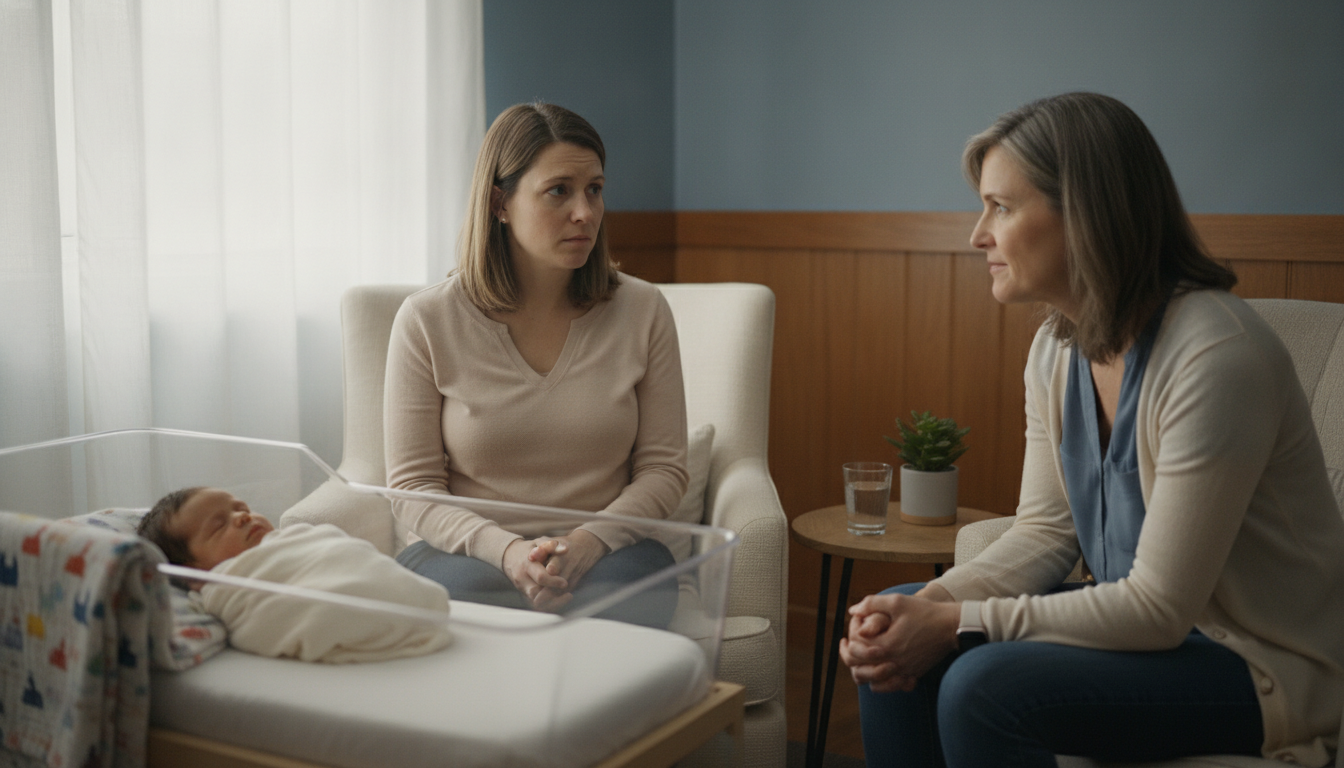
Postpartum depression isn’t the only thing that can knock you sideways after having a baby, and not knowing what you’re actually dealing with makes everything feel scarier. Postpartum anxiety, perinatal OCD, and postpartum psychosis are separate conditions, and research shows that up to 100 percent of new mothers have at least one unwanted intrusive thought, while actual postpartum psychosis affects only 1 to 2 in every 1,000 births. This guide explains what each one looks like and when to get help.
Beyond Postpartum Depression: What Else Can Happen
Most people have heard of postpartum depression. Far fewer have heard that anxiety, obsessive compulsive disorder, and psychosis can also show up in the weeks after birth. Clinicians often group these conditions under the term perinatal mood and anxiety disorders, since symptoms can start during pregnancy too, not only after delivery.
The American College of Obstetricians and Gynecologists recommends screening every pregnant and postpartum patient for depression, anxiety, bipolar disorder, suicidal thoughts, and psychosis, according to its ACOG screening guideline, rather than relying on a single depression questionnaire that can miss what’s actually going on. That matters because the treatment, the urgency, and the level of risk are different for each condition, even when the surface symptoms look similar.
Postpartum Anxiety and Intrusive Thoughts After Birth
Postpartum anxiety often shows up as nonstop worry about the baby’s breathing, feeding, or safety, along with racing thoughts and a body that will not relax even when the baby is fine. It can feel like your mind refuses to switch off, even when you are exhausted.
Intrusive thoughts after birth are also far more common than most parents expect, and having one does not mean something is wrong with you as a parent. In one large study, between 70 and 100 percent of new mothers reported intrusive thoughts about their infant, and close to half described thoughts that involved the idea of intentional harm. The OCD Foundation research found nearly identical numbers. A scary thought is not the same as wanting to act on it, and it is not the same as being close to acting on it.
Perinatal OCD: When Thoughts Feel Unwanted and Scary
Perinatal OCD takes those common intrusive thoughts and turns them into something that starts running the day. You might picture dropping the baby on the stairs, or worry you will lose control during bath time, and then spend hours checking, avoiding, or asking someone else to reassure you that everything is fine.
The key feature of perinatal OCD is that the thought feels wrong to the person having it. You know it does not match who you are, and that horror is exactly what drives the checking, the avoidance, and the reassurance seeking. A psychiatric research review on postpartum obsessions found that women with OCD, without psychosis, do not carry a higher risk of harming their baby, and that the distress itself tends to work as a protective signal rather than a warning sign. Treatment usually starts with education about how OCD actually works, followed by a therapy method called exposure and response prevention, sometimes paired with medication.
Common examples parents describe include:
- An image of the baby falling down stairs
- A fear of losing control while bathing or cooking near the baby
- A worry about leaving the baby somewhere unsafe by accident
- An urge to check breathing over and over through the night
Postpartum Psychosis Symptoms That Need Fast Action
Postpartum psychosis is rare, but it moves fast and needs emergency care. It shows up in roughly 1 to 2 out of every 1,000 births, according to a clinical provider guide written for maternity teams, and it often begins within the first two weeks after delivery.
Unlike perinatal OCD, a person in a psychotic episode may believe the frightening thought is true, necessary, or coming from an outside source, such as a voice or a message. A parent might go days without real sleep and not feel tired, become confused, or develop a fixed belief that something is deeply wrong with the baby. A recent psychiatric review found that about 4 percent of parents with postpartum psychosis who act on hallucinations or delusions end up harming their infant, which is exactly why fast professional care matters so much.
National guidance is direct about this. Suspected postpartum psychosis should get a same day mental health assessment, and NHS emergency guidance advises calling emergency services right away if there is any risk to the parent or the baby.
How Postpartum Depression Differs From OCD and Psychosis
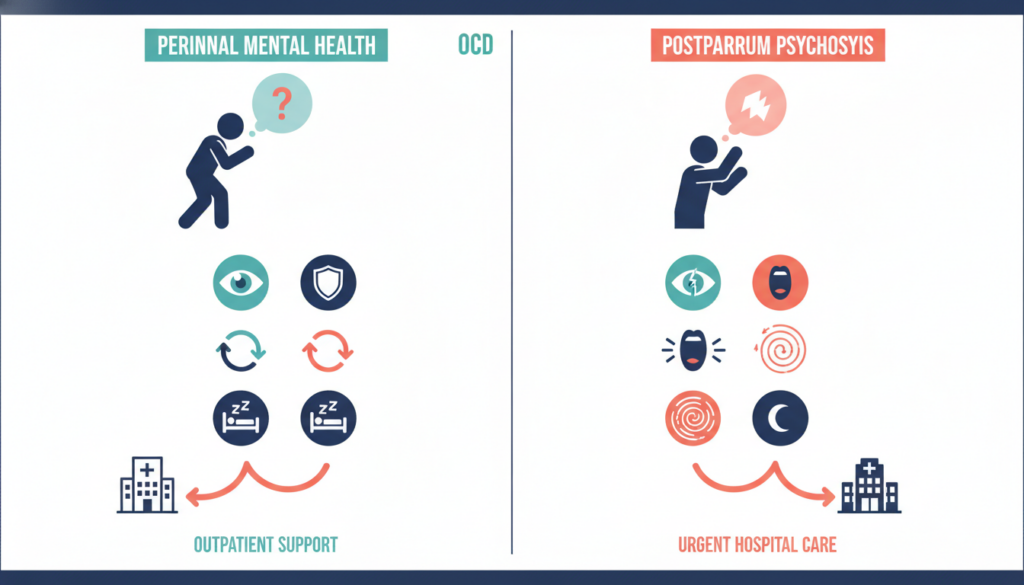
It helps to see these side by side, because the biggest difference is not the scary thought itself. It is how the parent relates to that thought.
| Feature | Perinatal OCD | Postpartum Psychosis |
|---|---|---|
| How the thought feels | Unwanted and upsetting | May feel true or required |
| Insight | Knows the thought is irrational | Insight is often lost |
| Reality testing | Stays connected to reality | Can become disconnected |
| Typical response | Avoids, checks, seeks reassurance | May act on the belief |
| Sleep pattern | Anxious but able to sleep | May barely sleep, without feeling tired |
| Care needed | Outpatient therapy and support | Emergency psychiatric care |
Postpartum depression looks different again. It tends to bring heavy sadness, low energy, guilt, and a sense of hopelessness, without the vivid unwanted images that mark OCD or the false beliefs that mark psychosis. Someone can also have more than one of these conditions at once, which is part of why a full evaluation matters more than trying to sort it out from a checklist alone.
Screening, Disclosure, and Getting Real Help
Standard depression screening tools such as the EPDS and PHQ9 are useful, but they were not built to catch OCD symptoms. A normal depression score does not rule out perinatal OCD. Clinicians need to ask directly about unwanted thoughts, checking behavior, and avoidance, not just mood.
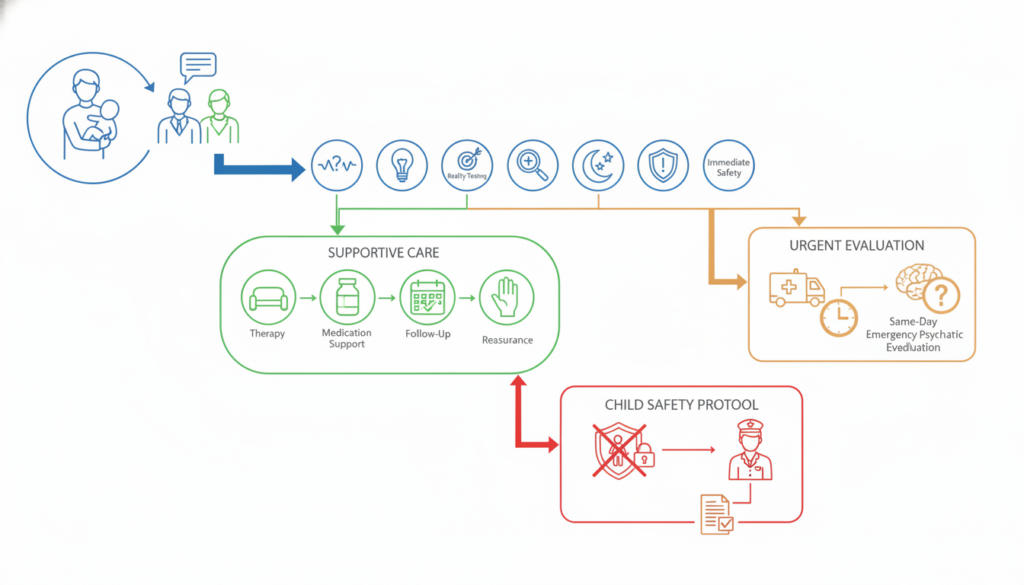
If you are a partner, friend, or clinician who is worried about someone, the safest approach is a calm, direct question. Something like: many new parents have scary or unwanted thoughts, has anything like that been happening for you. That kind of question opens the door without adding shame on top of fear.
Telling a doctor or therapist about these thoughts should lead to a careful conversation, not an automatic report to child protective services. A diagnosis, a hospitalization, or a frightening thought is not by itself proof that a child is in danger. Federal child welfare law sets only a minimum standard, and each state builds its own rules on top of it, so what counts as reportable depends on the actual facts and where you live, not on a mental health label alone. Psychology association guidance also notes that mandatory reporting rules vary widely by state and require real concern about abuse or neglect, not just a diagnosis on a chart.
Why This Distinction Matters for Families
Getting this right protects both parents and babies. Treating an unwanted OCD thought like proof of danger can lead to unnecessary emergency visits, unfair judgment, and parents who stop being honest with their doctors out of fear of losing their baby. Missing real psychosis, on the other hand, can be devastating, since symptoms can escalate within hours.
The simplest rule of thumb is this. Thoughts that feel horrifying and unwanted usually call for support and steady treatment. Beliefs that feel true, commanded, or paired with confusion and little sleep call for emergency care right away. Either way, no parent should have to sort this out alone, and asking for help early is a sign of strength, not failure.
Find Support That Fits Your Situation
If postpartum anxiety, intrusive thoughts, or sudden mood changes are making these first months feel unmanageable, you deserve real support, not guesswork. Call us to learn about our outpatient mental health services and take the next step toward feeling grounded.