
Body Dysmorphic Disorder Symptoms and the OCD Connection

If you can’t stop fixating on a flaw in your appearance that others barely notice, you may be dealing with something more serious than low self esteem. Body dysmorphic disorder is a diagnosable condition built on repetitive checking and grooming rituals, and clinicians group it with obsessive compulsive disorder because both involve intrusive, compulsive thought patterns. This guide covers real BDD symptoms, body dysmorphic disorder vs body image struggles, and why it sits on the OCD spectrum.
What Is Body Dysmorphic Disorder?
So what is BDD, exactly? It is a mental health condition where a person becomes fixated on one or more perceived flaws in their looks, flaws that other people see as minor or don’t notice at all. The DSM-5-TR criteria require more than simple dissatisfaction. A person needs repetitive appearance related behaviors or mental acts, real distress or trouble functioning day to day, and symptoms that aren’t better explained by an eating disorder.
More Than Vanity
BDD gets dismissed as vanity a lot, and that label misses the point entirely. Someone with BDD isn’t chasing beauty for fun. They feel trapped by a belief that a body part is disgusting, deformed, or impossible to be seen with, even when the feature is ordinary or barely visible to anyone else.
Clinicians place BDD among obsessive compulsive and related disorders rather than with anxiety or eating disorders, a placement that reflects the OCD related classification shared by both conditions. That single decision in the diagnostic manual tells you a lot about how the disorder actually works. The problem isn’t just a thought. It’s a thought paired with a compulsion the person feels they cannot skip.
Body Dysmorphic Disorder vs Body Image Issues
Most people dislike something about how they look sometimes. Wishing for clearer skin or straighter teeth doesn’t mean you have BDD. The clinical picture changes when the concern becomes intrusive and organized around rituals, a shift a Cleveland Clinic overview describes as checking, comparing, and seeking reassurance that rarely brings lasting relief.
Here is a simple test. Ordinary appearance concern stays flexible. You can skip the mirror, wear something plain, or let a comment roll off you without much trouble. BDD strips that flexibility away. Skipping a ritual can trigger real panic, shame, or a sense that something bad will happen if the person is seen without covering the perceived flaw.
Another marker is the size of the concern compared to what others actually see. A person can have completely clear skin and still believe it is ruined. That gap between perception and reality, paired with rituals and real suffering, is what tips the scale from body image struggle to a diagnosable disorder.
Common BDD Symptoms and Compulsive Behaviors
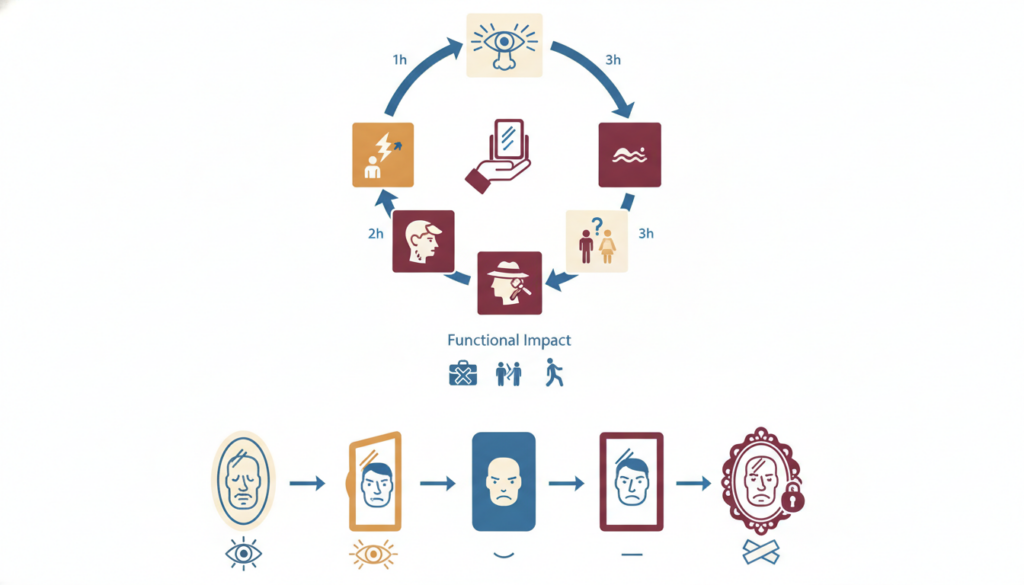
BDD symptoms tend to cluster around a handful of repeated behaviors. A large symptom review found these patterns in the large majority of people diagnosed with the disorder:
- Repeated mirror checking, often from different angles or under different lighting
- Comparing your face or body to other people, in person or through photos
- Camouflaging a disliked feature with makeup, hats, or clothing
- Asking friends or family for repeated reassurance about how you look
- Skin picking or excessive grooming aimed at fixing the perceived flaw
- Avoiding cameras, mirrors, or social events because the flaw might be noticed
How Much Time Does BDD Take Up?
Time is a useful clue, though it isn’t a formal cutoff. Many clinicians treat about one hour a day of appearance focused thinking as a rough marker of clinically significant preoccupation, based on expert diagnostic guidance from researchers who study the disorder closely. In practice, plenty of people with BDD spend several hours a day caught in checking, grooming, or mental comparison, and that time cost is often what drags down school, work, and relationships.
Is BDD an Eating Disorder?
Short answer, no, though the two can look alike from the outside. Eating disorders center on weight, food, and body fat. BDD usually centers on specific features such as skin, hair, the nose, or facial shape, and a person can have BDD without any disordered eating at all.
Weight concerns don’t automatically rule BDD out either. Someone can be diagnosed with both conditions at once, but only when each set of symptoms independently meets full criteria. When a person already meets criteria for an eating disorder, weight and shape concerns are generally attributed to that disorder first, according to guidance on the overlap between the two conditions. A separate BDD diagnosis still applies if the person has an independent preoccupation with another feature, like a perceived facial defect, that meets BDD criteria on its own.
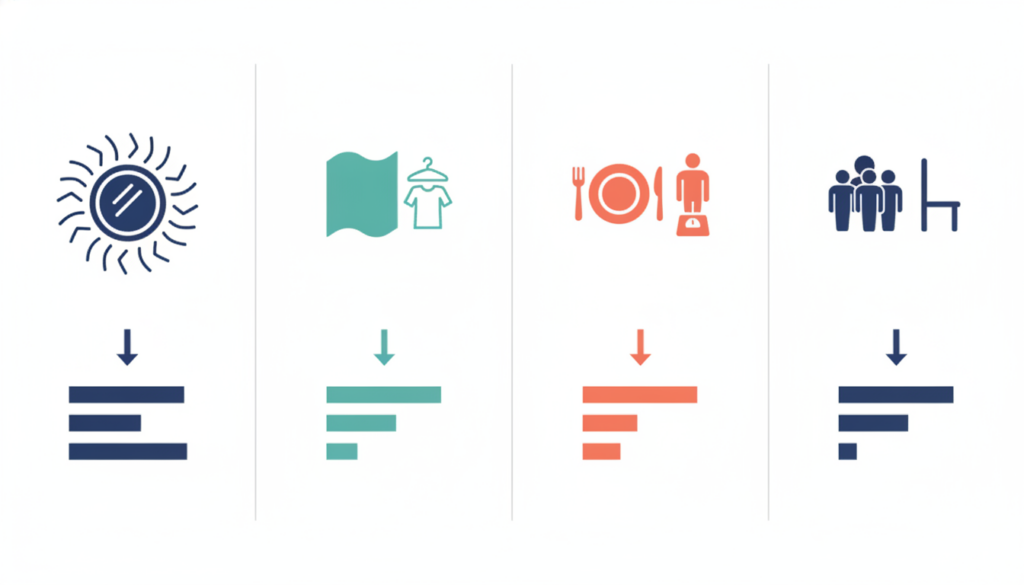
The practical difference clinicians look for is what organizes the person’s thoughts and behavior. If restriction, bingeing, or fear of weight gain drives the picture, an eating disorder is the better fit. If checking, camouflaging, and reassurance seeking revolve around a specific feature rather than weight, BDD fits better.
The OCD Connection: Why BDD Is an OCD Spectrum Disorder
BDD sits in the same diagnostic chapter as OCD because both conditions run on the same basic engine, an intrusive thought followed by a compulsive act meant to bring relief. In OCD, the intrusive thought might be about contamination or safety. In BDD, it’s about a perceived flaw. The compulsion looks different on the surface, hand washing versus mirror checking, but the underlying cycle is nearly identical.
Insight and Self Recognition
One shared feature worth understanding is insight, meaning how certain a person is that their belief is accurate. Someone with good insight might say their nose probably looks fine but they can’t shake the worry. Someone with poor insight is convinced the flaw is real despite reassurance. Research led by Katharine Phillips helped shape how the diagnostic manual handles the most extreme cases, where a person is completely convinced their belief is true. Rather than automatically calling that a separate psychotic disorder, it gets classified as BDD with absent insight, since the person can still recognize their own reflection. What they cannot do is doubt their interpretation of it.
BDD also overlaps with social anxiety disorder, since both can involve avoiding people out of fear of judgment. The difference often comes down to why someone fears social situations in the first place. A social anxiety comparison found that social anxiety usually centers on fear of general embarrassment, while BDD driven avoidance is tied specifically to shame about one perceived defect. Ask whether the fear would disappear if the perceived flaw simply vanished. If yes, BDD is likely doing the driving.
Getting Support for Body Dysmorphic Disorder
Left untreated, BDD tends to chip away at relationships, school, work, and a person’s sense of self worth over time. The good news is that it responds well to the right kind of care. A large treatment analysis of randomized trials found that BDD focused cognitive behavioral therapy produced large drops in symptoms, not just in how a person feels about one body part but in overall preoccupation and daily functioning.
Medication helps too. Serotonin reuptake inhibitors are considered a first choice treatment alongside therapy, and pharmacology research on the disorder found that fluoxetine produced a meaningfully higher response rate than placebo after a full 12 week trial. Neither treatment works instantly, and people often need more than a few weeks before real change shows up, which is worth knowing if progress feels slow at first.
None of this means a person with BDD needs to white knuckle their way through it alone or wait until things fall apart. The earlier the pattern gets named and addressed, the less time it has to reshape someone’s days around a flaw that, in most cases, nobody else can even see.
If obsessive thoughts about your appearance are running your day, you don’t have to sort it out on your own. Contact our team to learn more about our mental health program and take the first step toward feeling steady.