
Burnout vs. Depression: Signs, Overlap, and Key Differences

Burnout vs depression can look almost identical, but the key difference is whether your symptoms ease once you step away from work or stay the same no matter where you are. Research shows burnout exhaustion overlaps so strongly with depression that one large study found a correlation of about 0.80 between the two, meaning fatigue alone cannot tell them apart. This guide covers the signs of burnout, how to tell if it’s burnout or depression, and when it’s time to seek help.
Burnout vs Depression: What Sets Them Apart
When people ask about burnout vs depression, they’re usually trying to figure out why they feel drained, foggy, and unmotivated, and whether rest alone will fix it. The World Health Organization treats burnout as a work related response rather than a mental health diagnosis. Under the ICD11 system, burnout grows out of long term job stress that hasn’t been managed well, and it shows up through three things: feeling depleted, growing distant or cynical about the job, and feeling less capable at work. WHO draws a firm line here, stating that burnout describes the occupational phenomenon itself and should not be used to explain experiences outside of work.
Depression behaves differently. It’s a broader pattern that can touch mood, sleep, appetite, focus, self worth, and physical safety, and it doesn’t stay confined to one corner of life the way burnout does. The NHS outlines common depression symptoms such as persistent low mood, guilt, disturbed sleep, appetite changes, and loss of interest in things that used to feel enjoyable, all of which can show up just as easily on a day off as at your desk.
What Burnout Looks Like
Burnout tends to stay tied to the job. You might dread logging on Monday morning, feel numb toward coworkers or clients, or start doubting your own competence at work. Yet away from the office, on a weekend or during a real vacation, you may still laugh with friends, enjoy a hobby, or feel present with family.
What Depression Looks Like
Depression tends to follow you everywhere. A break from work, a vacation, or time with people you love may not lift the heaviness. You might lose interest in activities that once mattered, feel worthless or excessively guilty, or notice your movements and thinking have slowed down, regardless of your work schedule. 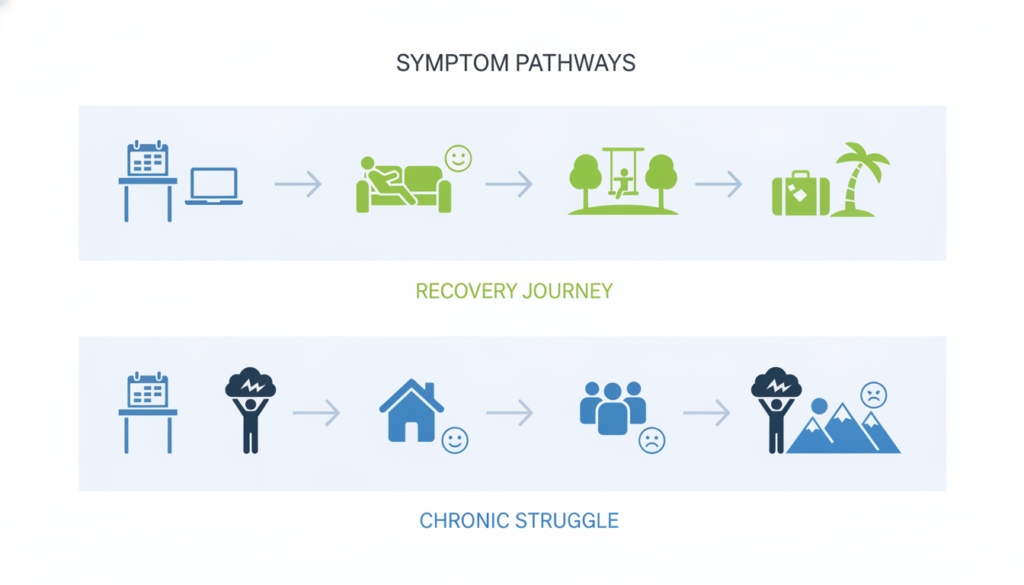
Signs of Burnout and Workplace Burnout Symptoms
Workplace burnout symptoms usually build slowly, often after months of understaffing, unclear expectations, or work that never seems to end. Common signs of burnout include:
- Constant exhaustion that sleep doesn’t fix
- Cynicism or detachment toward your job, coworkers, or clients
- Feeling less capable at tasks you once handled easily
- Trouble concentrating during meetings or routine work
- Dread before the workday starts and relief once it ends
- Irritability that eases once you’re away from the job
These signs of burnout are common and real, but they don’t tell the whole story on their own. Fatigue, poor concentration, and low motivation show up in depression too, which is exactly why exhaustion by itself is such a weak clue.
Is It Burnout or Depression? A Practical Test
One approach clinicians use, sometimes called the symptom persistence test, is simple to apply. Ask yourself whether your symptoms ease when you step away from work, during evenings, weekends, or an actual vacation. If you notice real relief and can still feel pleasure, connection, or calm once you’re off the clock, a work centered burnout picture becomes more likely.
Picture someone who feels emotionally flattened after a string of demanding shifts but reconnects with family, laughs with friends, and enjoys a hobby within a few days off. That pattern leans toward burnout rather than depression.
This test is a helpful clue, not a diagnosis. A large systematic review covering dozens of studies found that burnout and depression overlap so much that researchers still can’t agree they’re fully separate conditions. In an analysis of more than 12,000 workers, exhaustion from burnout showed a strong correlation with depression, at roughly 0.80, a link so tight that fatigue alone cannot reliably separate the two.
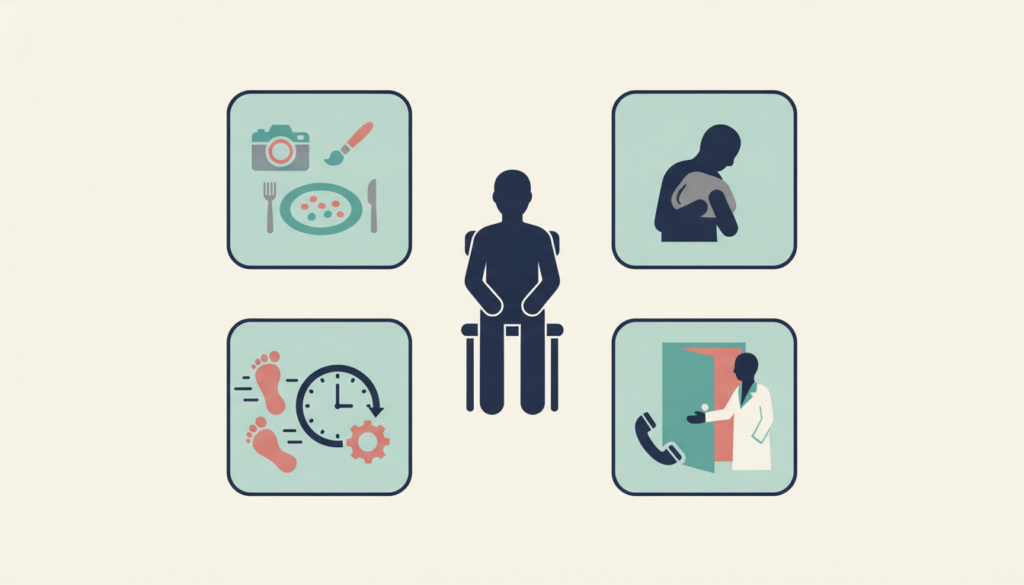
The clearest warning sign that something beyond burnout may be happening is a loss of pleasure that reaches outside of work entirely. Clinical guidance on depression notes that preserved enjoyment of hobbies and relationships supports a burnout picture, while losing pleasure across the board points more toward depression, though it also cautions that depression can appear without a complete loss of interest.
The Burnout Vs Depression Overlap To Take Seriously
The burnout depression difference that matters most isn’t which symptoms show up, it’s how far those symptoms reach. By WHO’s own definition, burnout applies only to the occupational context, meaning it’s meant to explain job related strain, not life in general.
Depression can spread into sleep, appetite, relationships, self worth, and physical movement, well beyond the office. Research on time away from work supports this idea. A vacation recovery study found that stepping away can ease work related rumination and exhaustion, though the benefit can fade fast once someone returns to the same stressful environment. That fading effect helps explain why prolonged burnout can start to look a lot like depression when the underlying stress never really lets up.
When Burnout or Depression Becomes an Emergency
Regardless of which label fits best, some symptoms should never be brushed off as ordinary work stress. Thoughts of death, self harm, or feeling like a burden fall outside the burnout definition entirely and call for direct evaluation. NIMH’s warning signs list includes talking about being a burden, feeling trapped or hopeless, and withdrawing from people you love.
If someone says they’re having thoughts of killing themselves right now, treat it as urgent. NIMH’s safety guidance offers clear urgent evaluation guidance stating that current thoughts of suicide require immediate mental health evaluation, and the person should not be left alone.
Clinical guidance from NICE also recommends asking direct questions about suicidal thoughts rather than avoiding the topic, noting that asking plainly does not increase risk and can open the door to real support.
Why Getting This Right Matters
Getting the burnout depression difference right isn’t about landing on the perfect label. It’s about making sure real distress gets the right kind of help. Someone whose exhaustion lifts with rest and time away from a hard job may need workplace changes, clearer boundaries, and support from managers or occupational health. Someone whose sadness, guilt, or hopelessness follows them everywhere needs more than a vacation. They need a proper evaluation, and if thoughts of death or self harm show up, they need that evaluation quickly. Naming the problem accurately, whether that’s burnout, depression, or both together, is what opens the door to care that actually helps.
If what you’ve read here feels familiar, you don’t have to sort out burnout versus depression on your own. Reach out to a caring provider and book a consultation to get clarity on what’s going on and find a path toward feeling better.