
Eating Disorders in Midlife: Not Just a Teenage Illness

Many people assume eating disorders in midlife cannot happen to someone in their forties, fifties, or sixties, but that assumption keeps real cases hidden in plain sight. Research shows up to 7.7% of women over 40 live with a full eating disorder, and midlife anorexia or adult-onset bulimia can begin for the first time during menopause or divorce. This article covers how these later-onset eating disorders show up, why screening tools often miss them, and what a full assessment checks.
Eating Disorders in Midlife Are More Common Than You Think
Picture the person you imagine when you hear the phrase eating disorder. If that person is a teenage girl, you are not alone, and you are also missing most of the picture. Eating disorders in midlife are common enough that clinicians are urged to ask about them routinely, yet they slip past notice again and again. Among adults over 40, research summarized by the National Eating Disorders Association puts the share of women who meet full criteria for an eating disorder diagnosis somewhere between 2% and nearly 8%, with about 1% of men affected as well. Many more people have symptoms serious enough to disrupt daily life without checking every box needed for a formal diagnosis.
These cases do not follow one single path into illness. Some people have carried an eating disorder since their teenage years without full recovery. Others recover for years and then relapse under stress. And some develop a first episode well into midlife, often tied to menopause, a divorce, an empty house once the kids leave, or the strain of caring for an aging parent. Later-onset eating disorders rarely look like a stock photo of anorexia. They tend to show up as stomach trouble, sleep problems, low mood, or a diabetes diagnosis that will not stabilize, which is part of why they get missed for so long.
None of this is limited to thin young women. Adults at every body size, men, and people going through major body changes from illness or surgery can all develop these patterns. Weight alone tells you very little about how sick someone actually is.
Why Later-Onset Eating Disorders Get Overlooked
Doctors are trained to expect eating disorders in young, visibly thin women. So when a 52 year old describes bloating, fatigue, or trouble sleeping, the eating disorder possibility often is not on the list. The Centre for Addiction and Mental Health points out that patients rarely walk in and say they think they have an eating disorder. Instead they mention constipation and mood changes, weight fluctuation, or anxiety, and the underlying pattern stays hidden unless someone asks direct questions about food, weight control, and exercise.
Midlife carries its own set of pressures that can trigger or reawaken disordered eating. A recent review of the evidence points to menopause, grief, divorce, retirement, chronic illness, and weight loss surgery as common turning points for eating disorders in older adults who never expected to face one. Hormonal shifts during perimenopause can change appetite and body shape at the same time depression, insomnia, or anxiety are also rising, and that mix can push someone toward restriction, bingeing, or compulsive exercise for the first time in their life. This does not mean menopause causes an eating disorder on its own. It means the body and the mind are both under strain at once, and stress from any direction can tip someone into a harmful pattern.
Shame adds another layer. A middle aged adult who develops restrictive or binge eating patterns may feel embarrassed that they are dealing with something they think of as a young person’s problem. That embarrassment can keep them from mentioning symptoms even when a doctor asks general questions about health and stress.
Midlife Anorexia and Adult-Onset Bulimia Explained
Midlife anorexia rarely looks like the severe, visibly underweight cases doctors are trained to spot. A person can lose a large share of body weight while still sitting inside a normal or even high weight range, a pattern known as atypical anorexia. The person may still fear weight gain intensely, restrict food harshly, and exercise to the point of exhaustion, all while friends and coworkers compliment the weight loss. The OSFED classification covers exactly this kind of case, along with bulimia that happens less than once a week, binge eating that does not fit every technical threshold, and purging without any bingeing at all. None of these are minor versions of the illness. They can be just as serious, medically and emotionally, as textbook anorexia or bulimia.
Adult-onset bulimia often develops quietly. A person may start bingeing at night after years of ordinary eating, then vomit, misuse laxatives, or exercise hard to compensate, all in private. Many people at a normal or higher weight who binge and purge never get asked about it directly, because clinicians assume bulimia belongs to a younger patient. Detailed clinical guidance in the eating disorder medical care guide recommends asking about every method of weight control, not only vomiting, since laxative misuse, diuretic misuse, and driven exercise reveal just as much as classic purging behavior.
Compulsive exercise deserves its own mention because it so easily hides behind praise for discipline. Exercise becomes a symptom rather than a healthy habit when someone cannot rest, feels intense guilt over a missed session, or keeps going despite injury or exhaustion, a pattern documented in a driven exercise study that looked closely at this kind of compensatory movement. Food avoidance driven by sensory issues, fear of choking, or ongoing gut symptoms rather than weight concerns is its own separate pattern too, and it needs a different conversation entirely.
Here is a simple breakdown of common midlife presentations and why each one tends to slip past notice.
| Presentation | What it can look like in midlife | Why it gets missed |
|---|---|---|
| Midlife anorexia | Rapid weight loss and rigid food rules, even at a normal or higher weight | Weight loss gets praised instead of questioned |
| Adult-onset bulimia | Private bingeing followed by vomiting, laxatives, or hard exercise | Normal weight hides the pattern |
| Binge eating disorder | Repeated loss of control eating, shame, and secrecy, often tied to menopause or stress | Mistaken for poor willpower or normal overeating |
| Purging disorder | Vomiting or laxative misuse without bingeing | Screening tends to focus on bingeing, not purging alone |
| Compulsive exercise | Rigid, driven activity used to control weight or offset eating | Seen as healthy discipline rather than a symptom |
What Screening Tools Miss in Older Adults
Most primary care visits use a five question tool called SCOFF to flag possible eating disorders, and it can work well for exactly what it was built for. It was developed in 1999 using a small sample of women aged 18 to 40, well before eating disorder diagnoses expanded to include binge eating disorder and the wider OSFED category. A large meta-analysis pooling 25 validation studies found the tool caught roughly 86% of true cases and correctly ruled out about 83% of people without an eating disorder, which sounds solid until you look at who was actually studied. The strongest evidence supports SCOFF for young women at risk of anorexia or bulimia, not for the wider range of patterns seen in midlife.
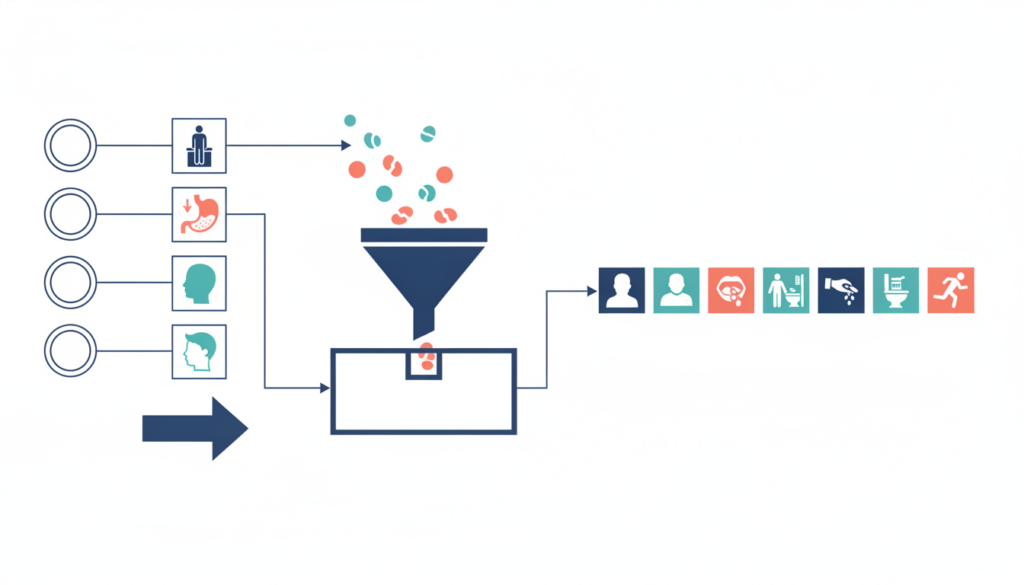
A community sample study that included a broad mix of adults found something more troubling. SCOFF’s sensitivity dropped to just under 54% in that group, meaning it missed nearly half of real cases. The people it missed were women aged 35 to 54, most with a higher body weight, who had binge eating disorder or an OSFED pattern involving excessive exercise. In other words, the exact patients that midlife screening most needs to catch turned out to be the ones a quick questionnaire was most likely to miss.
The U.S. Preventive Services Task Force reached a similar conclusion in its own task force review, noting that most supporting studies involved adult women, with far less evidence for men, older adults, and other groups. None of this makes SCOFF worthless as a starting point. It means a negative result should open a longer conversation, not close one.
The Value of a Full Diagnostic Assessment
A short questionnaire cannot replace a real conversation about someone’s relationship with food, weight, and their body over time. A full eating disorder evaluation looks at weight history going back years, not just today’s number on a chart. It asks about skipped meals, food rules, binge episodes, every method used to control weight, exercise habits, mood, trauma history, medication and supplement use, and how symptoms are affecting work, relationships, and daily life.
It also includes blood work and a check of heart rate and blood pressure while lying down and again while standing, because dangerous complications like a slow heart rate, low blood pressure, and electrolyte imbalances can occur even when someone’s weight looks unremarkable. Normal lab results do not rule out a serious problem either. A person can carry significant malnutrition while their blood work still looks fine on paper.
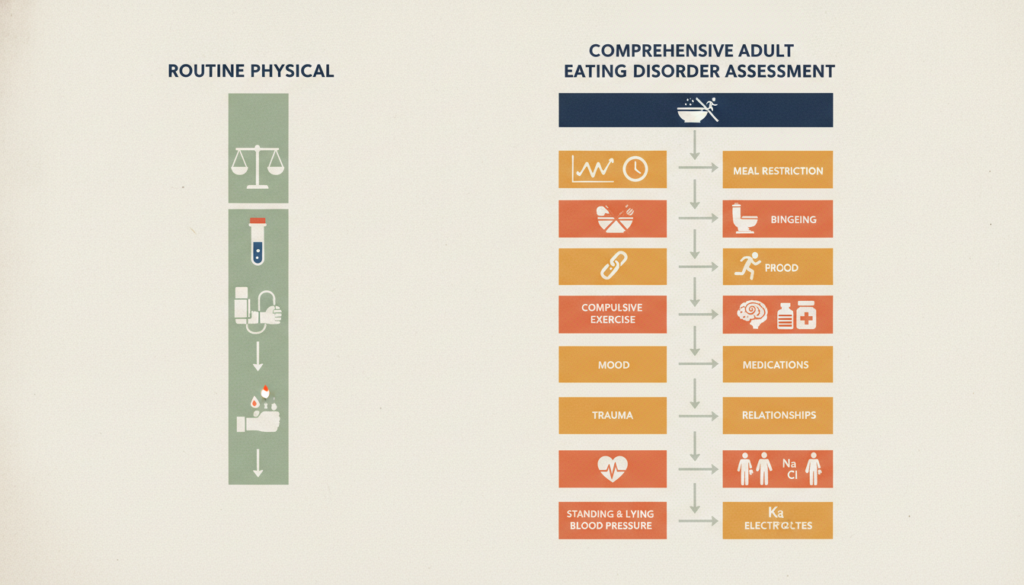
The clearest lesson from the evidence is that body weight alone cannot tell a clinician whether someone is sick or how sick they are. A patient’s history, their behavior, and how symptoms are affecting daily life matter just as much as any single number.
Getting Help for Eating Disorders in Midlife
Left unaddressed, eating disorders in midlife do not resolve on their own just because someone has more life experience or better coping skills than they did at twenty. Restriction, bingeing, and purging carry the same medical risks at fifty that they do at fifteen, and shame about having an eating disorder later in life often keeps people from asking for help at all. Recognizing midlife anorexia, adult-onset bulimia, binge eating disorder, or any other pattern early gives someone a real shot at treatment before complications build up.
If any of this sounds familiar, whether it is your own experience or something you have noticed in someone you love, a conversation with a provider who treats adults is a reasonable next step. You do not need to wait until things feel unbearable, and you do not need to fit a stereotype to deserve support.
If you are ready to talk with someone who understands adult mental health and eating concerns, reach out to explore Mosaic Wellness & Recovery outpatient program and take the first step toward feeling steady again.