
EMDR Therapy for Depression and Anxiety: What to Expect

If depression or anxiety keeps circling back to memories you cannot quite let go of, you might wonder whether EMDR therapy for depression actually helps or if it only works for trauma survivors. Research on EMDR and depression shows real promise, including one review of 320 adults that found a strong drop in depression scores, though it has not been shown to beat standard treatments outright. This guide walks through what a real session looks like, what the evidence supports, and how to know if it fits your situation.
What Is EMDR Therapy for Depression and Anxiety?
EMDR stands for Eye Movement Desensitization and Reprocessing. It was built as a structured therapy for trauma, and it still has its deepest roots there. The idea is that distressing memories sometimes get stored in a way that keeps triggering emotions, body sensations, and beliefs long after the event is over. During a session, you focus briefly on a difficult memory while following a back and forth motion, such as the therapist’s fingers, a light bar, or alternating tones. This is meant to help your brain file the memory away in a less charged, more settled form.
The treatment has expanded well past posttraumatic stress. Therapists now use EMDR therapy for anxiety and depression, grief, chronic pain, and more. That expansion is worth knowing about, because helping with a symptom does not automatically mean a treatment is proven for every diagnosis tied to that symptom. The strongest evidence remains for PTSD, where the Department of Veterans Affairs describes EMDR as one of the most studied psychotherapies available, typically delivered weekly over about three months.
How EMDR Sessions Work: The Eight Phases
A full course of EMDR is not just eye movements. It runs through eight phases, though a therapist may move back and forth between them depending on how you respond.
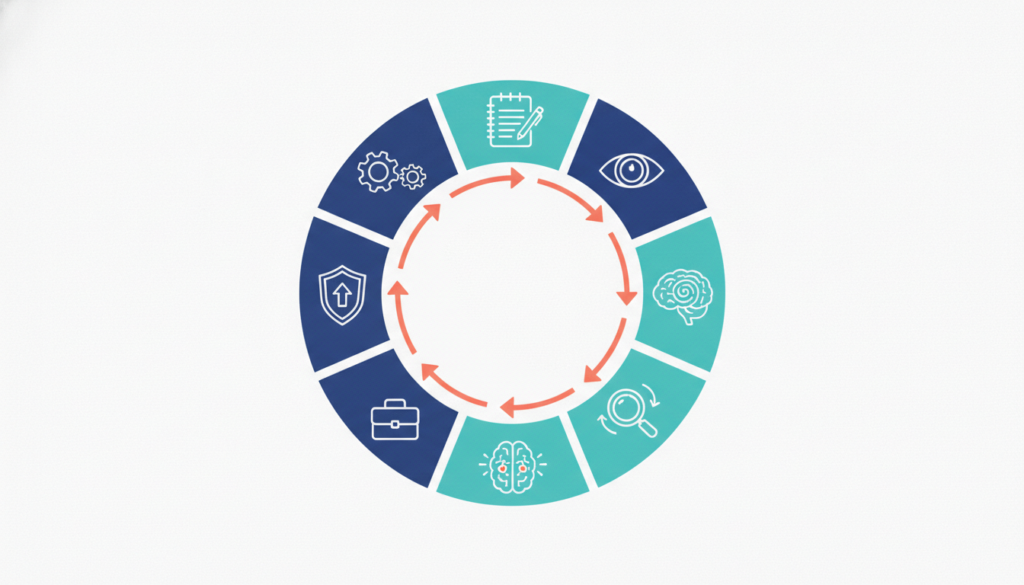
Early sessions focus on your history, your goals, and whether specific memories or beliefs seem connected to your current depression or anxiety. Next comes preparation, where you and your therapist build coping tools, agree on how you will signal if things feel too intense, and make sure you can settle back down after getting activated. Only after that does the actual memory work, called desensitization, begin. Each session ends with closure, meant to leave you oriented and not stuck mid memory, and every new session opens with a check in on what shifted since last time.
This structure matters because rushing straight to a painful memory without preparation is not how the treatment is meant to work, and it is not how the research studies delivered it either.
Does EMDR Work for Anxiety and Depression?
The honest answer is that EMDR probably helps some people, but the evidence is thinner and less settled than it is for PTSD. A 2021 review of eight trials and 320 adults with diagnosed depression found a large reduction in symptom severity compared with inactive control groups. That same review, though, found no significant improvement in remission rates, meaning fewer people fully recovered than the symptom scores alone might suggest.
A broader 2026 analysis pooling 40 clinical trials and over 2,000 participants found EMDR reduced both depression and anxiety symptoms overall. But when researchers separated the comparisons, the benefit against passive controls like waiting lists was large, while the benefit against other active therapies, such as CBT, was smaller and statistically shaky. That pattern shows up again and again in this research: EMDR looks strong next to doing nothing, and less clearly superior next to another solid treatment.
One trial worth knowing about is the EDEN study, which randomized 82 patients with recurrent depression to receive either EMDR or CBT alongside their antidepressant medication. Both groups improved substantially over 15 sessions, and the gains held at six month follow up. EMDR was not shown to beat CBT, but it held its own as an add on treatment, which is a meaningfully different claim than saying EMDR cures depression on its own.
| EMDR Compared To | What Research Found |
|---|---|
| Waiting list, no active treatment | Large drop in symptoms for depression, anxiety, and PTSD |
| Active therapy like CBT | Smaller, less certain advantage |
| PTSD populations specifically | Most consistent and best replicated results overall |
For anxiety specifically, the picture is even less settled. Much of the anxiety improvement seen in EMDR research comes from people with PTSD or mixed diagnoses, not from trials built around generalized anxiety, panic disorder, or social anxiety on their own. A panic disorder trial involving 84 adults over 13 sessions did find EMDR held up about as well as CBT on several measures, which is encouraging, but it is one study in one specific anxiety condition, not proof that EMDR treats anxiety broadly.
What to Expect Session by Session
There is no single fixed length for a course of EMDR, because the right dose depends on what you are treating and how complex your history is. The National Institute for Health and Care Excellence recommends EMDR for PTSD be delivered manually by a trained clinician, generally over eight to twelve sessions, with more added when needed.
For depression, the research picture looks different. A pilot study of adolescents with major depression used just six weekly sessions, each built around a memory the teen identified as tied to their depressive symptoms. About six in ten no longer met criteria for depression afterward, and that number rose slightly by the three month follow up. Still, nearly forty percent continued to meet full criteria, and most participants went on to receive additional support like CBT or medication adjustments. That is a useful reminder that even a promising short course is rarely the entire answer for depression on its own.
Expect your therapist to check in often. Sessions typically open with a review of what came up since last time, whether that is a dream, a new memory, or simply feeling more settled. If a target memory is not fully processed by the end of a session, your therapist should help you feel oriented and grounded before you leave, not send you out mid distress.
Is EMDR Therapy for Depression Right for You?
The strongest case for EMDR and depression is not “depression in general.” It is depression that seems tied to specific unresolved experiences, things like childhood neglect, humiliation, betrayal, or a loss that keeps resurfacing with the same emotional charge every time. If your depression is dominated by shame, guilt, or a recurring sense of helplessness that traces back to particular memories, EMDR has a more direct evidence base to draw on.
It is a less clear fit when depression feels biological or generalized, without an obvious memory network behind it, or when someone is in an acute crisis that needs stabilization first. It is also not a substitute for medication management in cases where that is clearly needed, or for mood stabilizing care in bipolar spectrum conditions. A good therapist will ask about your history early on specifically to figure out whether your symptoms have this kind of adverse event architecture before recommending EMDR as a central part of your plan.
Does EMDR work for depression when it is used this way, as one part of a bigger plan rather than a stand alone fix? The evidence leans toward yes for the right presentation, particularly when it is paired with medication or another therapy rather than used in isolation.
Common Reactions and When to Reach Out
It is common to feel emotionally tired, unusually sensitive, or to have vivid dreams for a day or two after a session. Some people notice brief increases in anxiety or intrusive thoughts as material gets stirred up. These reactions usually settle within a short window and are not, by themselves, a sign that anything has gone wrong.
What is not normal is distress that keeps climbing instead of settling, an inability to sleep, eat, or function at work or school, or grounding techniques that stop working entirely. A clear resource on this distinction notes that severity and duration matter more than whether you feel worse at all, since feeling worse should never be treated as automatic proof that treatment is working. If you notice escalating panic, new safety concerns, or a sense of being unable to return to baseline, contact your therapist promptly rather than waiting for the next scheduled session.
Depression and anxiety rarely respond to just one tool, and EMDR is no exception. It may reduce the pull of certain memories while leaving other pieces, like sleep, daily structure, or ongoing stress, for other parts of your care plan to handle.
If you think EMDR might fit into your own treatment plan for depression or anxiety, the best next step is talking it through with a clinician who can look at your full history and goals. Reach out to Mosaic Wellness & Recovery and book a consultation to start figuring out what actually makes sense for you.