
Emotional Dysregulation in Borderline Personality Disorder

If your emotions swing from calm to overwhelming in minutes, especially after a perceived rejection, you might be dealing with emotional dysregulation in borderline personality disorder rather than an ordinary bad mood. These shifts often follow a clear trigger, like feeling abandoned, and typically last hours rather than the days or weeks of a bipolar mood episode. Here is what sets BPD apart, plus how DBT for BPD helps people manage it.
What Is Emotional Dysregulation in BPD?
Emotional dysregulation means the brain and body struggle to bring an emotional reaction back down to a manageable level once it starts. It shows up in a lot of conditions, not just BPD. Attention deficit disorders, trauma related conditions, sleep loss, and even a rough week can all produce something that looks like it. This makes emotional dysregulation a transdiagnostic process rather than proof of any single disorder on its own.
In BPD specifically, the pattern has a particular shape. A major clinical review describes it as four connected pieces working together: high emotional sensitivity, strong and unstable negative feelings, not enough use of helpful coping tools, and heavy reliance on coping strategies that end up making things worse. Research framing these four components of dysregulation helps explain why two people can both feel devastated after an argument, yet only one spirals into self harm, panic messaging, or hours of shutdown.
So what is BPD, in plain terms, if it is not just strong feelings? It is a long standing pattern that affects how someone regulates emotion, sees themselves, and relates to other people, present across many parts of life rather than one bad relationship or one hard year.
Core Borderline Personality Disorder Symptoms
Borderline personality disorder symptoms cover more ground than mood alone. Diagnostic criteria describe a pattern of instability in relationships, self image, and impulse control, plus marked mood reactivity, starting by early adulthood and showing up across settings, not just at home or only at work. A person needs at least five of nine specific features for a formal diagnosis, based on the official criteria used by clinicians.
Those nine features include frantic efforts to avoid abandonment, relationships that swing between idealizing someone and feeling furious at them, an unstable sense of identity, impulsive behavior in risky areas, repeated self harm or suicidal behavior, mood reactivity, chronic emptiness, intense anger, and short episodes of paranoia or feeling disconnected from reality under stress. Affective instability, the emotional piece most people picture, is only one of nine. A broad clinical review of BPD makes this point directly. Diagnosing someone from intense emotion alone skips the rest of the picture entirely.
Why One Symptom Is Not Enough
Anger after criticism, crying for hours, or a single episode of self harm can happen to people without BPD. What separates ordinary distress from the disorder is whether the pattern repeats across relationships and years, and whether it comes packaged with the identity and impulse control problems above. A single rough breakup does not meet the bar, no matter how painful it feels.
BPD Emotional Dysregulation vs Bipolar Mood Swings
Because both conditions involve mood instability, sleep problems, and impulsive choices, BPD emotional dysregulation gets confused with bipolar disorder often. The clearest way to tell them apart is timing and structure, not intensity.
Bipolar disorder runs on discrete episodes with formal length requirements. A hypomanic episode needs at least four days of change, mania needs seven days or hospitalization, and major depression needs two weeks. Bipolar II specifically requires one hypomanic episode lasting at least four days plus a major depressive episode, without a history of full mania. BPD affective shifts, by contrast, usually arrive fast after an interpersonal trigger, like feeling ignored or criticized, and settle within hours rather than running for days on their own.
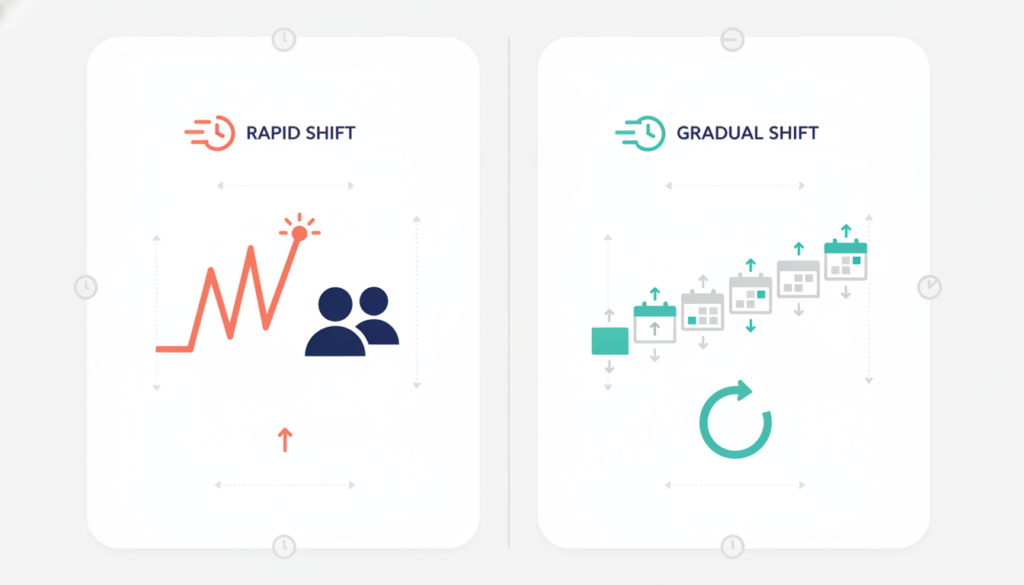
Daily mood tracking backs this up. A study that had participants report their emotions several times a day found that people with BPD showed sharper swings and bigger jumps in hostility, fear, and sadness than a depression comparison group, even though their overall average mood level was similar. This daily monitoring research suggests the real difference is how fast and how far emotion moves, not simply how bad it gets on average.
| Feature | BPD emotional dysregulation | Bipolar mood episode |
|---|---|---|
| Typical trigger | Perceived rejection, abandonment, or criticism | Not required to be interpersonal |
| Typical duration | Hours, occasionally a few days | Days to weeks, with formal minimums |
| Onset speed | Rapid, often within minutes | Can build over days |
| Between episodes | Instability may continue | Often calmer, more stable baseline |
| Core issue | Personality wide pattern | Distinct mood episode |
Neither condition rules out the other. A person can have both, and stress can bring on a bipolar episode just as easily as it can trigger a BPD reaction. The point of comparing them is not to force a single label, but to ask the right questions about pattern and timing.
Is It BPD or Just Intense Emotions?
Feeling things deeply is not a disorder. Plenty of people cry easily, get rattled by conflict, or need a full day to recover from a hard conversation, without any of the identity or relationship instability that marks BPD. Temperament, poor sleep, grief, and ordinary stress can all turn up the emotional volume without meeting a clinical threshold.
The line gets crossed when coping ability runs out. One person might feel crushed after a perceived slight, talk to a friend, sleep on it, and feel better by morning. Another might feel the same crushing reaction, then send dozens of frantic messages, threaten self harm, use substances to cope, and still feel raw and ashamed days later. Both felt intense emotion. Only the second pattern points toward something more serious.
Distress tolerance matters as much as the emotion itself. One review notes that strong emotional reactivity looks especially connected to BPD when it pairs with low ability to tolerate discomfort, not simply when feelings run hot. That combination, strong reaction plus poor tolerance plus harmful coping, is what clinicians watch for, not the volume of the emotion on its own.
Treating Emotional Dysregulation With DBT for BPD
DBT for BPD, or Dialectical Behavior Therapy, remains one of the most studied treatments for people with BPD who struggle with self harm and suicidal behavior. It was built specifically for this population, and full model DBT is more than a coping skills class. It combines weekly individual therapy, a weekly skills group, coaching between sessions, and a weekly team meeting where therapists support each other, a structure sometimes called the four treatment modes.
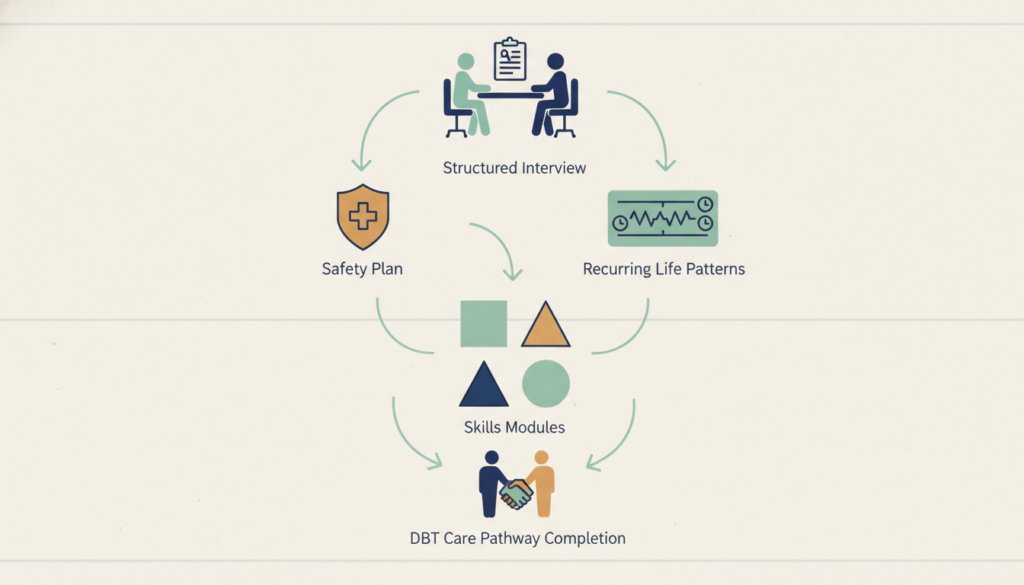
The skills group teaches four sets of tools: mindfulness, distress tolerance, emotion regulation, and interpersonal effectiveness. Mindfulness helps a person notice an urge before acting on it. Distress tolerance offers ways to get through a crisis without making it worse. Emotion regulation reduces the buildup of vulnerability that makes reactions bigger than they need to be. Interpersonal effectiveness gives language for asking, refusing, and setting boundaries, which matters given how often BPD crises start with a relationship event.
Research on this model has found real effects. A trial comparing full DBT against two stripped down versions found that groups receiving skills training showed greater drops in self harm and better mood outcomes than those without it, even though all three approaches reduced suicide attempts by similar amounts. This skills training trial supports skills work as an active ingredient, not just background education, though it does not suggest an unsupported skills class alone is enough for someone at high acute risk. The updated treatment guideline from the American Psychiatric Association also points to structured therapy, along with a clear plan for suicide and self harm risk, as central to good BPD care.
A typical adult course runs through a skills cycle of about 24 weeks, often repeated over roughly a year, though the right length depends on how severe the pattern is and how the person is progressing. Adolescents get a version adapted for family involvement, since teens live inside their household environment far more than adults do.
Why Getting the Diagnosis Right Matters
Calling every mood swing bipolar, or every intense feeling BPD, leads to the wrong treatment plan. Someone with true bipolar disorder needs mood stabilizing care and close monitoring for episode warning signs. Someone with BPD needs structured therapy that targets triggers, identity, relationships, and impulse control together, not medication alone. Missing the real pattern can mean months of treatment aimed at the wrong target while the person keeps struggling.
Emotional dysregulation on its own tells you almost nothing about which condition is behind it. What tells the real story is the shape of the pattern over months and years: how fast it starts, what sets it off, how long it takes to settle, and what else shows up alongside it, from identity confusion to chronic emptiness to relationship chaos. A careful, longitudinal look, ideally with a trained clinician using a structured interview rather than a quick checklist, is still the most reliable way to sort out what is actually happening and what kind of help will actually work.
If you recognize yourself or someone you love in this pattern, you do not have to figure it out alone or guess at a label from a symptom list online. Reaching out to a program built around structured, evidence based care can help you get a clear picture and a real plan, so talk with a provider about an outpatient mental health program that offers DBT and can walk you through the next step.