
Postpartum Depression vs. Baby Blues: Signs and Timeline

Feeling weepy and overwhelmed right after birth is common, but knowing whether it is baby blues or postpartum depression can be confusing. Baby blues usually begin around day two or three, peak near day five, and fade on their own within two weeks, while postpartum depression lingers, worsens, or brings warning signs like hopelessness or thoughts of self harm. This article breaks down the timeline, the signs to watch for, and how to help someone who may be struggling.
What Separates Postpartum Depression From Baby Blues
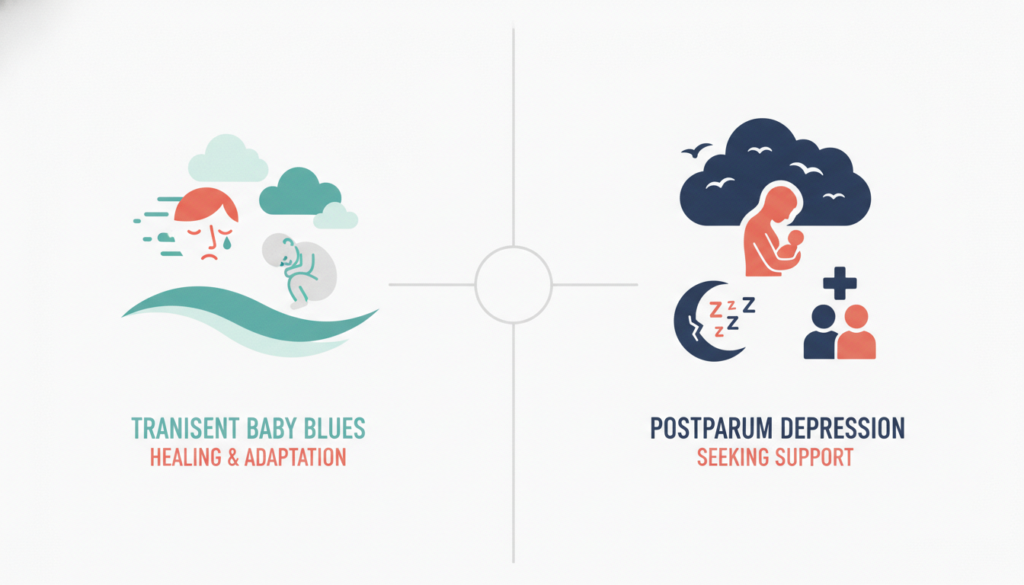
The difference between postpartum depression and baby blues is not about which single symptom shows up first. It comes down to how long symptoms last, how severe they get, whether they interfere with daily life, and whether safety becomes a concern. According to a perinatal depression review, baby blues are a short lived wave of tearfulness, mood swings, anxiety, and fatigue that most new parents feel in the days after delivery. Postpartum depression can share those same symptoms, but it sticks around, deepens, and can pull a parent away from caring for themselves or their baby.
Both conditions can involve crying, irritability, poor sleep, and feeling overwhelmed. That overlap is exactly why timing and severity carry so much weight when telling them apart.
The Baby Blues Timeline, Day By Day
Postpartum blues tend to follow a fairly predictable postpartum blues pattern, according to research from the MGH Center for Women’s Mental Health. Symptoms usually start about two to three days after delivery, build to their worst point around day four or five, and taper off on their own by day ten to fourteen.
During this window, a parent might cry easily, feel emotionally raw, or snap over small things, but they usually still have moments of connection with the baby and can generally manage daily tasks, even if it takes extra effort. Mood swings tend to come and go throughout the day rather than sitting as one constant low that never lifts.
When Baby Blues Cross Into Postpartum Depression
Two weeks is a useful marker, not a strict deadline. Clinical guidance treats day fourteen as the point where caregivers should stop assuming symptoms are simple hormonal adjustment and start asking harder questions. Symptoms that remain past two weeks, get worse instead of better, or come with intense guilt, hopelessness, or an inability to sleep even when the baby is asleep point toward something beyond ordinary blues.
Baby blues themselves are not nothing to worry about. Research cited in the same review found that nearly 28 percent of parents who had baby blues went on to develop later depression, compared with about 16 percent of those who did not have blues. So a rough patch in the first two weeks is still worth mentioning to a doctor, even after it passes.
Diagnostic labels add another layer of confusion. The American Psychiatric Association’s diagnostic manual does not list postpartum depression as its own condition. Instead, a major depressive episode can carry a peripartum onset label when it starts during pregnancy or within four weeks after birth. That four week window is narrower than most people expect, which is why the American College of Obstetricians and Gynecologists uses a broader twelve month window for screening and care. A depressive episode that starts at four months or eight months postpartum still deserves treatment, even if it misses that technical four week cutoff.
| Feature | Baby Blues | Postpartum Depression |
|---|---|---|
| Onset | About 2 to 3 days after birth | Pregnancy, early postpartum, or later in the first year |
| Peak | Around days 4 to 5 | Can build slowly or worsen over weeks |
| Duration | Resolves by about day 10 to 14 | Continues past two weeks, sometimes for months untreated |
| Daily function | Mostly preserved | Often impaired, including infant care |
| Safety concerns | Usually low | May include hopelessness or thoughts of self harm |
Symptoms That Point To Something More Serious
Persistent low mood that will not lift, loss of interest in things that used to feel good, and pervasive guilt are common markers of a depressive episode, along with appetite changes, poor concentration, and slowed or agitated movement. Anxiety often rides along with depression in the postpartum period, showing up as constant dread, panic attacks, or repeated checking on the baby.
One sign parents often miss is sleep that does not come even when there is a real chance to rest. A parent with baby blues who gets a genuine break, someone else watching the baby for a few hours, can usually doze off. A parent with depression may lie awake, ruminating, even when there is nothing left to do. That gap between opportunity and ability to rest is one of the clearest outside signals that something beyond ordinary exhaustion is happening.
Functional impairment matters too, but it is not always obvious. Some parents keep feeding, working, and showing up to appointments while quietly falling apart inside. The better question is not whether tasks are getting done but what it costs the person to get them done, and whether that pace is one they can sustain.
Suicidal Thoughts Warning Signs To Take Seriously
The Edinburgh Postnatal Depression Scale, a common screening tool, includes one question about thoughts of self harm. Any answer above zero on that item calls for a same day assessment of safety, regardless of the total score. A low overall score should never override a single positive answer on that question.
Warning signs to watch for include statements like feeling like a burden, a sense of being trapped with no way out, talk of disappearing, giving away belongings, or a flat resignation that nothing will ever get better. Withdrawal from people who used to matter, loss of interest in the baby paired with guilt about that loss, and a sudden calm after a stretch of severe distress can all be signals worth asking about directly rather than quietly hoping they pass.
Passive Vs Active Suicidal Ideation
Not every dark thought carries the same level of danger, and knowing the difference helps you respond in the right way. Passive suicidal ideation looks like wishing you could disappear, sleep and not wake up, or simply not exist, without any specific plan or intent to act on it. Active suicidal ideation includes intent, a plan, a timeline, or access to a way to carry it out.
Both deserve a direct response. Passive thoughts can shift toward active ones quickly, especially under sleep loss, isolation, or worsening depression, so a wish to disappear should still prompt a same day check in rather than a wait and see approach, in line with risk assessment questions used in perinatal safety screening.
Intrusive thoughts add another wrinkle. Many new parents experience unwanted, frightening images of something happening to the baby, and intrusive thoughts research estimates that the large majority of new mothers report some version of these thoughts. What separates ordinary intrusive thoughts from genuine risk is whether the thought is unwanted and resisted, or whether there is desire, planning, or a loss of touch with reality. A parent horrified by their own thought and avoiding triggers is showing a very different pattern than one who is preparing to act or losing contact with what is real.
How To Help Someone Who Is Suicidal
If you are worried about a partner, friend, or family member, ask directly rather than hinting around the subject. A simple, calm approach works well: ask whether they are having thoughts of hurting themselves, dying, or hurting the baby. Follow up with specific questions about how often the thoughts happen, whether there is a plan, whether they have access to a way to act on it, and what has kept them safe so far.
Listen without arguing, judging, or rushing to fix things. Saying that you believe them and that this is not their fault tends to open the door further than reassurance like pointing out how much they have to be grateful for. If the person describes a specific plan, has access to a way to carry it out, or cannot commit to staying safe, do not leave them alone. Contact emergency services or go to an emergency room together. If immediate danger has passed but risk remains, help arrange a same day appointment with an obstetric provider, therapist, or crisis line rather than a routine visit weeks away.
Postpartum Psychosis: A Rare But Urgent Emergency
Postpartum psychosis is different from depression and far less common, affecting roughly one to two out of every one thousand deliveries, according to psychosis prevalence data from a clinical guide written for obstetric providers. It can bring hallucinations, delusions, severe confusion, rapid mood swings, or behavior that seems disorganized, and it can develop within days.
A key danger is that the person experiencing psychosis may not recognize that anything is wrong, so family members often have to act without waiting for the person to ask for help. Suspected psychosis calls for emergency evaluation right away, and the parent should not be left alone with the baby until help arrives.
How Postpartum Depression Gets Screened And Treated
Screening tools like the EPDS help flag who needs a closer look, but they are not a diagnosis on their own. A large threshold meta analysis pooling data across many studies found that a score of eleven or higher struck the best balance between catching true cases and avoiding false alarms, correctly identifying about 81 percent of major depression cases while correctly clearing about 88 percent of those without it. Local programs sometimes adjust that cutoff based on language, culture, and available follow up.
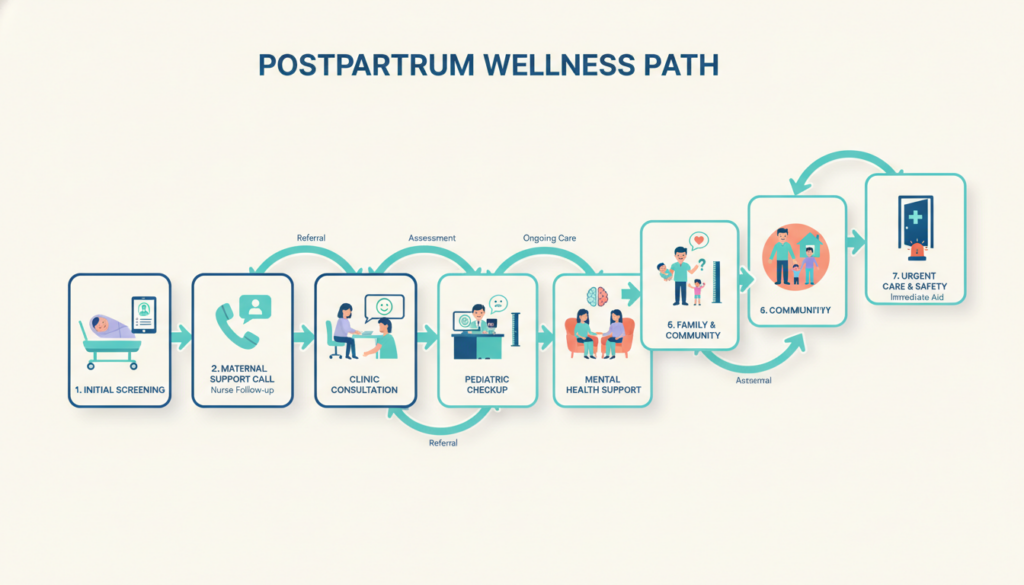
Care works best as an ongoing relationship rather than a single appointment. Guidance on postpartum care continuum recommends contact with a maternal care provider within three weeks of birth and a full postpartum visit no later than twelve weeks, rather than waiting for one isolated six week checkup. Pediatric visits add another layer of protection. A pediatric screening recommendation calls for screening the birth parent for depression at the baby’s one, two, four, and six month checkups, which catches people whose symptoms show up after the early weeks or who miss their own follow up care.
Why Getting This Right Matters
Getting the timeline right is not about applying a label correctly. It is about making sure a parent who is genuinely struggling gets support before things get worse, and making sure a parent having a rough but ordinary week does not feel pathologized for crying at three in the morning. Either way, paying attention, asking direct questions about safety, and staying connected through the following weeks gives everyone the best chance at a safe, steady recovery.
If you are noticing these signs in yourself or someone you love, you do not have to sort it out alone. Reach out to Mosaic’s outpatient mental health program and talk with someone who can help you figure out the next step.