
Postpartum Depression vs. Baby Blues: Signs to Watch For
Postpartum depression and baby blues can feel almost identical in the first days after birth, so it is hard to know which one you are facing. The key difference is timing and severity: baby blues fade within about two weeks, while postpartum depression can persist for months and touches about one in eight mothers during the first year. This guide covers postpartum depression vs baby blues, signs that go beyond sadness, and when to get help.
Postpartum Depression vs Baby Blues: What Sets Them Apart
Baby blues and postpartum depression get talked about as if they are the same thing wearing different names. They are not. Baby blues is a short, mild dip in mood driven by hormone shifts, sleep loss, and the sheer shock of new parenthood. Postpartum depression is a real clinical condition. It can start during pregnancy, show up soon after birth, or emerge months later, and it does not resolve on its own the way baby blues does.
The terms carry different clinical weight too. Formal diagnostic criteria only label a mood episode as having peripartum onset if it begins during pregnancy or within four weeks after delivery. But most day to day postpartum care, including current ACOG guidance, treats the relevant window as the full first year after birth, since depression can begin, return, or worsen at any point during that stretch. That broader view matters. A mother struggling at month seven has not missed her window for care.
How Long Do Baby Blues Last
Baby blues typically start within the first two or three days after delivery and taper off on their own by about two weeks postpartum. During that window, a new mother might cry without a clear reason, feel unusually anxious, snap at loved ones, or swing from raw to fine and back again within an hour. It is uncomfortable, but it is not dangerous, and it usually does not need treatment beyond rest, support, and a little patience from the people around her.
The line worth watching is duration and intensity. Clinical guidance explains that symptoms persisting beyond two weeks or interfering with daily life point more toward postpartum depression than a passing hormonal dip. If low mood, worry, or tearfulness are still around after two weeks, or if they get worse instead of better, that pattern is worth mentioning to a clinician rather than waiting it out.
Signs of Postpartum Depression Beyond Sadness
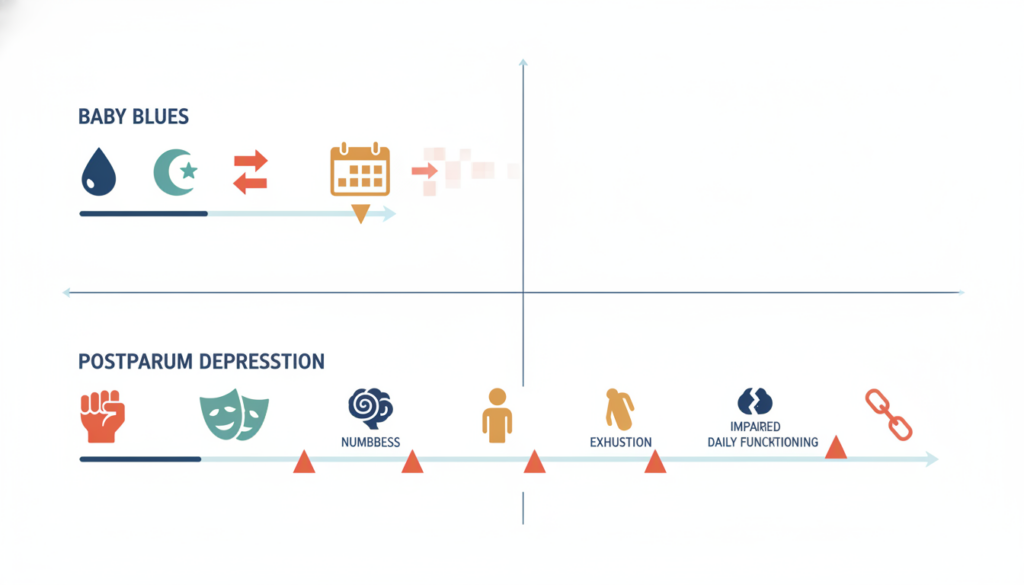
Sadness is only one face of postpartum depression, and for many mothers, it is not even the loudest one. The NHS notes that persistent low mood, irritability, exhaustion, and anxiety can show up alongside sadness or instead of it. That last part matters, because a mother who does not feel sad may still be missed if a conversation starts and stops with a single question about tears.
Anger and Irritability That Feel Unfamiliar
Some mothers describe a short fuse that was not there before pregnancy. Snapping at a partner over nothing. Feeling flooded with rage the second the baby starts crying. Wanting to scream after one more lost hour of sleep. This kind of irritability can be a depressive symptom on its own, not just stress talking. It can also point to anxiety, unresolved birth trauma, or plain exhaustion. Either way, it is worth naming out loud rather than brushing off as a short temper or a bad week.
Feeling Numb Instead of Sad
Other mothers do not feel sad at all. They feel flat, distant, or like they are going through the motions of caring for a baby they genuinely love without actually feeling the love in the moment. This kind of emotional numbness is a recognized part of postpartum depression, and it is easy to miss because it does not match the crying, withdrawn picture most people expect. A mother who says, I feel nothing, not sad, just empty, is describing something real and treatable, not a lack of love.
Scary Thoughts You Do Not Want
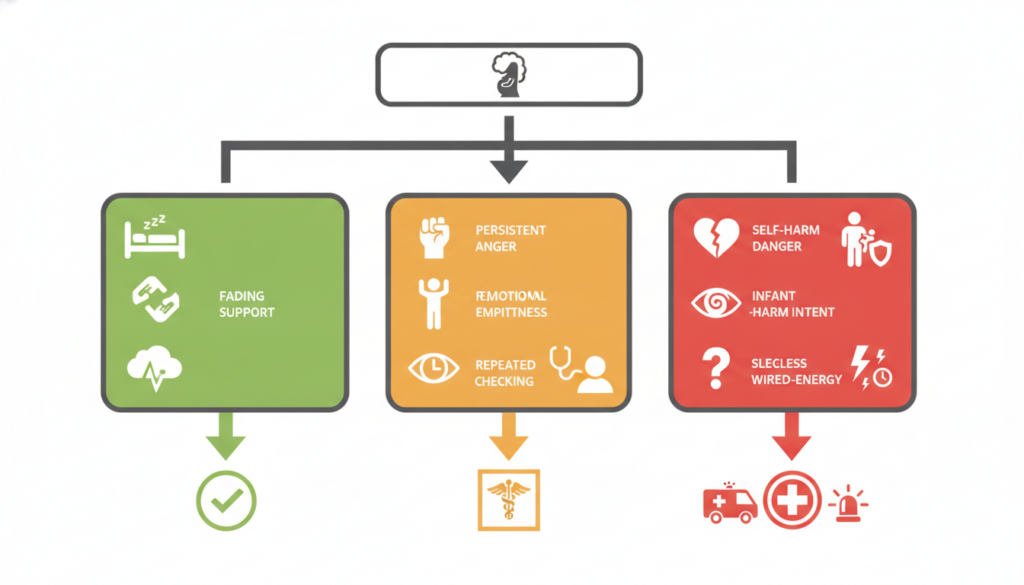
Unwanted, frightening thoughts about something happening to the baby are common, and on their own, they are not proof that a mother intends harm. Programs like MCPAP for Moms note that these intrusive thoughts are usually tied to anxiety, depression, or obsessive compulsive symptoms rather than psychosis, and most parents who have them are actively trying to prevent the very thing they picture. A mother checking the crib five times a night or avoiding stairs while holding the baby is often trying to protect, not hurt.
Postpartum Depression Symptoms That Signal an Emergency
Most postpartum depression symptoms call for prompt care, not urgent care. A smaller set of symptoms means something different: get help today. Same day contact is warranted for any thought of suicide or self harm, any thought of harming the baby that comes with intent or a plan, confusion, hallucinations, or a manic style pattern of barely sleeping while feeling wired instead of tired.
Postpartum psychosis sits in its own category entirely. It is rare, but it is a psychiatric emergency, not a severe version of baby blues or an extreme form of ordinary postpartum depression. The NHS describes it as usually starting suddenly, often within the first two weeks after birth, and involving hallucinations, delusions, and severe confusion. The National Institute for Health and Care Excellence recommends that anyone showing signs of possible postpartum psychosis be assessed by a mental health team within four hours of referral, which says a lot about how quickly this condition can escalate.
If you or someone you love may be experiencing this, do not wait for a scheduled appointment. Call 911 for immediate danger, or reach the 988 Crisis Lifeline for guidance on what to do next, and do not leave the parent alone with the baby until help arrives.
Postpartum Depression vs Baby Blues: Hidden Signs
One reason postpartum depression vs baby blues gets confused, even by people close to the mother, is that depression can hide behind competence. A mother might answer every message, keep the house running, feed the baby on schedule, and still be quietly drowning underneath it all. Looking fine is not proof of being fine, and clinicians are increasingly careful about assuming that a parent who appears organized is doing well internally.
Screening tools add another layer worth understanding. The Edinburgh Postnatal Depression Scale and the PHQ-9 are both widely used, and research comparing the two found similar accuracy at a group level, with sensitivity landing somewhere around 0.84 to 0.85 at common cutoffs. But agreement between the two tools for any one person is only moderate. A low score on one test does not automatically rule out a real problem, which is part of why a screening score should open a conversation rather than close one.
That is also part of why the American Academy of Pediatrics recommends screening the birth parent for depression at the baby’s one, two, four, and six month checkups, not just once at a single postpartum visit. Repeated screening catches symptoms that show up later, or that a mother was not ready to admit the first time someone asked.
When to Get Help Right Away
Deciding whether to wait, call soon, or call now can feel confusing in the moment, especially when you are running on no sleep. This table lays out the basic pattern.
| Presentation | Typical timing | What to do |
|---|---|---|
| Baby blues | First days after birth, gone by about two weeks | Rest, support, and monitor |
| Postpartum depression | Anytime during pregnancy through the first year | Contact a clinician within days |
| Postpartum psychosis | Often sudden, usually within the first two weeks | Get emergency care right away |
If you are unsure which row fits, treat it as the more urgent one until a clinician tells you otherwise. Erring toward caution costs little. Waiting too long can cost a lot.
Why Catching the Difference Matters
Knowing the difference between postpartum depression and baby blues is not about handing someone a label for its own sake. It changes what happens next. A parent riding out baby blues mostly needs rest, a little grace, and people checking in over the next couple of weeks. A parent with postpartum depression needs an actual plan for care, one that gets revisited at week eight or month eight, not just at the six week checkup and never again.
The mothers who get missed most often are not the ones crying in an obvious way. They are the ones described by everyone around them as fine, or strong, or handling it, while privately dealing with rage, numbness, or fear they cannot say out loud. Learning to notice these patterns, in yourself or in someone you love, is the step that opens the door to real support instead of quiet suffering.
If you are noticing these signs in yourself or someone you care about, you do not have to sort it out alone. Reach out to Mosaic Wellness & Recovery and explore an outpatient mental health program and take the next step toward feeling like yourself again.