
Reverse Seasonal Affective Disorder in Warm Climates
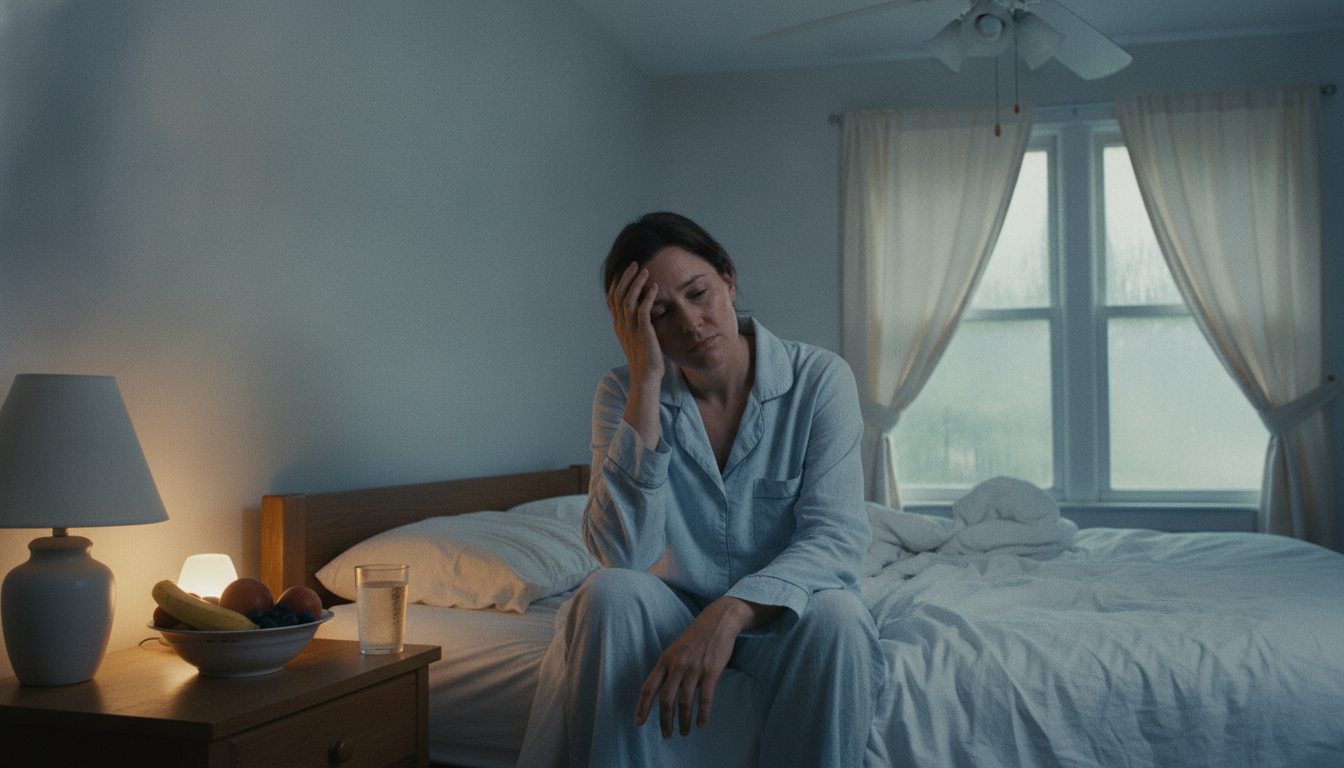
Reverse seasonal affective disorder is a real but lesser known form of seasonal depression that starts in spring or summer and lifts once the weather cools. Yes, seasonal affective disorder can show up in warm climates too, often with insomnia, appetite loss, and restlessness instead of winter’s oversleeping and carb cravings. This guide covers the symptoms, why warm states complicate diagnosis, and what to track before your first appointment.
What Is Reverse Seasonal Affective Disorder?
Most people picture seasonal affective disorder as a winter problem tied to short days and cold weather. Reverse seasonal affective disorder flips that script. It describes a pattern where depression shows up during spring or summer and eases once the season changes.
Here is the part that surprises a lot of people. SAD is not actually its own diagnosis in the manual clinicians use. It is a course specifier, called with seasonal pattern, added on top of an existing diagnosis, usually recurrent major depression or bipolar disorder, once specific timing requirements are met, according to a clinical summary in the NCBI Bookshelf. That distinction matters more than it sounds. A person cannot be diagnosed with reverse seasonal affective disorder simply because they feel worse every June. They need to first meet the criteria for a mood disorder, and then a clinician has to confirm the episodes follow a repeating seasonal course rather than a single rough stretch.
This is also why the same underlying framework covers both directions. Winter and summer patterns are two sides of one diagnostic idea, not two separate conditions.
Seasonal Affective Disorder Symptoms in Summer
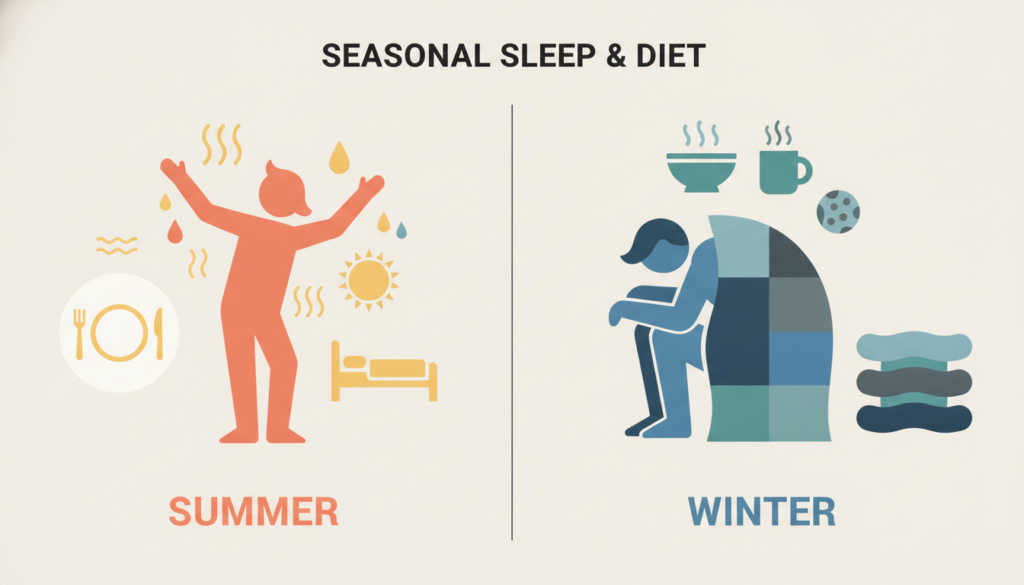
The seasonal affective disorder symptoms most people picture, oversleeping, weight gain, and carb cravings, belong to the winter version. Summer seasonal affective disorder tends to look almost the opposite. According to the National Institute of Mental Health, summer pattern depression more often involves insomnia, appetite loss, weight loss, restlessness, anxiety, agitation, and irritability, and in some cases aggressive behavior.
These symptoms tend to show up alongside the core signs of depression: low mood, loss of interest in things you used to enjoy, trouble concentrating, guilt, and, in serious cases, thoughts of suicide. None of these symptoms on their own proves a person has reverse seasonal affective disorder. Insomnia and irritability can come from plenty of places, including poor sleep habits, anxiety, or a genuinely hard summer. What sets a true seasonal pattern apart is that it repeats at roughly the same point on the calendar, year after year, and that it eases at a fairly predictable time once the season turns.
Winter Depression Versus Summer Depression Signs
Winter pattern depression tends to look like a slowdown. People sleep more, eat more, gain weight, and pull back from social contact. Summer pattern depression tends to look more like an overdrive that has gone wrong, marked by poor sleep, reduced appetite, and a keyed up, uneasy feeling that will not settle.
Neither pattern is more real or more serious than the other. They are different expressions of the same underlying course specifier, and clinicians use the direction of these changes to help sort out what might be happening. That said, symptom direction alone is not a clean dividing line. Atypical features such as extra sleep or a heavy, sluggish feeling can turn up in both seasonal depression and bipolar depression, so a symptom checklist is a starting point for conversation, not a final answer, based on findings summarized by Pjrek and colleagues. A person who feels agitated and cannot sleep might have depressed agitation, an anxiety disorder, or an early sign of hypomania, and telling those apart takes more than a symptom list.
Warm Climates and Reverse Seasonal Affective Disorder
So does SAD happen in warm climates? Yes, and this is exactly where reverse seasonal affective disorder becomes relevant. States with mild winters and long, hot, humid summers do not offer the usual explanation of cold, dark months driving depression. That leaves an open question: could heat, humidity, long daylight hours, and disrupted sleep act as a trigger the way darkness does in winter?
The honest answer is that nobody has solid regional numbers on how common summer pattern seasonal affective disorder actually is in warm, humid states. A warm climate does not, by itself, prove or rule out this pattern. Heat and humidity might genuinely worsen sleep and mood for some people. For others, those conditions might simply sit in the background while a completely different problem, such as a stressful work schedule, a health issue, or seasonal childcare demands, drives the symptoms. A pattern that repeats across two or more years, remaining absent from other months and lining up with the formal seasonal pattern requirements, tells a clinician far more than the simple fact that someone lives somewhere hot. The two year recurrence rule, the requirement that seasonal episodes outnumber nonseasonal ones, and the rule that a recurring life stressor should not better explain the pattern all still apply, regardless of climate.
Ruling Out Other Causes of Summer Symptoms
Before assuming reverse seasonal affective disorder, it helps to rule out simpler explanations. Heat intolerance can cause fatigue, headaches, poor sleep, and irritability that clear up fast once someone cools down. That looks different from a depressive episode that lasts for weeks regardless of temperature and does not resolve with air conditioning alone. Recurring summer stress, like childcare demands, a seasonal job, or financial pressure tied to cooling costs, can also produce a yearly low mood without matching the formal seasonal pattern criteria.
Medical causes deserve attention too. A thyroid and medical workup can catch conditions that mimic depression, since there is no blood test that confirms seasonal affective disorder on its own. Bipolar disorder is another must check item, since seasonal patterns can involve depression switching into hypomania or mania, and treatments such as antidepressants or light therapy carry more risk when that switch is possible, a caution raised in seasonal mood research. A MedlinePlus overview also notes that some people with bipolar disorder experience depression in fall and winter and mania in spring and summer, a very different picture from unipolar summer depression, which is one more reason careful screening matters before starting treatment.
What to Track Before Seeing a Doctor
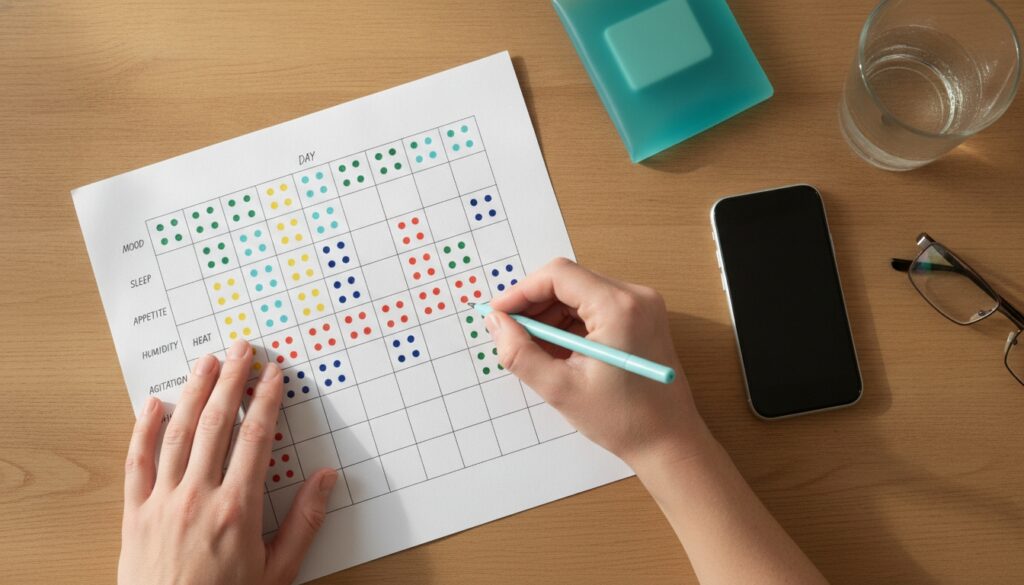
Memory alone is a shaky foundation for a seasonal diagnosis. Most people remember that a season felt hard without remembering exact onset dates or how long symptoms lasted. A short daily log kept over a few months is one of the most useful things you can bring to an appointment. Try tracking:
- the exact date your mood or sleep started changing
- daily sleep timing and how rested you feel each morning
- appetite and any weight change
- energy level, restlessness, or agitation
- heat, humidity, and how much cooling relief you get indoors
- stress from work, school, or family that repeats each year
- any period of unusually high energy, reduced need for sleep, or racing thoughts
A record like this helps separate a genuine seasonal pattern from heat sensitivity, situational stress, or a mood episode that is not really tied to the calendar at all. It also gives a clinician something concrete to work from instead of a general impression that summer feels harder.
Getting an Accurate Diagnosis and Treatment
What Clinicians Look For
A clinician generally wants to see the pattern repeat for at least two years, with a clear improvement or remission at a predictable point in the other season, and no similar episodes happening outside that window, criteria laid out in the same NCBI review. Screening tools such as the Seasonal Pattern Assessment Questionnaire can flag a possible pattern, but they tend to overcatch people whose depression is not actually seasonal, so a validity review of screening tools suggests treating a high score as a reason to look closer, not as a diagnosis in itself.
What Treatment Should Look Like
Treatment should match what actually drives the summer episode rather than a generic template. General depression care, including therapy and, when appropriate, medication guided by a prescriber, applies here the same way it would to any major depressive episode. Bright light therapy has a strong track record for winter pattern SAD, but there is little reason to assume more light helps someone whose problem is long summer days and poor sleep, so it should not be tried without guidance, a point supported by NIMH’s own summary of how little summer pattern SAD has been studied compared to winter SAD. Cooling the bedroom, protecting a regular sleep schedule, treating allergies, and building routine back into disrupted summer days are reasonable steps while a fuller evaluation is underway.
Why Getting This Right Matters
Getting this label right changes what happens next. Someone with true reverse seasonal affective disorder may benefit from planning ahead of their usual onset month, adjusting medication under a prescriber’s guidance, and protecting sleep before the heat sets in for the year. Someone whose summer struggles come from heat intolerance, a seasonal job, or an untreated medical issue needs a different plan entirely, and treating it as SAD could delay the care that would actually help.
Naming the problem accurately, instead of assuming every hard summer is SAD or dismissing it because the winters are mild, is what leads to real relief. A repeating pattern deserves to be taken seriously and tracked carefully, not guessed at.
If summer mood changes feel like a pattern rather than a one time rough patch, it helps to talk it through with someone who can look at the full picture with you. Book a consultation with Mosaic Wellness & Recovery team to start sorting out what is really going on and what support might fit your situation.