
The Hidden Toll of Living With Someone With Bipolar Disorder
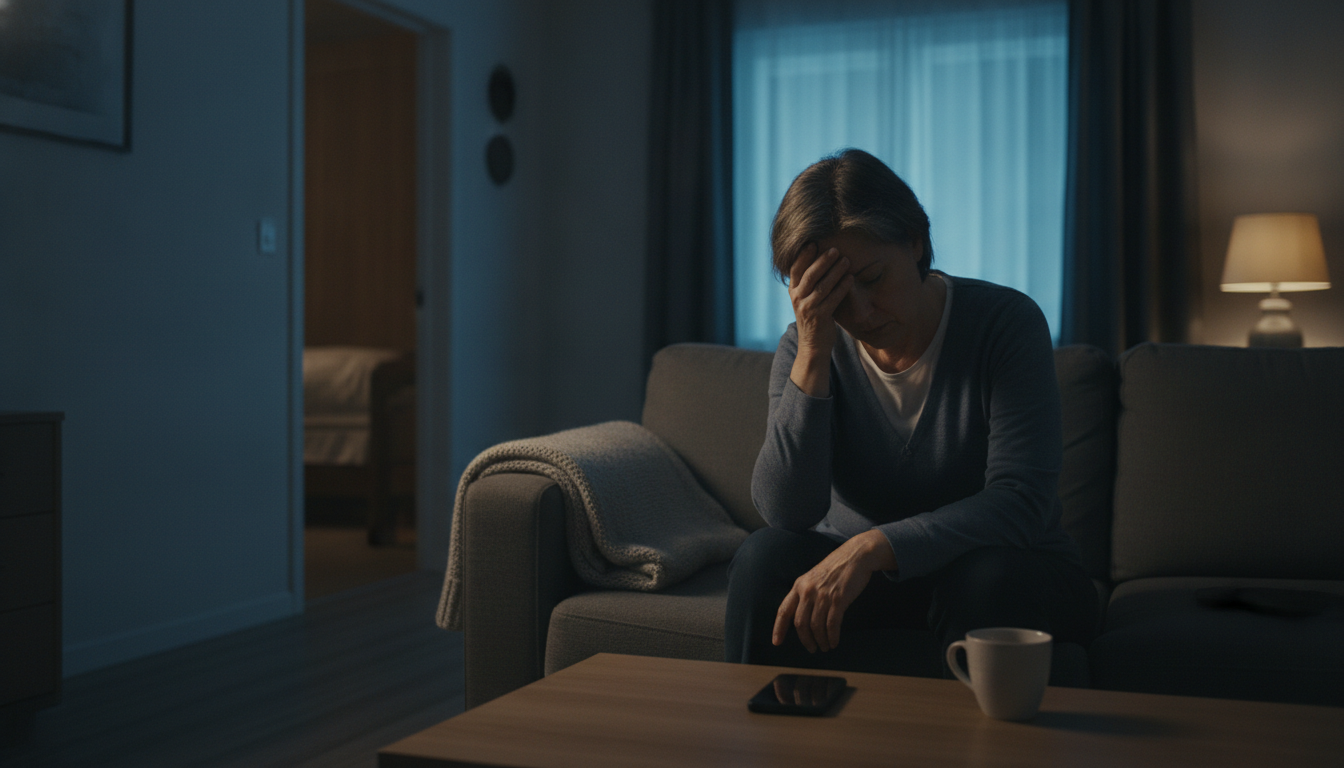
Living with someone with bipolar disorder can quietly wear down your own mental health long before you notice it happening. A 2023 survey of more than 1,200 family caregivers found that 72 percent carried high caregiving burden, and more than half showed moderate to severe depression symptoms on a standard screening tool, which tells us this strain is common and treatable, not something you’re supposed to just push through. This guide walks through why the toll builds, how to tell when it has crossed into something clinical, and what actually helps.
Living With Someone With Bipolar Disorder Feels Heavy
If you share a home with a partner, parent, sibling, or adult child who has bipolar disorder, you already know an exhaustion that doesn’t have an easy name. One week things feel steady. The next, you’re managing a manic spending spree, a depressive shutdown, or a phone call at two in the morning. That kind of back and forth adds up in ways that are hard to explain to people outside the situation.
Research backs up what you’re feeling. Living with someone who is bipolar does not automatically cause a mental health condition in you, but it raises the odds in ways that show up on paper, not just in your own head.
The Weight You Might Not Name
Caregiver strain often shows up as guilt, quiet resentment, money worries, broken sleep, and a low hum of fear that things could get worse. None of that makes you a bad partner, parent, or sibling. It means you’re carrying a second job nobody hired you for, and you deserve to name it instead of pretending it isn’t there.
How to Deal With Someone With Bipolar Disorder Day to Day
Most people who ask how to deal with someone with bipolar disorder are really asking how to stay steady when the ground keeps shifting under them. A few habits tend to help more than willpower alone:
- Learn the early signs of mania and depression together while your loved one is stable, so you both catch them early
- Agree on a simple crisis plan ahead of time, including who to call and what steps come first
- Separate the illness from the person, since behavior during an episode is not always a true reflection of how they feel about you
- Set boundaries around money, safety, and communication, and hold them calmly instead of in the heat of an argument
- Take a break before you hit empty, not after
Arguing with someone in the middle of a manic or depressive episode rarely works. It’s usually more useful to stay calm, keep sentences short, and revisit the harder conversation once the episode has passed.
When Caregiver Burnout Becomes Its Own Mental Illness
Caregiver burden and a diagnosable mental health condition are related, but they aren’t the same thing. In that same caregiver survey, depression scores and anxiety scores moved together closely, with depression rising nearly a full point for every one point increase in anxiety. Feeling stretched thin does not automatically mean you have depression or an anxiety disorder, but the two often travel side by side.
So where’s the line? Clinicians commonly use the Patient Health Questionnaire to screen for depression symptoms over the past two weeks. A score of 10 or higher is a reasonable signal that it’s time for a real evaluation, not just more coffee and willpower. Anxiety screening tends to use a similar cutoff.

One detail matters more than any total score. If you have any thoughts that you’d be better off dead or of hurting yourself, that calls for further risk assessment right away, no matter what the rest of the questionnaire adds up to. National screening guidance is clear that a positive depression screen should lead to further clinical evaluation, not just a number on a form that gets filed away.
When Living With Someone With Bipolar Disorder Gets Worse
Family caregivers of someone with psychosis or bipolar disorder tend to carry more strain than caregivers overall. A large meta-analysis found burden rates of about 36 percent among caregivers of people with psychosis, compared with roughly 27 percent in studies that didn’t focus on psychosis specifically. Care that involves relapse, hospitalization, or crisis tends to weigh more.
Watch for these patterns in yourself: trouble sleeping most nights, dread every time your phone buzzes, pulling away from friends, using alcohol or anything else to numb out, or feeling like you can’t picture life getting easier. None of these prove a diagnosis on their own. Together, and over time, they’re a real signal that your own health needs attention too, not just your relative’s.
Functioning matters more than any single score. A caregiver with mild symptoms who can’t sleep, can’t work, or feels unsafe needs help just as much as one with a higher number on a questionnaire.
Getting Help as a Family Member With Mental Illness in the House
A family member with mental illness in the house needs a plan too, not just the person carrying the diagnosis. Family psychoeducation, the kind that teaches you about symptoms, medication, and how to talk through a crisis, has a real track record. One systematic review of caregiver interventions found that psychoeducation programs for families of people with schizophrenia led to measurable drops in family burden months later, not just short term relief.
A separate study of caregivers supporting relatives with severe, ongoing mental illness found a clear link between burden and both depression and anxiety symptoms, which is one more reason to treat your own checkup as part of the care plan instead of an afterthought.

You might assume privacy law locks you out of information about your relative’s treatment. That’s not quite right. Providers can often share details that are directly relevant to your role in their care, especially if your relative hasn’t objected. It’s worth asking the practice directly what their policy allows instead of assuming the door is shut.
Why It Matters
None of this is about blaming yourself for feeling worn down, and it isn’t about deciding your relative’s illness is your fault either. It’s about recognizing that your sleep, your mood, and your safety matter just as much as theirs.
When caregivers get support early, families tend to handle relapses with less panic, communicate more calmly during hard stretches, and stay in the caregiving role longer without hitting a wall. Skipping your own checkup doesn’t make you a stronger caregiver. It usually just delays the moment when something has to give.
If living with someone with bipolar disorder has started to affect your own health, you don’t have to sort it out alone. Schedule a consultation with our team at Mosaic Wellness & Recovery to talk through what support could look like for you and your family.