
Treatment-Resistant Depression: What It Means, What's Next

If you’ve tried antidepressant after antidepressant with little relief, you may be dealing with treatment-resistant depression, a diagnosis usually given after two full antidepressant trials fail to help. Clinical guidelines generally define it as no meaningful improvement after two antidepressants, each taken at a therapeutic dose for at least six to eight weeks. This article explains what counts as an adequate trial, why some cases only look resistant, and what newer options like ketamine and TMS offer next.
What Is Treatment-Resistant Depression?
Treatment-resistant depression usually means a major depressive episode has not responded well to two different antidepressants, each given at a full dose for a fair length of time. The most current regulatory standard for this comes from the EMA’s 2025 guidance, which asks for two drugs from different classes, given at an adequate dose and duration, with adherence confirmed. A 2022 expert panel known as the Delphi consensus suggests roughly six weeks as a minimum trial length, with eight weeks at the highest tolerated dose as the stronger standard.
Here’s the catch: there is no single agreed definition. A recent review found more than 150 different definitions in published research, and they differ on how many drugs must fail, how long a trial should run, and whether psychotherapy counts. That gap matters because a broad definition labels more people as resistant, while a strict one can delay access to newer treatments. Cleveland Clinic describes the version most patients actually hear from a provider: no real improvement after two antidepressants taken correctly for at least six to eight weeks each.
What is treatment resistant depression, in plain terms? It’s a working label, not a permanent sentence. It tells a clinician that ordinary medication management alone probably needs help from another angle.
Ruling Out Pseudoresistance First
Before anyone gets the treatment-resistant depression label, it is worth checking whether the earlier medications ever had a fair shot. This is sometimes called pseudoresistance, and it shows up more often than people expect.
The Dose May Have Been Too Low
Some people never reach a full dose because side effects show up early or a prescriber starts low and never checks back in. A prescription bottle does not prove a therapeutic dose was reached or kept up.
The Trial May Have Ended Too Soon
A partial response at six weeks is not automatic failure. Research suggests waiting through an extended trial period before judging a partial responder as unsuccessful, since improvement can keep building for another month or so.
Bipolar Depression Can Look Like Resistance
Depression is often the first sign of bipolar disorder. If antidepressants alone cause agitation, insomnia, or brief highs, the real problem may be an unrecognized bipolar spectrum illness rather than resistant unipolar depression.
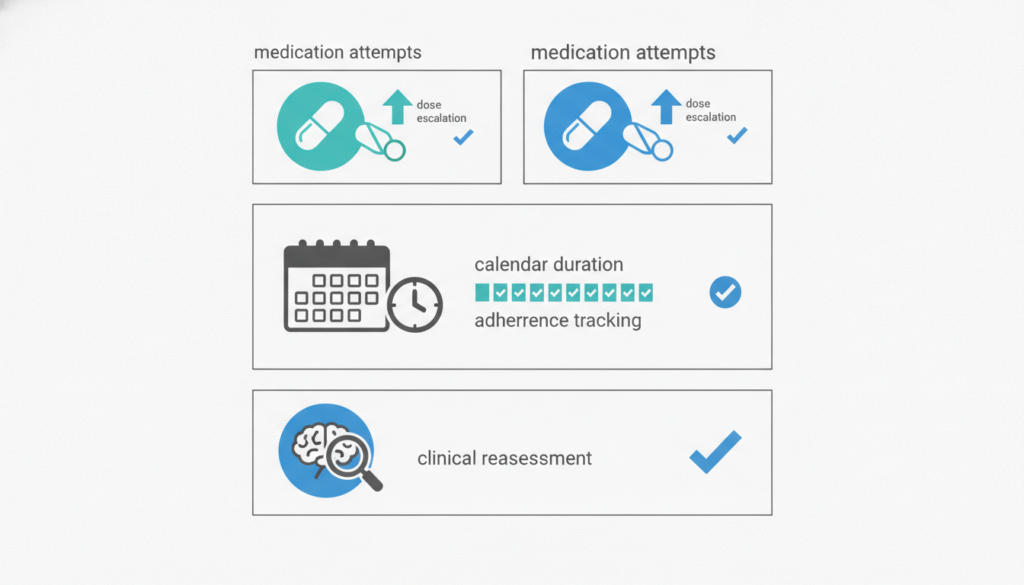
Medical Causes Deserve A Look
Thyroid problems and untreated sleep apnea can both mimic ongoing depression, draining energy, focus, and motivation even when medication is doing exactly what it should. A short lab panel or sleep evaluation sometimes changes the whole picture.
Options For Treatment-Resistant Depression
Once true treatment-resistant depression is confirmed, several paths exist, and most people try more than one before landing on something that works. Common next steps include raising the dose further, switching drug classes, adding a second medication such as an antipsychotic or lithium, and pairing medication with structured psychotherapy. When these still fall short, interventional psychiatry becomes a reasonable next step. The two most common insurance-covered options right now are esketamine nasal spray, sold under the brand SPRAVATO, and repetitive transcranial magnetic stimulation, usually shortened to TMS. Electroconvulsive therapy remains an option for severe or urgent cases but needs more medical supervision than either of these two.
Ketamine For Depression: How It Works
When people ask about ketamine for depression, they usually mean SPRAVATO, the FDA-approved nasal spray form of esketamine. It helps to know this is not the same product as intravenous racemic ketamine, which is legal for anesthesia but used off label for depression and rarely covered by insurance. SPRAVATO’s current label allows it on its own or alongside an oral antidepressant for adults with treatment-resistant depression.
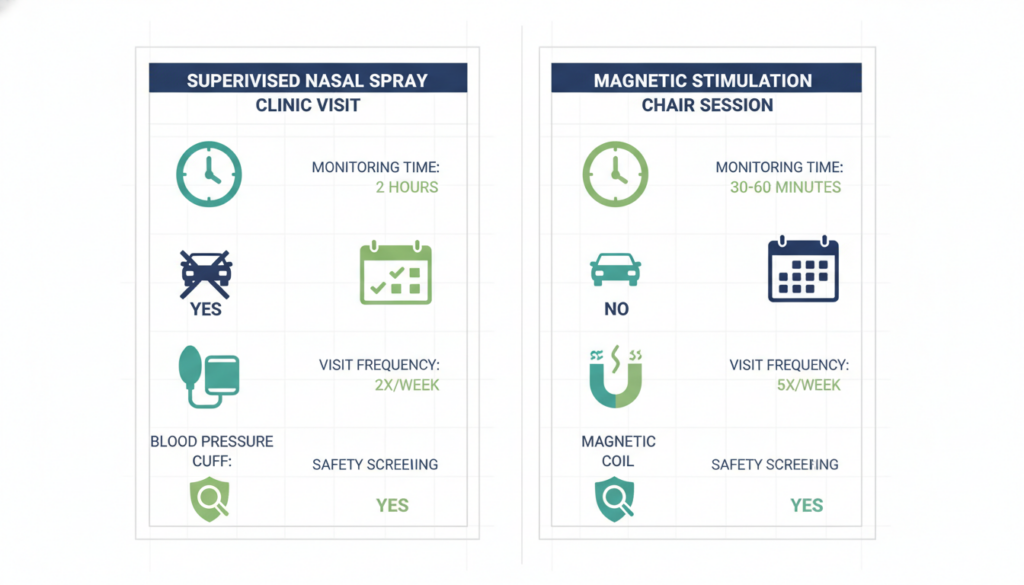
Because esketamine can cause sedation and a floaty, disconnected feeling, it is dispensed only in certified clinics under a restricted safety program. Patients give themselves the spray under direct supervision and stay for at least two hours afterward for monitoring, including blood pressure checks. No driving is allowed until the next day after a full night’s sleep. Dosing usually starts twice weekly for a month, drops to weekly for another month, then spaces out further based on how someone is doing. Some early research on esketamine suggests rapid improvement is possible within days for certain patients, though results vary widely from person to person.
TMS For Depression: What To Expect
TMS for depression works very differently. Instead of a medication, a magnetic coil placed near the scalp stimulates specific brain regions linked to mood. It is FDA-cleared, not FDA-approved, since it is a device rather than a drug. NeuroStar’s protocols list session lengths ranging from about three minutes for newer theta burst protocols up to nearly 40 minutes for standard sessions, and a full course usually runs five days a week for roughly six weeks.
There is no drug in the body, so most people can drive themselves home and get on with the rest of their day right after treatment. The main screening concern is metal: cochlear implants, aneurysm clips, and other magnetic sensitive devices near the head can rule someone out. Insurance plans such as Aetna commonly cap an initial course around 30 sessions, sometimes with a short taper afterward.
Comparing Ketamine And TMS Side By Side
The table below lines up the practical differences that often decide which option fits someone’s life better than symptom severity alone.
| Factor | Esketamine (SPRAVATO) | TMS |
|---|---|---|
| Regulatory status | FDA-approved medication | FDA-cleared device |
| Typical schedule | Twice weekly, then tapering | Five days weekly for about six weeks |
| Visit length | Two plus hours with monitoring | Minutes to under an hour |
| Driving after treatment | Not allowed until next day | Usually fine same day |
| Main screening concern | Blood pressure, vascular history | Metal or electronic implants near head |
Neither option wins outright. Someone with limited weekday availability but reliable transportation may find esketamine’s fewer visits easier to manage, while someone who needs to drive to work daily may find TMS a better fit.
Getting Insurance To Cover Treatment
Insurers rarely accept a vague history of failed medications. Most want documented dose, duration, and adherence for each prior trial. UnitedHealthcare’s 2026 policy asks for two antidepressant regimens of at least eight weeks each plus a baseline depression score before approving esketamine. TMS carries its own paperwork too, including proof of prior medication trials and confirmation that the device is used exactly as labeled. Keeping a clear record of every medication tried, at what dose, for how long, and with what result makes this whole process much smoother for everyone involved.
Why Getting This Right Matters
A treatment-resistant depression diagnosis should open doors, not close them. Getting the definition right protects people from being written off too early because a prescription was never given a fair chance, and it protects people from waiting years for care that could have started sooner. Whether the next step is a dose change, a fresh diagnostic look, ketamine, or TMS, the goal stays the same: matching the right treatment to the right person at the right time, without wasting months on something that was never going to work in the first place.
If depression has not gotten better despite real effort, you do not have to sort out the next step by yourself. Reach out to schedule a consultation and talk through what care for treatment-resistant depression could look like for you.