
What Is Complex PTSD? Signs, Causes, and Key Differences

Complex PTSD is a trauma related condition that combines the full PTSD symptom picture with lasting struggles in emotion regulation, self image, and relationships. It’s officially defined in the ICD-11 manual as code 6B41, requiring the classic PTSD symptoms of reliving the event, avoidance, and constant threat, plus three added struggles: mood swings, a negative self view, and relationship trouble. This guide walks through the signs, the likely causes, and how complex PTSD differs from standard PTSD and borderline personality disorder.
What Is Complex PTSD? A Straightforward Answer
Complex PTSD, sometimes shortened to C-PTSD, sits in an odd spot in mental health care. So what is C-PTSD, exactly, in plain terms? The World Health Organization treats it as a stand alone diagnosis in ICD-11, but the American classification used across most of the country, the DSM-5-TR, does not include it as its own category, based on trauma center guidance from the VA National Center for PTSD. That gap does not mean complex trauma is any less real. It means U.S. clinicians tend to describe the same pattern using PTSD plus other diagnoses, like depression or personality disorders, instead of one unified label.
To meet ICD-11 criteria for complex PTSD, a person needs the full PTSD symptom cluster, meaning reliving the event in the present, avoiding reminders, and feeling constantly on guard, plus lasting trouble in three more areas: managing emotion, seeing yourself fairly, and staying connected to other people. According to assessment guidance from the same center, the condition also requires clear impairment in daily life, not just uncomfortable feelings that come and go.
Complex PTSD vs PTSD: What Actually Differs
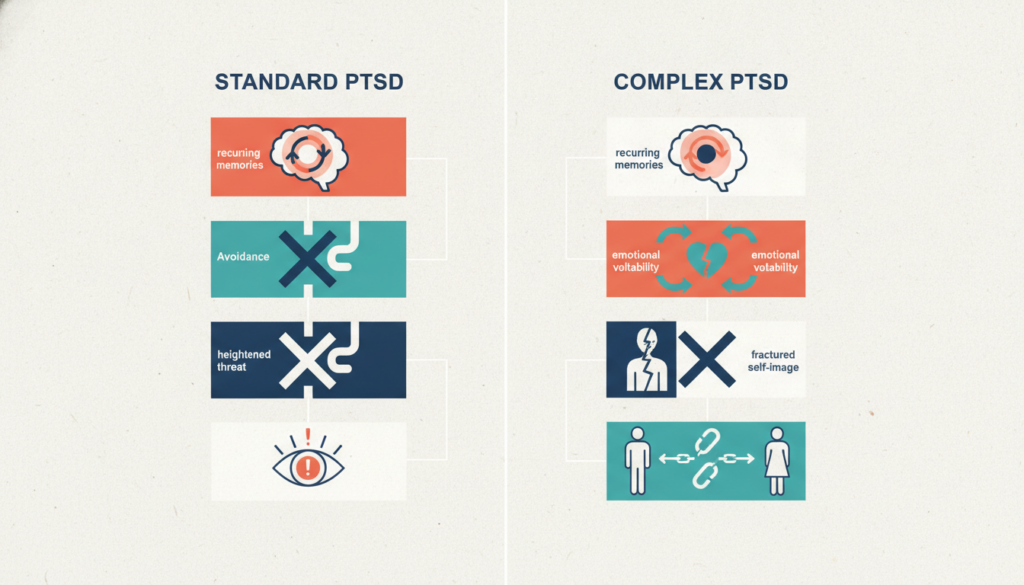
Standard PTSD centers on three symptom clusters: reliving the trauma through flashbacks or nightmares, avoiding people or places that trigger memories, and staying on high alert for danger that already passed. Complex PTSD includes every one of those symptoms, then adds three more that ICD-11 groups together as disturbances in self organization.
The extra symptoms are not simply a worse version of PTSD. A clinical guidance paper explains that complex PTSD reflects a broader syndrome rather than heightened severity of the same one. Someone can have severe PTSD without meeting complex PTSD criteria at all, and someone with plenty of emotional pain and relationship trouble does not qualify for complex PTSD unless the core PTSD symptoms are also present and documented.
Disturbances in Self Organization Explained
Clinicians use the phrase disturbances in self organization, or DSO, to describe the three added struggles that separate complex PTSD from standard PTSD:
- Affect dysregulation, which can look like explosive anger, sudden emotional shutdown, or trouble calming down once upset
- Negative self concept, meaning persistent shame, a sense of being damaged, or a belief that you deserved what happened
- Relationship difficulties, such as avoiding closeness, distrusting people, or feeling cut off even when support is right there
These three domains show up alongside the core PTSD symptoms, not instead of them. A person who has only the DSO features without the reliving, avoidance, and threat symptoms would not meet complex PTSD criteria on that basis alone.
What Causes This Childhood Trauma Disorder
Complex PTSD tends to develop after trauma that repeats over months or years rather than a single frightening event. Common settings include prolonged childhood abuse or neglect, domestic violence that continues for years, captivity, torture, and organized violence, though the clinical guidance paper notes these are common contexts, not the only ones.
Because so many cases begin early in life, complex PTSD is often talked about as a childhood trauma disorder, even though adults can develop it after prolonged trauma later on too. What seems to matter most is the ongoing, escapeless nature of the harm. A child who cannot leave an abusive home, or an adult trapped in a coercive relationship, learns to adapt in ways that reshape self image and trust long after the danger has passed. The nervous system stays braced for threat, and the beliefs formed during the trauma tend to stick around long after the situation changes.
Complex Trauma Symptoms You Might Notice
Complex trauma symptoms show up differently from person to person, but a few patterns are common. Someone might feel emotionally numb for days, then erupt in anger over something small. Someone else might do well at work while privately feeling convinced they are a fraud or unworthy of good things happening to them. Many people describe pulling away from friends and partners right when they need support the most, because closeness itself starts to feel risky rather than comforting.
These symptoms often show up alongside the core PTSD experience of nightmares, intrusive memories, and hypervigilance. The combination can make everyday tasks like keeping a job, parenting, or maintaining friendships much harder than PTSD symptoms alone would suggest. It also helps explain why people with complex trauma histories sometimes get labeled as difficult or unmotivated when what they are actually dealing with is a nervous system still bracing for danger.
C-PTSD Diagnosis Criteria and Assessment Tools
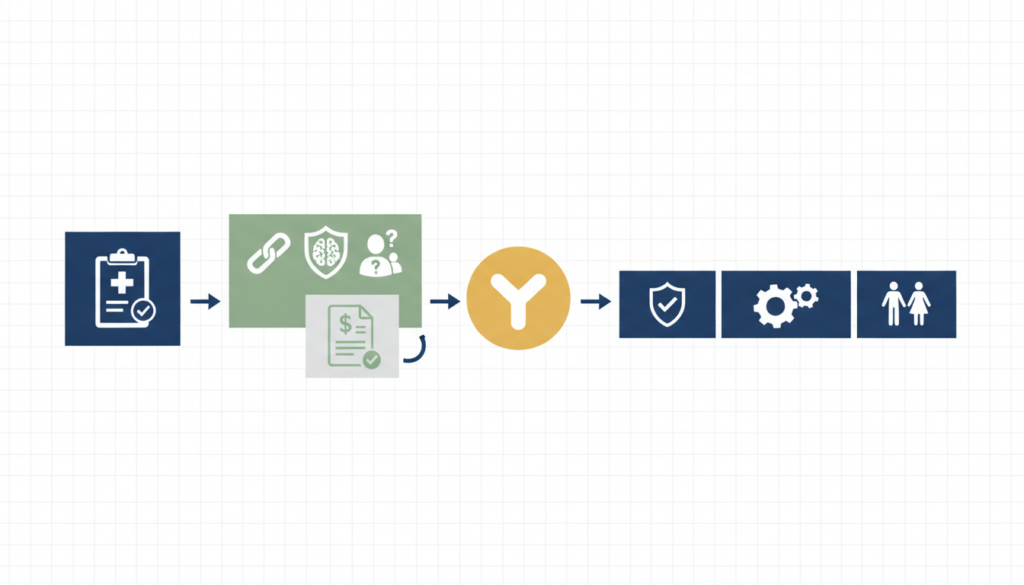
Getting a clear C-PTSD diagnosis starts with an assessment that looks at both the PTSD symptom clusters and the three added self organization domains. A widely used screening measure called the International Trauma Questionnaire is an 18 item self report tool that rates six PTSD symptoms, six self organization symptoms, and functional impairment on a simple scale from 0 to 4.
In the United States, this creates a coding puzzle worth understanding. DSM-5-TR does not include complex PTSD as its own diagnosis, and U.S. insurance claims run on the ICD-10-CM system rather than the ICD-11 framework that recognizes code 6B41. A clinician who identifies a complex trauma presentation typically still bills chronic PTSD code F43.12, while documenting the self organization symptoms separately in the treatment plan. This does not make a person’s experience any less real. It just means the paperwork and the clinical picture are not always written in the same language, so a good clinician will explain both to you plainly.
Complex PTSD and Borderline Personality Disorder
Complex PTSD and borderline personality disorder overlap enough that clinicians sometimes mix them up, but they are not the same thing. Borderline personality disorder does not require the PTSD symptom cluster at all. It centers more on an unstable sense of self and an intense fear of abandonment. Complex PTSD, by contrast, always requires the core PTSD symptoms plus the three self organization struggles described earlier.
A latent class study of women with childhood abuse histories found separate PTSD, complex PTSD, and borderline personality disorder symptom groups, which supports treating them as distinguishable patterns rather than one blurry category. That said, the conditions often occur together. An overlap review found that borderline personality disorder and PTSD occur together in anywhere from about 22% to 74% of clinical samples, and a 2025 BPD study found that 57% of patients being treated for borderline personality disorder also met criteria for probable complex PTSD. None of this means one diagnosis cancels out the other. It means a thorough assessment should check for both rather than assuming emotional intensity automatically points to one label.
Getting Diagnosed and Finding Treatment That Fits
If any of this sounds familiar, a full assessment matters more than chasing a single label. A clinician working from the ICD-11 framework may use a brief screening tool, or a more detailed clinician led interview, to sort out whether PTSD, complex PTSD, borderline personality disorder, or some combination best explains what you are experiencing. None of these conditions rule each other out automatically, and a careful assessment should leave room for more than one diagnosis when the evidence supports it.
Treatment usually works best in stages: building safety and basic coping skills first, then processing the trauma itself, then rebuilding relationships, identity, and daily routines. None of this requires waiting for a perfect diagnostic label before starting. Even without a single U.S. billing code for complex PTSD, treatment can still target the mood swings, the self blame, and the relationship strain that make daily life so hard, alongside the more familiar PTSD symptoms of flashbacks and avoidance.
If this description feels close to your own experience, you do not have to sort out a label before getting support. Reach out to the team at Mosaic Wellness & Recovery to learn more about outpatient mental health care and talk through an assessment that looks at the whole picture, not just one diagnosis.