
Why PMDD Is So Often Misdiagnosed as Bipolar Disorder

PMDD is so often misdiagnosed as bipolar disorder because both conditions bring irritability, mood swings, and sleepless nights that seem impossible to predict. The real difference in PMDD vs bipolar disorder comes down to timing: PMDD symptoms cluster in the final week before your period and clear within days of bleeding, while bipolar episodes can start at any point in the month and last much longer. This guide shows what separates true PMDD symptoms from bipolar mood swings.
PMDD Vs Bipolar Disorder: Why the Mix-Up Happens
If you have ever left a doctor’s office with a bipolar label after describing “monthly meltdowns,” you are not alone. Both PMDD and bipolar II disorder can involve depressed mood, anxiety, low energy, poor sleep, impulsivity, and conflict with the people around you. On paper, the symptom lists overlap enough that a rushed conversation can point a clinician toward the wrong diagnosis.
The trouble is that most people describe their symptoms from memory, and memory is a poor tool for spotting patterns. Research on the standard PMDD scoring method found that people’s recollections of premenstrual symptom spikes were weak predictors of what daily tracking actually showed once researchers ran the C-PASS validation study. You might remember your worst three days vividly while forgetting that you also felt anxious two weeks earlier. That gap in memory is exactly where misdiagnosis creeps in.
PMDD is defined by a repeating pattern tied to the menstrual cycle, according to criteria outlined in a Frontiers global health review. Bipolar II disorder, on the other hand, is defined by distinct mood episodes that can show up whenever they want, cycle or no cycle. Confusing the two is not a small clerical error. It can lead to months or years of the wrong treatment plan.
The Cost of Getting It Wrong
A missed PMDD diagnosis means someone keeps suffering through a solvable monthly pattern without the tools that actually target it. A missed bipolar diagnosis is arguably riskier, since antidepressant treatment used alone can sometimes trigger mania or mixed symptoms in people with bipolar disorder. Getting the timeline right is not just about paperwork. It shapes what treatment comes next.
PMDD Symptoms That Look Like Bipolar Mood Swings
Premenstrual dysphoric disorder mood swings have a specific shape, even though they can feel chaotic in the moment. Diagnostic guidance summarized by the StatPearls clinical review requires at least five symptoms during the week before your period, including one core mood symptom such as marked irritability, sudden emotional shifts, hopelessness, or a keyed up, anxious feeling.
Beyond that core symptom, PMDD can also include trouble concentrating, exhaustion, changes in appetite or cravings, sleep problems, feeling overwhelmed, and physical symptoms like bloating or breast tenderness. What makes this a PMDD pattern rather than something else is the timing. Symptoms show up in the final week before menstruation, start easing within a few days after bleeding begins, and become minimal or gone during the week that follows.
That symptom free stretch is the detail people often miss when they compare their experience to bipolar disorder. If you feel completely like yourself for two or three weeks a month and then hit a wall right before your period, every single cycle, that pattern is doing a lot of the diagnostic work. Bipolar mood episodes are not expected to clear on such a predictable, cycle bound schedule.
Irritability Is the Trickiest Overlap
Irritability shows up in PMDD, in bipolar depression, in hypomania, in anxiety, and in plain exhaustion. On its own, it tells a clinician very little. What matters is what comes with it. In PMDD, irritability tends to arrive alongside tearfulness, feeling overwhelmed, and a strong urge to withdraw. It is not typically paired with racing energy, big plans, or a sense of being unstoppable. That combination points somewhere else entirely.
Bipolar II Symptoms That Aren’t PMDD
Bipolar II disorder requires a history of at least one major depressive episode and at least one hypomanic episode, according to clinical summaries from Medical News Today’s overview. Hypomania is the part most often confused with a bad premenstrual week, so it is worth breaking down carefully.
A hypomanic episode involves a clear period of elevated, expansive, or irritable mood combined with a noticeable jump in energy or activity, lasting at least four days in a row. Alongside that mood and energy shift, people often notice a reduced need for sleep without feeling tired the next day, unusually fast or talkative speech, racing thoughts, inflated confidence, distractibility, and a spike in risky or impulsive behavior such as overspending, according to details from WebMD’s bipolar guide.
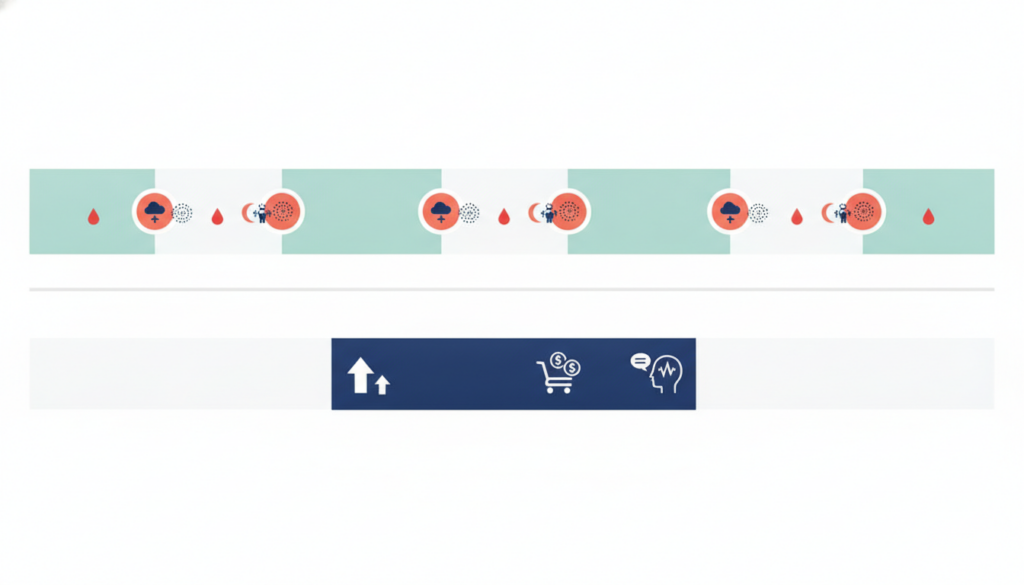
Notice what is missing from that list. There is no requirement that hypomania show up before a period. It can happen in the middle of your cycle, right after your period ends, or during a stretch with no clear link to menstruation at all. If someone is sleeping three hours a night for a week while feeling wired, confident, and unusually productive, and this is not confined to the days before their period, that pattern deserves a bipolar workup rather than a PMDD label.
There is also a third category that gets overlooked. Premenstrual exacerbation describes bipolar or depressive symptoms that are present across the whole month but simply get worse before menstruation. That is not the same thing as PMDD. A review of premenstrual exacerbation warns that a premenstrual flare up in someone with an existing mood disorder should generally be treated as part of that disorder, not automatically relabeled as a second, separate PMDD diagnosis.
The Daily Tracking That Settles PMDD Vs Bipolar Disorder
Because memory fails us here, the most reliable tool is boring, simple, daily tracking. The gold standard instrument is the Daily Record of Severity of Problems, a form with 24 items covering eleven symptom areas plus three questions about how much the symptoms are getting in the way of daily life, each rated on a scale from one to six, as described in the StatPearls clinical review.
The scoring method built on top of that daily record is called C-PASS, short for the Carolina Premenstrual Assessment Scoring System. It is not a separate questionnaire. It is a standardized way of applying diagnostic criteria to the daily numbers, checking symptom content, severity, and whether things reliably switch off after your period starts. In its original validation with 200 people who already reported premenstrual emotional symptoms, this method matched expert diagnosis in about 98 percent of cases, based on findings from the C-PASS validation study. That is an impressive number, but the same study excluded anyone with a history of mania or an active psychiatric diagnosis, so it should not be treated as a stand alone way to rule bipolar disorder in or out.
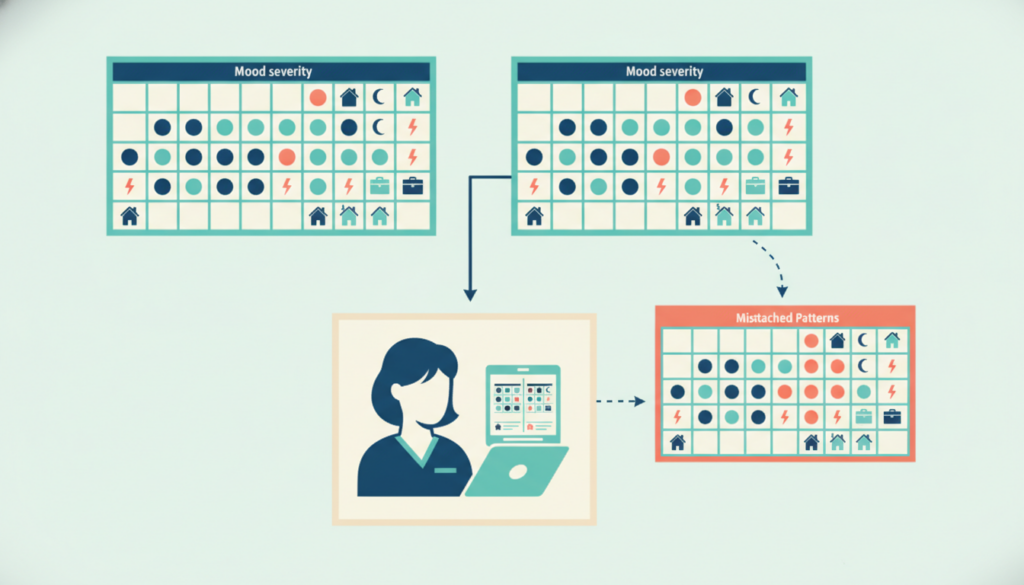
Guidance from the ISPMD consensus statement recommends tracking for at least two full symptomatic cycles before confirming a PMDD diagnosis, and adding a third cycle if the first two do not agree. If bipolar disorder is already part of the picture, tracking works best once mood is relatively stable, since an active depressive or hypomanic stretch makes it nearly impossible to tell whether a premenstrual spike is a distinct PMDD pattern or just the underlying illness flaring up, according to a bipolar PMDD review.
Here is a simple side by side look at what separates the two patterns.
| Feature | PMDD | Bipolar II Hypomania |
|---|---|---|
| When it starts | Final week before your period | Any time, cycle or no cycle |
| How long it lasts | Improves within days of bleeding | At least four days straight |
| Sleep pattern | Insomnia paired with exhaustion | Less sleep, but often no fatigue |
| Mood quality | Irritable, anxious, overwhelmed | Elevated, wired, unusually confident |
| What confirms it | Two cycles of daily tracking | Longitudinal history of episodes |
Why Getting PMDD Vs Bipolar Disorder Right Matters
The treatment paths for these two conditions are not interchangeable, and that is the real reason this distinction deserves more than a five minute conversation. Confirmed PMDD often responds well to an SSRI, sometimes taken only during the luteal phase since the response can happen faster than it does in standard depression treatment. Bipolar disorder instead calls for ongoing mood stabilization, because starting an antidepressant on its own can risk pushing someone toward mania or a mixed episode, a concern raised directly in reviews of comorbid PMDD and bipolar disorder from Sepede and colleagues.
PMDD and bipolar disorder can genuinely coexist, but that conclusion should come after careful tracking, not as a default assumption. It is also worth saying plainly that PMDD is linked to a higher risk of suicidal thinking compared with people who do not have the condition, based on findings published in the CMAJ clinical review. Whichever label eventually fits, the symptoms themselves deserve to be taken seriously while the picture gets sorted out.
If your mood feels like it swings on a schedule you cannot quite name, do not settle for a guess based on one hard conversation. Two cycles of honest daily notes, paired with the right clinician, will tell you far more than memory ever could.
You deserve a diagnosis that actually matches your pattern, not just the label that came up first. By reaching out our team and at Mosaic Wellness & Recovery to talk with a provider about a mental health treatment program built around your real symptoms and timeline.